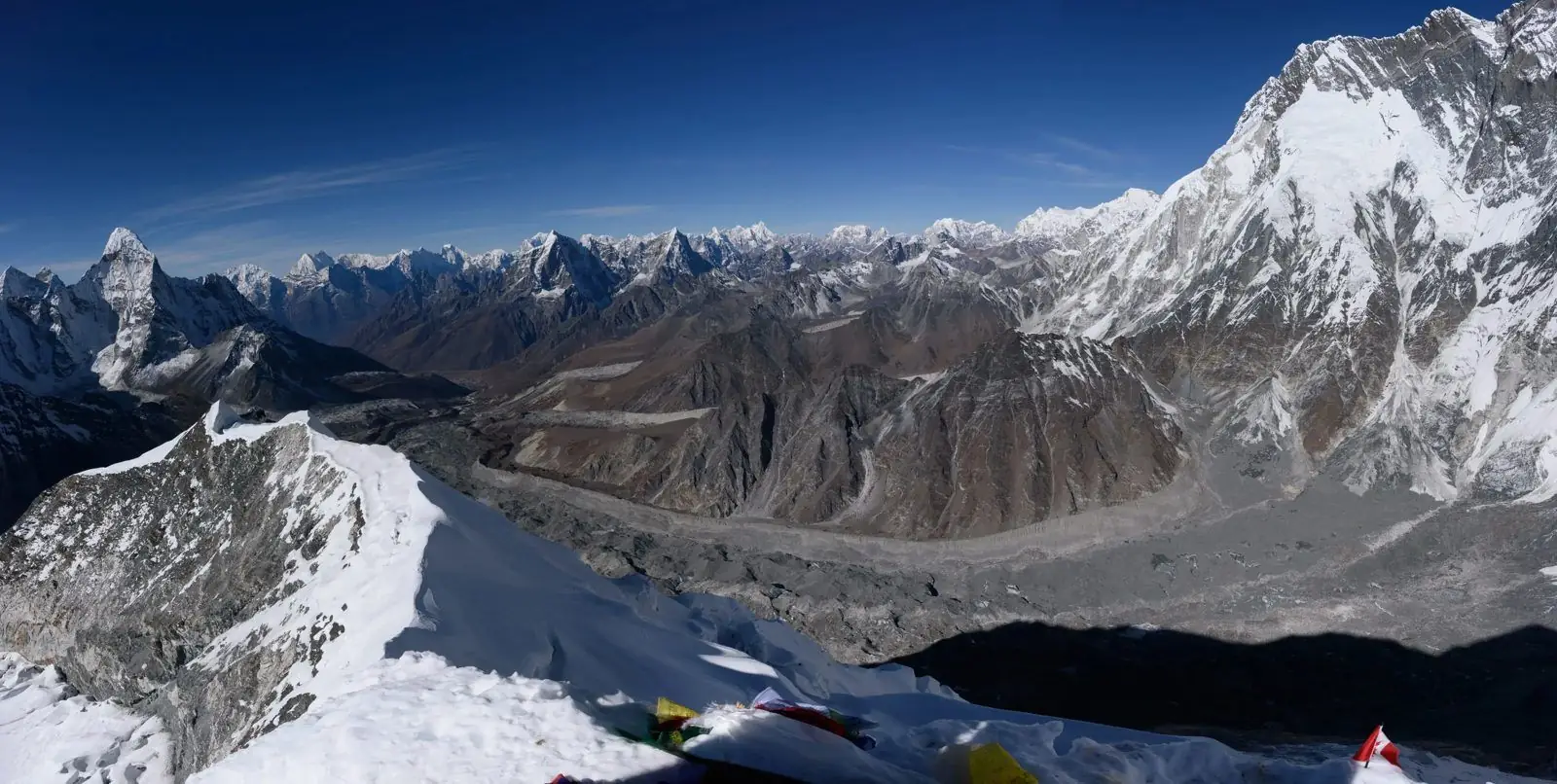
The Three Passes trek is a demanding high-altitude walk rather than a technical climb. It is one of the hardest standard teahouse treks in Nepal because it combines length, altitude, cold and three long pass days. You do not need ropes or climbing skills in most conditions, but you do need strong endurance, good judgment and a willingness to turn back or wait for better weather.
What makes it hard
There are four main difficulties. First, the length, with about 20 days of walking and many days of five to eight hours. Second, the altitude, with most nights spent between 4,000 and 5,200 m once past Namche. Third, the cold, because lodges above 4,500 m are unheated except in the dining room. Fourth, the pass days themselves. Each is a long push with a steep ascent, a high saddle and a long descent, usually starting before dawn and lasting eight to ten hours.
Comparing the three passes
Renjo La is generally the gentlest, with a clear stone-stepped climb. Kongma La is the highest and longest, with a steep, rocky section. Cho La is often called the most technical because of the glacier crossing and loose rock, although conditions change from year to year.
Fitness that helps
- Several months of regular aerobic exercise, such as hill walking, running, cycling or stair climbing.
- Back-to-back long hikes with a loaded daypack.
- Leg and core strength for steep descents.
- Some experience above 4,000 m, which is the best predictor of how you will cope.
Who it suits
The trek suits healthy people who enjoy long days outdoors, are comfortable with simple lodges and cold nights and have time for a slow schedule. It is not a good first Himalayan trek. If you have never trekked at altitude before, the classic Everest Base Camp route or a shorter Gokyo trek is a better starting point, and you can return for the passes later.
What makes people turn back
Most people who do not finish are stopped by altitude symptoms, cold, stomach problems or exhaustion, not by the terrain. Good pacing, drinking enough water, eating even without appetite and telling the guide early about any symptom help far more than raw strength. A flexible attitude and a spare day or two are the best safety margin.