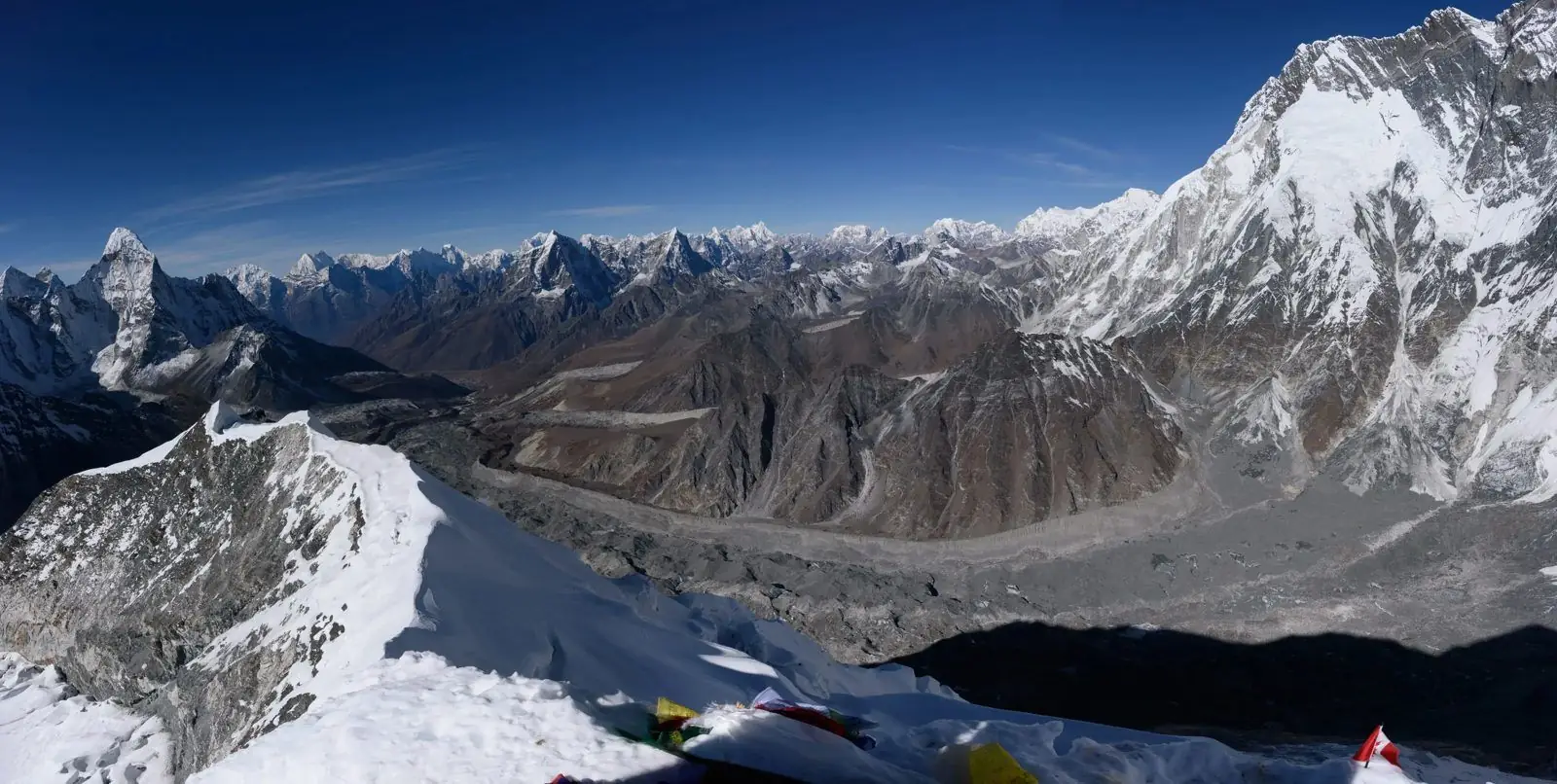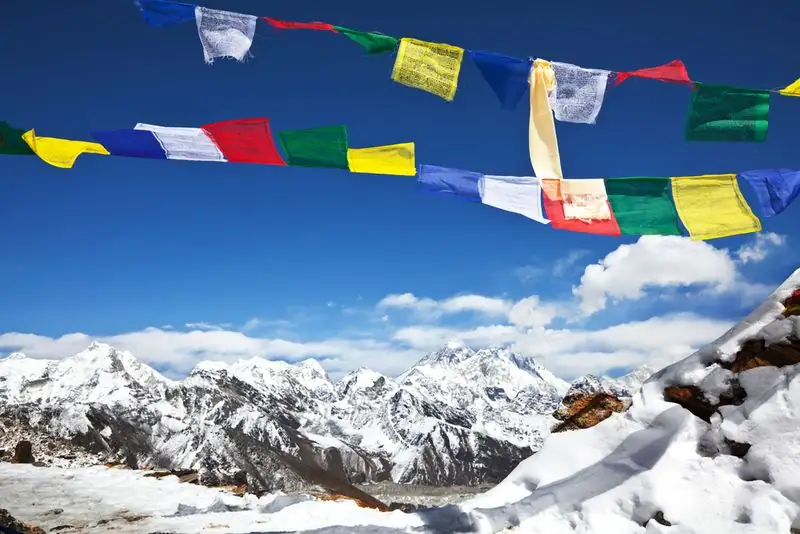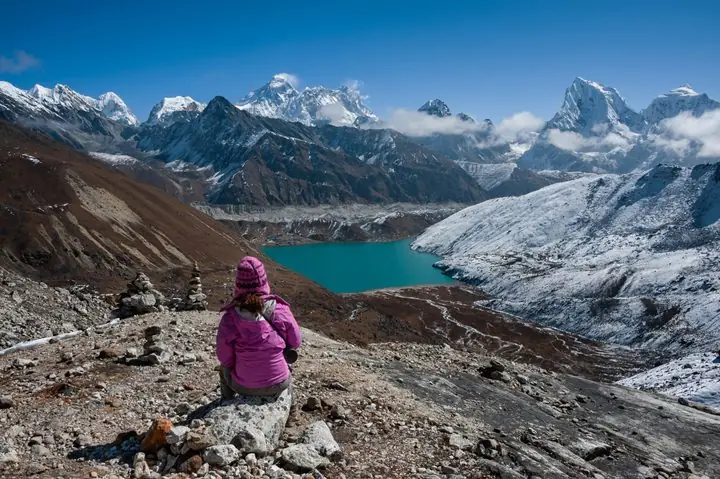
The Three Passes can be walked in either direction. Operators often describe the route as clockwise or anticlockwise, and the choice affects acclimatisation, views and how hard the later days feel. There is no single right answer, but each direction has strengths, and the best plan depends on your fitness, season and schedule.
The usual direction: Renjo La first
The most common plan goes from Namche to Thame, crosses Renjo La to Gokyo, then Cho La to Dzongla and Lobuche, visits Everest Base Camp and finishes with Kongma La to Chhukung. The main advantage is that the easiest pass comes first and the highest one comes last, when you are best acclimatised. Another is that the dramatic view from Renjo La appears early in the trip, and the final days descend along a familiar valley.
The reverse direction: Kongma La first
Going the other way starts with Chhukung and Kongma La, then Lobuche, Everest Base Camp, Cho La, Gokyo and Renjo La, finishing at Thame and Namche. The advantage is that you reach Everest Base Camp earlier and cross Renjo La last, so the quietest and most scenic end of the route is the finale. The cost is a harder early section. You tackle the highest pass sooner, with less acclimatisation, and Cho La is crossed in the opposite direction, which some trekkers find steeper and harder on the knees.
How to decide
- If you want the safest acclimatisation profile, choose the usual direction.
- If you want a quieter finish and are already well acclimatised, consider the reverse.
- If the season is snowy, ask your guide which direction gives easier conditions on Cho La.
Do not fix the direction too early
Good operators keep the final decision flexible, because conditions change. A guide who has just crossed a pass can tell you whether the glacier side of Cho La is icy or whether Kongma La has fresh snow. Ask how the direction is chosen, and make sure the contract allows sensible changes.