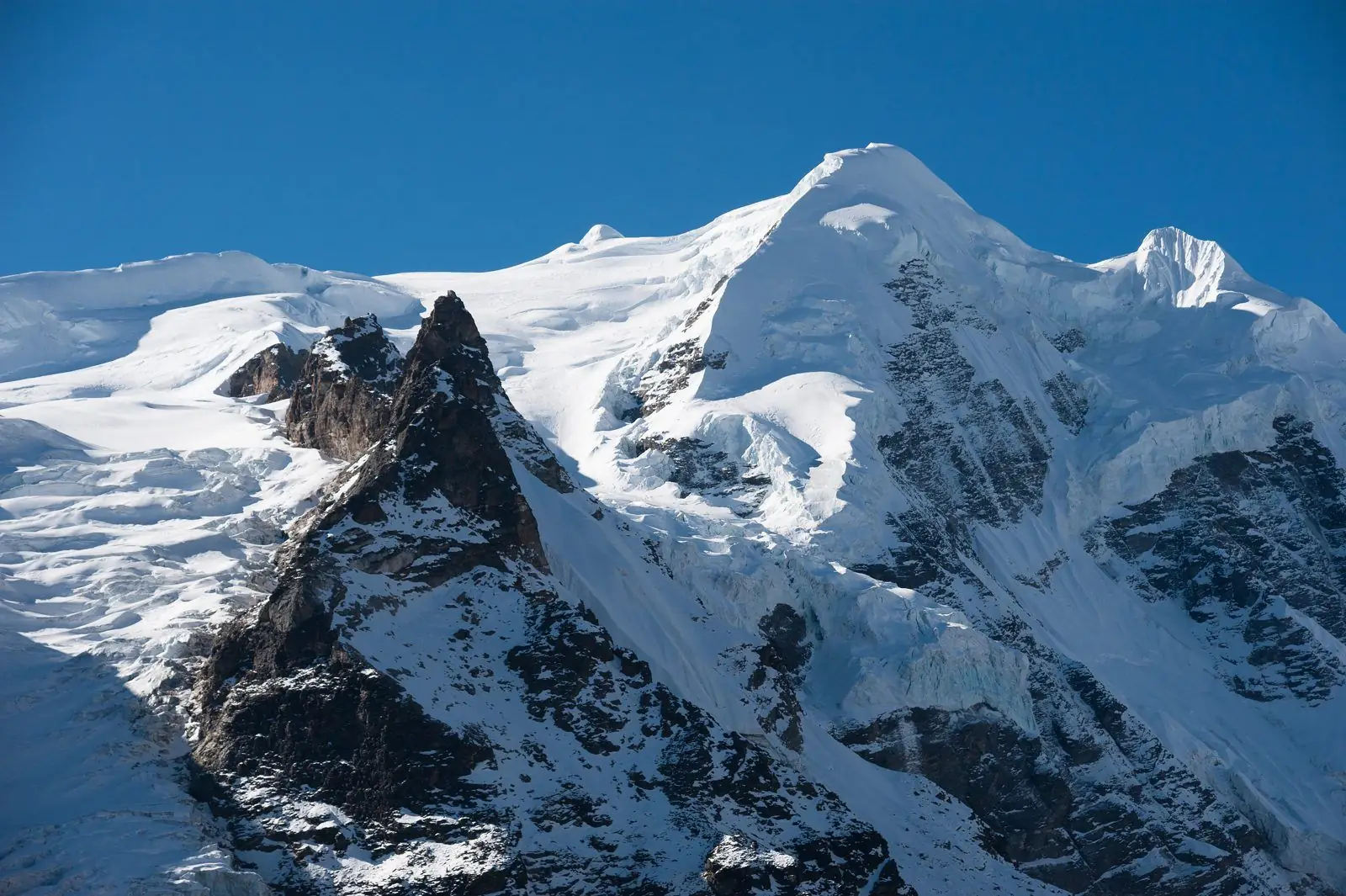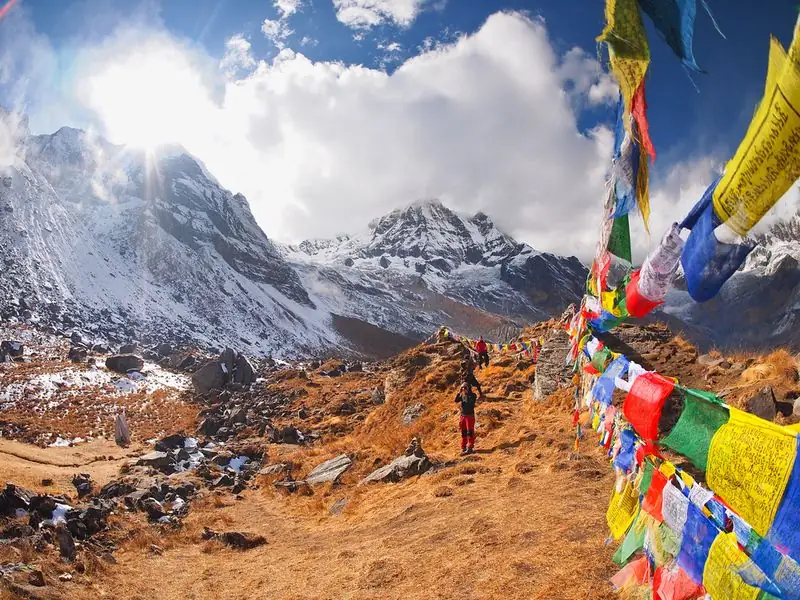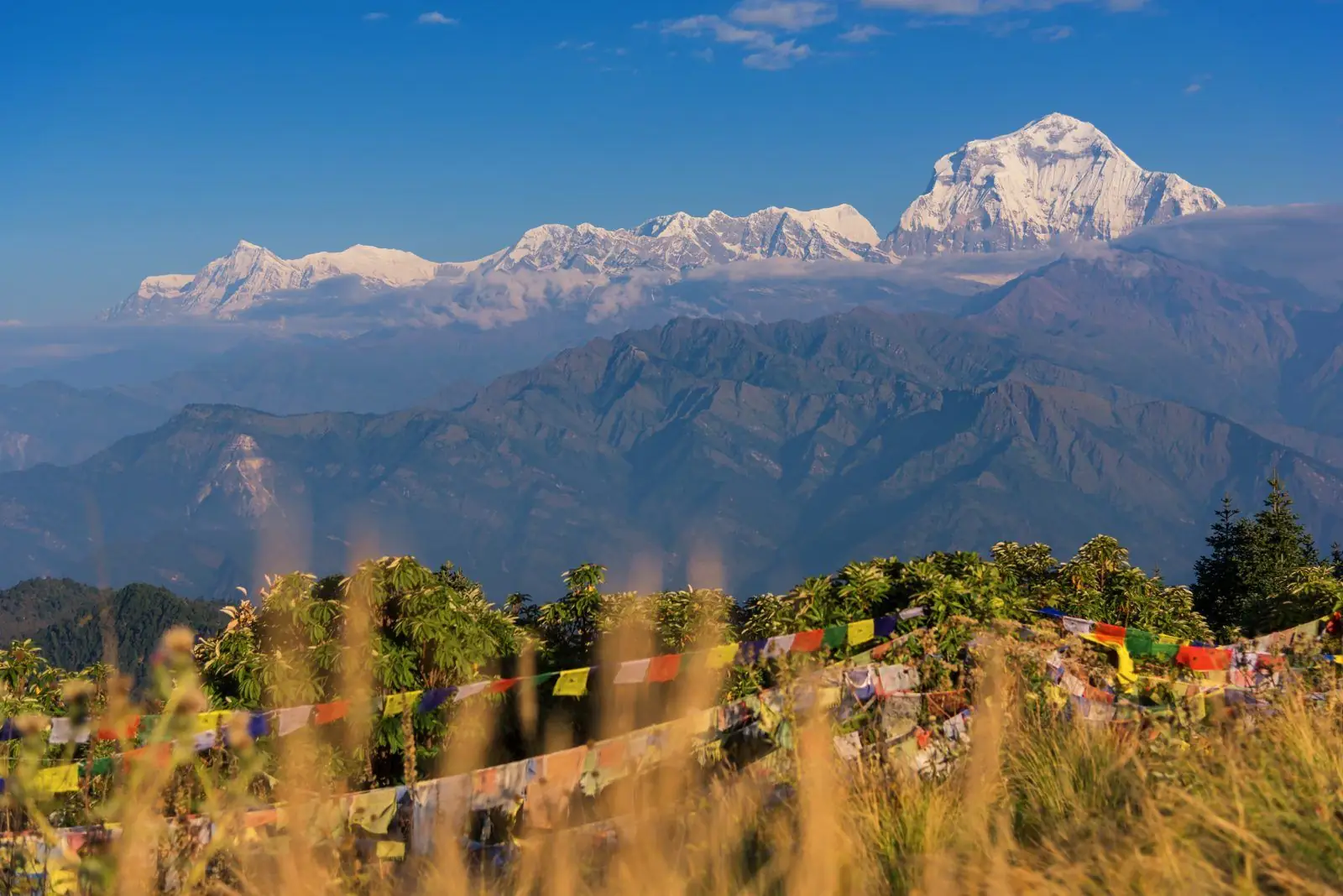
Dhampus Pass is a high crossing at about 5,240 m, the second of two passes above 5,000 m on the Dhaulagiri Circuit. It lies between Hidden Valley and the long descent toward Yak Kharka, Marpha and Jomsom. After it, the hardest altitude of the trek is behind you.
Altitude: about 5,240 m. Heights quoted for villages and camps vary by source, so treat this as a guide.
Where Dhampus Pass is and why trekkers cross it
The Dhampus Pass connects the high plateau of Hidden Valley with the Kali Gandaki side of the mountains. Trekkers cross it because it is the exit from the Dhaulagiri massif circuit, and the only practical way to reach the villages and lodges on the north side.
The peak known as Dhampus Peak or Thapa Peak rises above the pass and is climbed from Hidden Valley or from the Kali Gandaki side, though that is a separate undertaking.
What the crossing is like
The day begins with a climb from camp over rocky, sometimes snowy ground. The gradient is moderate compared with the French Pass, but the height makes every step slower. At the top you are in a wide, windy saddle with big views.
The far side drops steeply at first, then the trail eases toward Yak Kharka, which is about 3,680 m. The descent is long, and knees and toes feel it.
Altitude and how you may feel
At about 5,240 m the air is thin, and you start the day already tired from a night at high camp. Headache, nausea and breathlessness can be present. Walk steadily, drink often and rest briefly rather than stopping for long in the wind.
Altitude illness can strike, and the good news is that descent after the pass helps quickly. If you feel worse on the way up, tell your guide, turn back and go down.
Gear, timing and practical tips
Start early, since afternoon winds and cloud can make the saddle unpleasant. Carry a windproof shell, gloves, sunglasses and plenty of water. Microspikes may be useful if there is snow or ice on the trail.
As the circuit is for experienced and well prepared trekkers, travel with a reputable operator and a guide who knows the route. Allow spare days in the plan so a weather delay does not force a risky choice.
Common questions
How high is Dhampus Pass?
Our trek guides give about 5,240 m. Some sources round it near 5,200 m. It is slightly lower than the French Pass at about 5,360 m, but it is still a serious high altitude crossing.
Is Dhampus Pass easier than French Pass?
Most trekkers find it less technical, with a gentler climb and a clear descent. It still comes after a night at Hidden Valley, so tiredness and altitude make it hard. Weather can change the difficulty a lot.
Where do you go after Dhampus Pass?
You descend a long way toward Yak Kharka, at about 3,680 m, and then continue to Marpha and Jomsom in the Kali Gandaki valley, where lodges, food and transport are available again.