




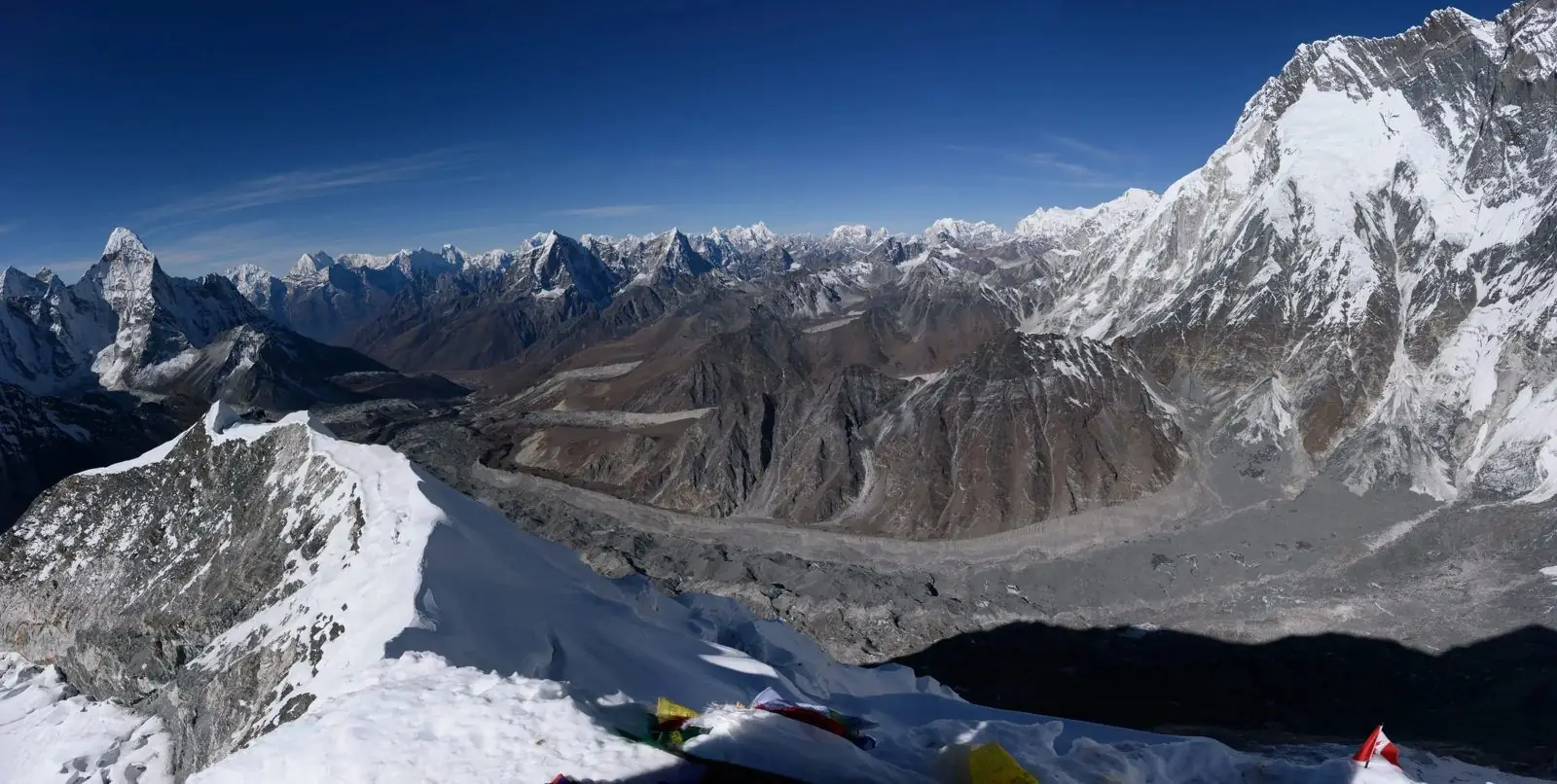
Ghunsa is a Tibetan style village at about 3,595 m on the north Kanchenjunga trek in far east Nepal. It is the main stop before the high section, and our itineraries often use it for a rest day to help your body adapt before the climb toward Khambachen.
Altitude: about 3,595 m. Heights quoted for villages and camps vary by source, so treat this as a guide.
Where Ghunsa is and why trekkers stop
Ghunsa stands in the Ghunsa valley, west of Kanchenjunga, and the north route passes through it on the way to Khambachen, Lhonak and Pangpema. Trekkers stop here because it is the last sizeable village before the high camps, which makes it a good place to rest and regroup. Several guides mention a rest day here, with the sleeping altitude rising slowly.
Kanchenjunga needs a restricted area permit and a licensed guide.
What to expect at Ghunsa
Expect a Tibetan style village with wooden houses, prayer flags, yaks and a real sense of being far from the road. Views along the valley include Jannu, which looks like a separate mountain from here and is one of the highlights of the north trek. Nights are cold, so expect frost. A rest day can be spent walking gently, washing clothes, repacking and talking with villagers about life in the valley.
Altitude and how you may feel
At about 3,595 m, Ghunsa is high enough that headache, poor sleep, and reduced appetite are common. A rest day helps, and a short walk higher followed by a night back at the village is a classic way to acclimatise. Drink plenty and avoid alcohol. Altitude illness can strike without warning, so report symptoms at once. If they worsen, descend to a lower village, and do not continue toward Lhonak.
Lodging, food and practical tips
Lodging is in teahouse style guesthouses with simple rooms, shared toilets and a dining room that is the warmest place. Food is mostly dal bhat, noodles, potatoes and soup, and supplies get more limited as you go higher. Carry cash in Nepali rupees, because there are no machines beyond Taplejung. Bring a warm sleeping layer, hat, gloves and a headlamp. Charging and hot water may cost extra, so plan to carry a power bank.
Common questions
How high is Ghunsa?
Our guides give Ghunsa at about 3,595 m. It is the main stop before the high section, and the sleeping altitude rises slowly from here toward Khambachen at about 4,050 m.
Why do trekkers rest at Ghunsa?
It is the last major village before the higher camps, and a rest day gives your body time to adapt. Resting here also leaves flexibility if the weather turns.
Can I see Jannu from Ghunsa?
Yes. Our guides note that trekkers on the north route can see Jannu clearly from the Ghunsa valley and nearby camps. Visibility depends on cloud and season.


