




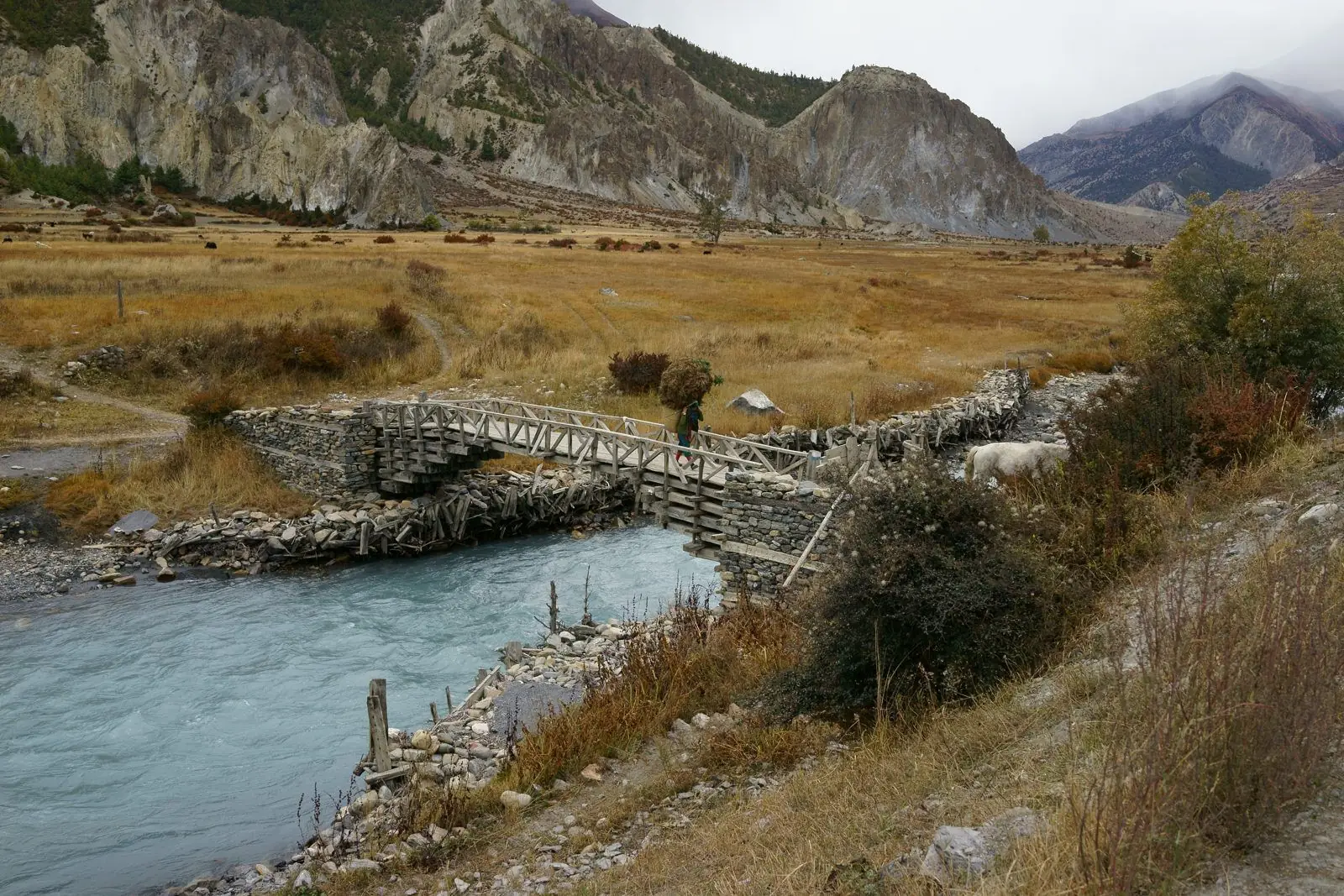
Upper Dolpo is one of the most remote and culturally intact regions in Nepal. It lies north of the Dhaulagiri range, on the Tibetan plateau side, and is a restricted area that needs a special permit and a registered agency.
One of the last remote corners of the Himalaya
Upper Dolpo is a high, dry plateau tucked behind the Dhaulagiri range, close to the border with Tibet. It was closed to outsiders for decades and opened to trekkers in 1989 under a restricted-area system that remains in place. The landscape is bare, wide and golden, with villages at more than 4,000 m, yak caravans, prayer flags and monasteries. It is the setting for the famous travel book The Snow Leopard, and for the film Caravan.
Culture
The people of Upper Dolpo follow a blend of Tibetan Buddhism and the older Bon religion. Their lives are shaped by trade, in which yak and goat caravans carry salt and grain between Tibet and the middle hills. Houses are flat-roofed, made of mud and stone, and the villages are surrounded by barley fields in the short summer. Mani walls and chortens line the trails.
Shey Gompa and Crystal Mountain
Shey Gompa, the main monastic site, is called the Crystal Mountain monastery. Local tradition dates it to the eleventh century. A huge crystal-bearing mountain rises above it, and the surrounding circuit is a pilgrim walk. The monastery sits on a barren plateau at around 4,500 m and feels remote from the rest of the world.
The route
The standard trek starts from Juphal, climbs to Shey Phoksundo Lake, crosses the Kang La pass at about 5,151 m, visits Shey Gompa and Saldang, crosses the Jeng La pass and returns through Dho Tarap and the Tarap valley. The whole trek takes about 21 days.
Why it is demanding
The route is very remote, passes are high, and there are no hospitals. It suits experienced trekkers who accept camping, simple food and variable weather.
Plan it
Read the itinerary and the permit guide.
A restricted Tibetan-style region
Upper Dolpo lies behind the Dhaulagiri range, with high passes above 5,000 m and villages that keep Bon and Buddhist traditions. Access is by flight to Juphal or Jumla, and the area requires a special permit through a licensed agency.


