




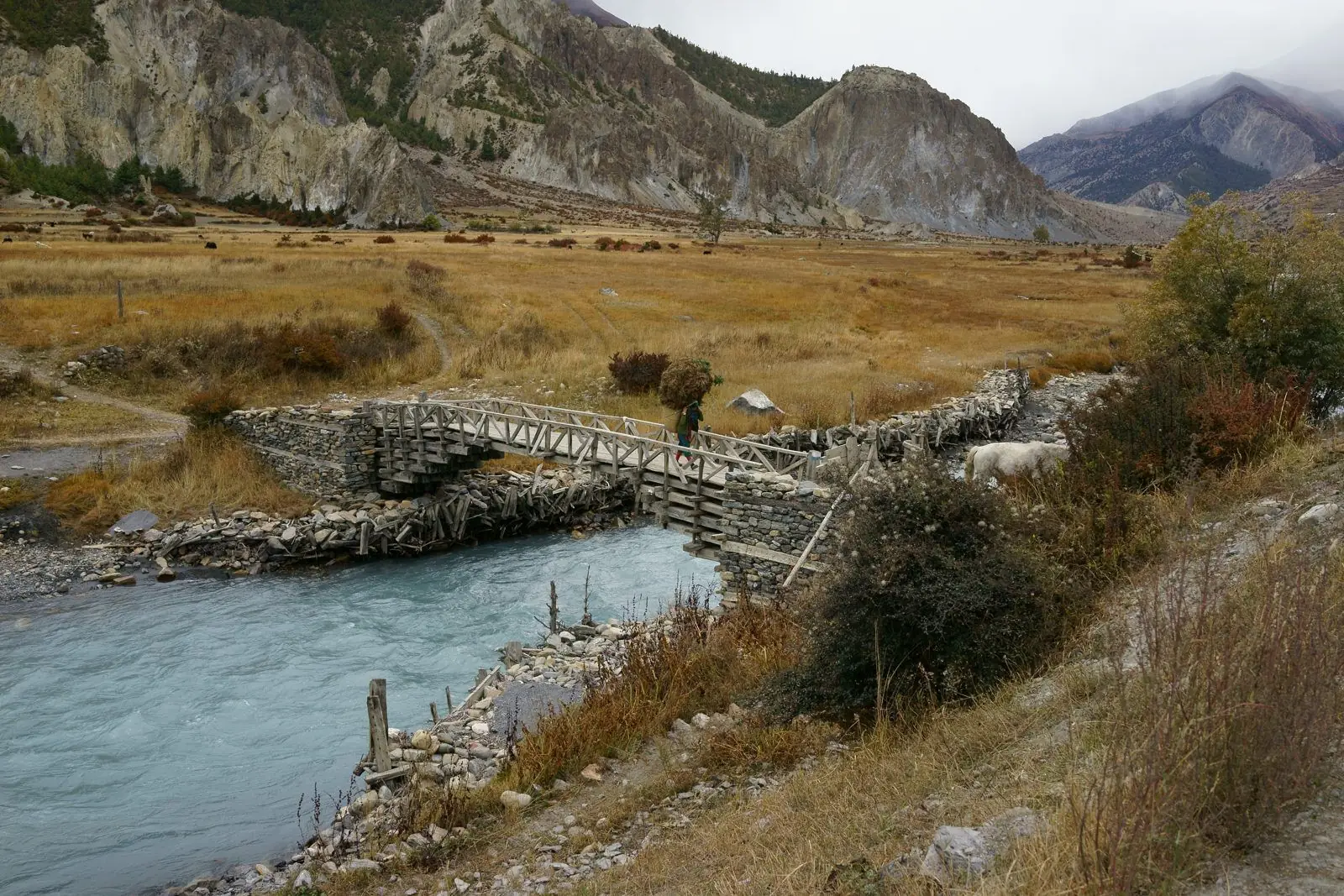
Upper Dolpo is a camping trek. Lodges are rare above Phoksundo, so you sleep in tents, eat hot meals cooked by your own cook, and rely on a crew with pack animals to carry food, fuel and gear for the whole route. Villages have very little to sell, and there is almost no signal. This page explains what that means day to day.
Why this is a camping trek
Above Phoksundo there are almost no lodges, and the villages are small, so the crew carries your camp with you. Each afternoon they pitch sleeping tents, a dining tent and a toilet tent, usually near water on flat ground.
Near the start, around Dunai and Phoksundo, a simple lodge room may be available, but this changes by season and cannot be assumed. Plan on tent life, bring a warm sleeping bag, and expect cold mornings. We explain the likely mix for your dates before you book. Warm clothes for camp evenings make a large difference to comfort.
What the meals look like
Your cook and kitchen helper prepare fresh meals. Breakfast is usually porridge, eggs, bread or pancakes with tea. Lunch is a hot meal in camp or on the trail, and dinner is often a few simple courses.
- Rice, lentils and vegetables are common
- Soup, noodles, potatoes and pasta add variety
- Eggs are common, while meat is limited
- Tea, coffee and hot water are always available
Fresh vegetables are scarce after the first days, so the crew carries much of the food. Tell us about any allergy, vegetarian or Jain diet in advance, because choice is small once you are on the trail.
Water and staying well
Your crew boils or treats drinking water, and your guide will say where to refill. Avoid untreated stream water, even if it looks clear. A bottle that can take hot water helps on cold nights.
The air is dry and the sun is strong, so drink often. Wash your hands before eating and use hand gel. Carry oral rehydration salts, since stomach upsets are common on remote treks. This is general information, not medical advice, and anyone feeling unwell should tell the guide early, because help is days away. Keep rehydration salts and a small snack supply in your daypack at all times.
How remote it is
Upper Dolpo is among the most remote trekking regions in Nepal. Mobile signal is almost absent, charging is limited and there are no cash machines, so carry the Nepali rupees you need in small notes. Check current rules on Indian currency in Nepal, since they change.
Flights to Juphal depend on weather, so keep your onward travel flexible. The area is restricted, so you need a special permit and a licensed guide through a registered agency, and independent travel is not allowed. Rules change, so confirm before you travel. Tell family to expect gaps in contact of many days at a time.
Who carries the supplies
The crew does the heavy work. Porters, and often mules, horses or yaks, carry tents, kitchen gear, stoves, fuel and food for the whole trek, and the cook prepares meals in camp. The guide leads and manages safety, and you carry a daypack with water, layers and personal items.
Since villages have little to sell, food is planned for every day, with fresh items added when possible. Pack animals need handlers and feed, which is part of why this trek costs more than lodge treks, and why spare days for weather are wise.
Common questions
Can I stay in lodges on the Upper Dolpo trek?
Only near the start, and not reliably. Above Phoksundo lodges are rare, so plan for camping the whole way. We explain the likely mix for your dates before you book.
Who cooks the food in camp?
Your own cook and kitchen helper prepare fresh meals every day. Tell us about any diet or allergy before the trek, because choice is limited once you are in the high valleys.
Do pack animals really carry everything?
Most of it. Porters and animals carry tents, kitchen gear, fuel and food, while you carry a daypack. Animals depend on weather and passes, so the guide may adjust the plan if conditions change.


