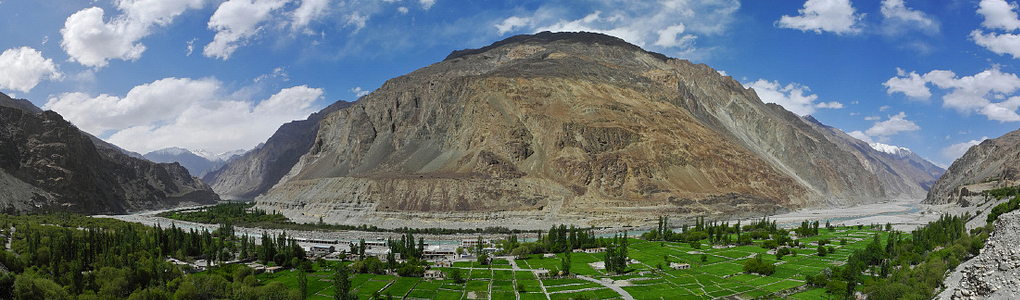
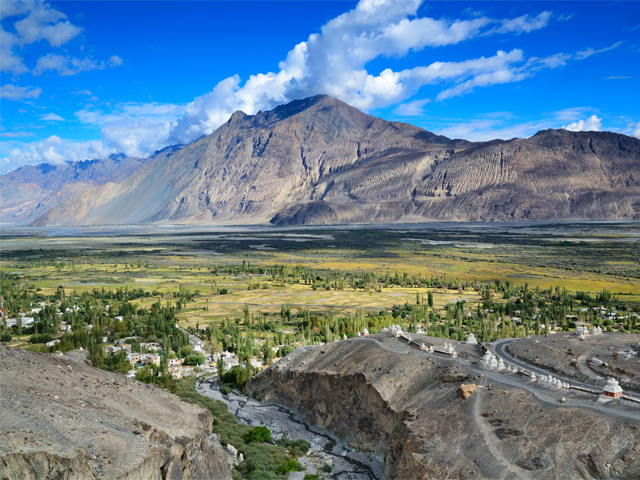
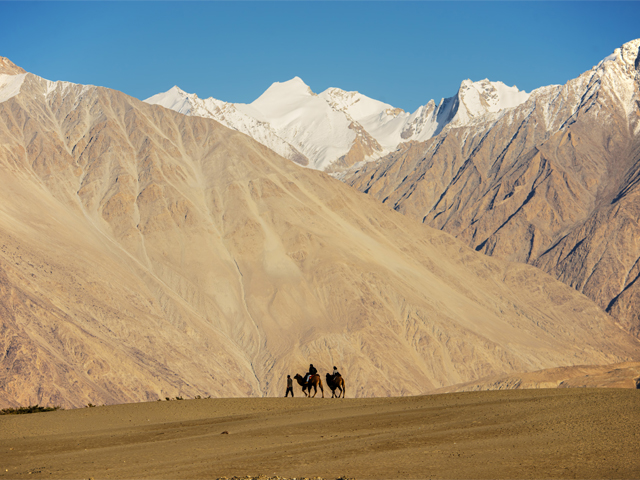
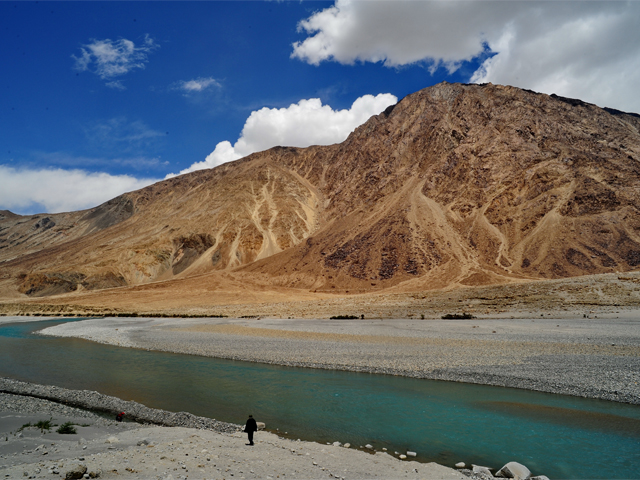
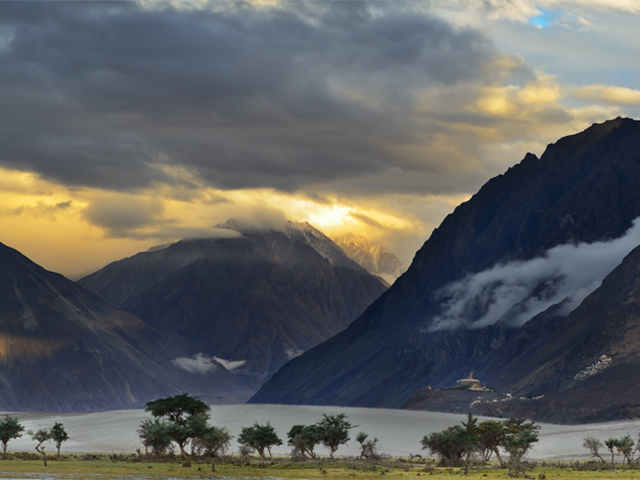
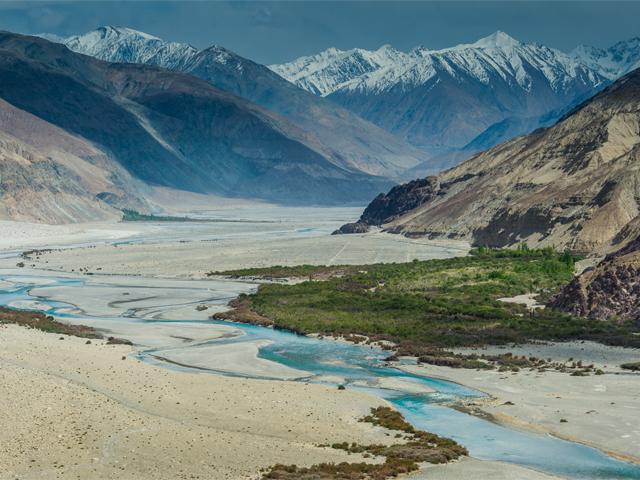
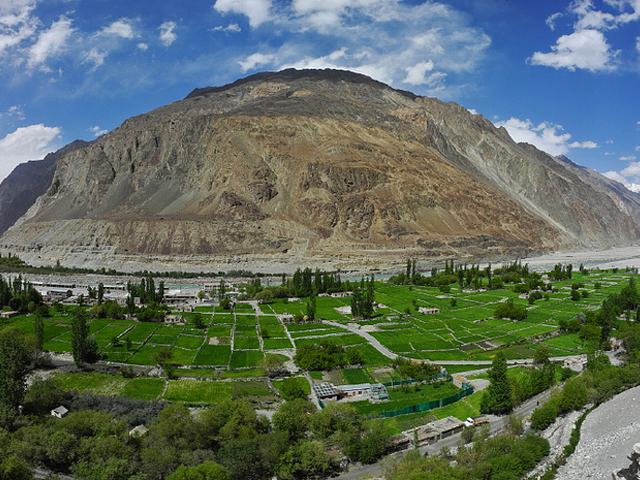
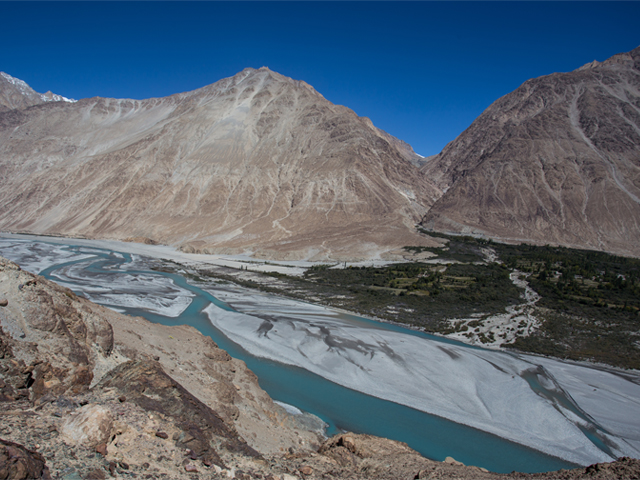
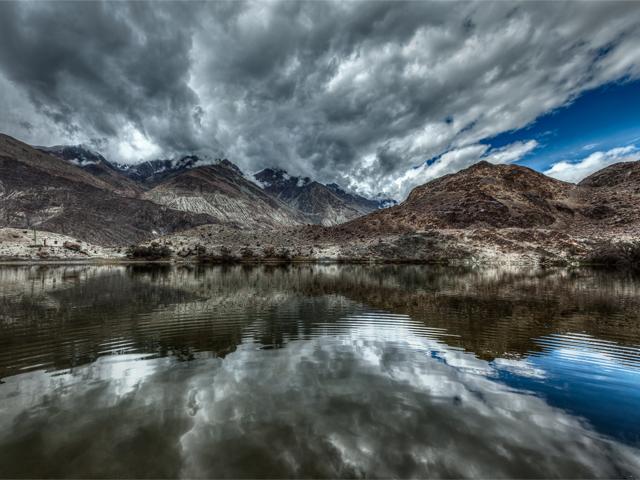
The Nubra Valley opens to the north of Ladakh like a hand with three fingers. The Shyok river comes down from the east, meets the Nubra, also called the Siachen, and together they carve a wide, sandy trough between the Ladakh range and the Karakoram. Locals say the old name was Ldumra, "the valley of flowers", and in late summer you can still see why: wild roses, sea buckthorn and apricot orchards line the villages, while white sand dunes spread across the valley floor near Hunder, where double-humped Bactrian camels graze.
Diskit, the main town, is about 150 km north of Leh, and the valley floor averages some 3,050 m (10,000 ft), so it is noticeably lower and warmer than Leh. Diskit Gompa, with its giant Maitreya statue gazing down the valley, and the nearby village of Hunder are the usual stops, while Panamik has hot springs and Turtuk, on the far northern frontier, is a Balti village that only opened to visitors in recent years.
Most visitors cross the Khardung La, which stays open throughout the year; its title as the highest motorable road in the world is no longer accepted by most authorities, but the 5,300-metre-class pass is dramatic in any case. A second route, opened in 2008, goes over the Wari La from Sakti and rejoins the main Nubra road through Agham and Khalsar along the Shyok. Entry permit rules have been revised more than once, so ask at the Leh district office for the current requirement before you set out, and allow at least two nights in the valley so you are not rushing back over the pass.
Image From Flickr: Axel Drainville