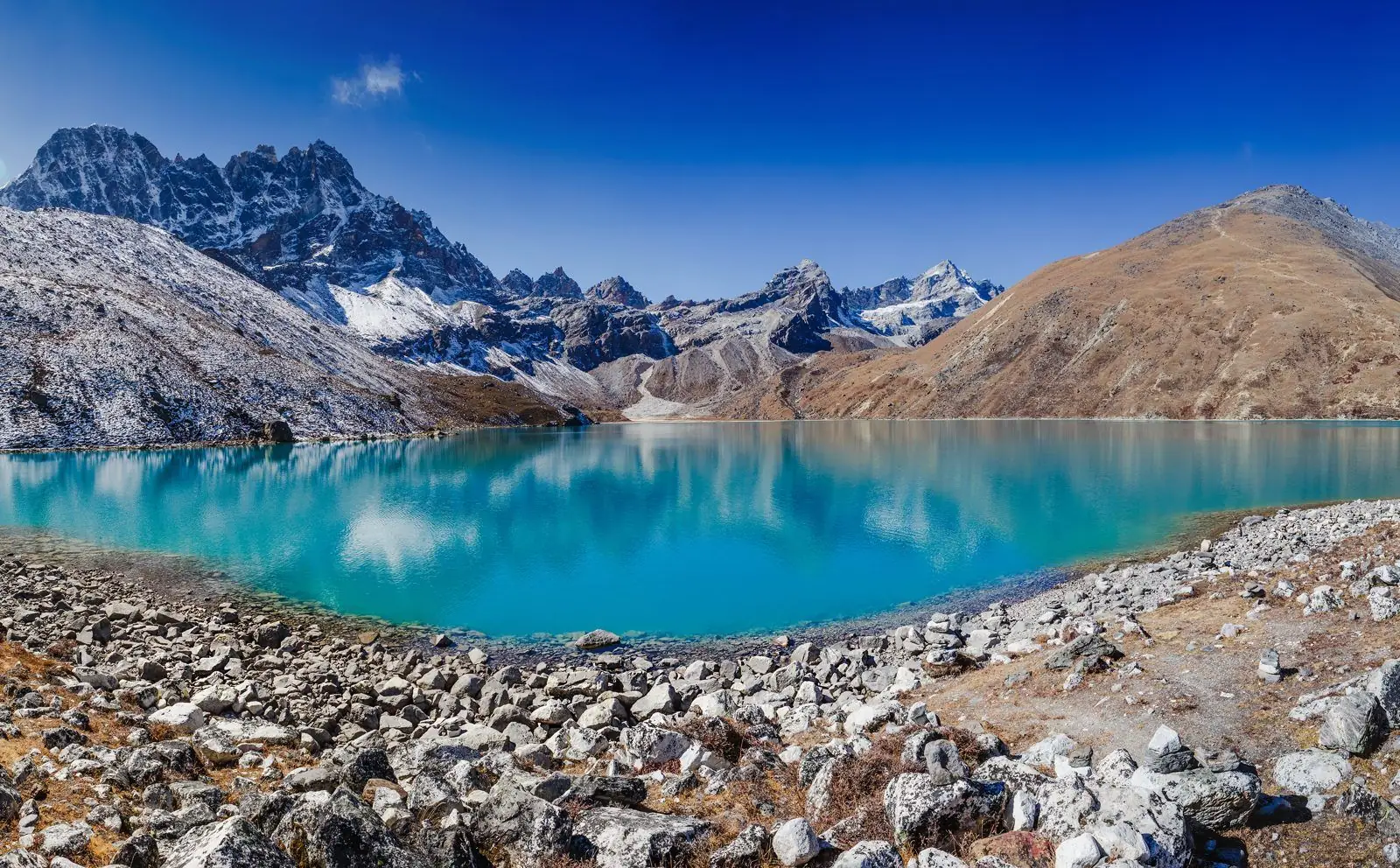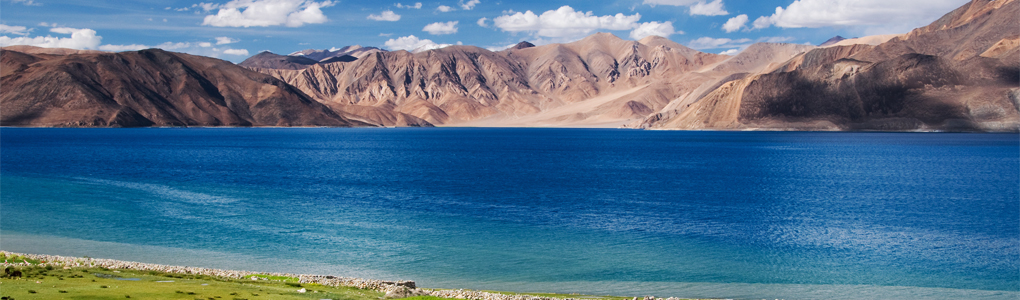
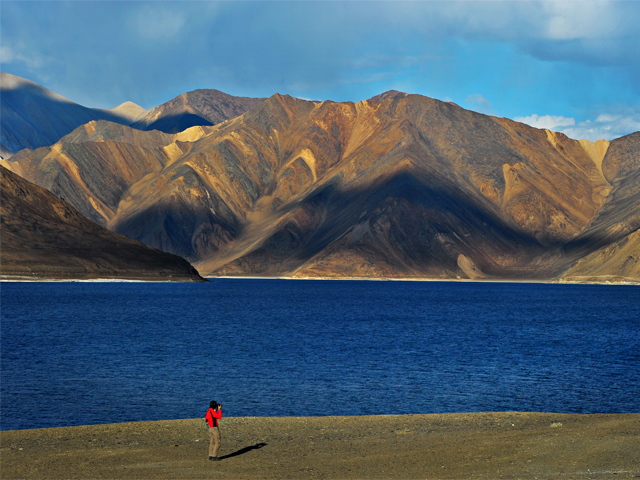
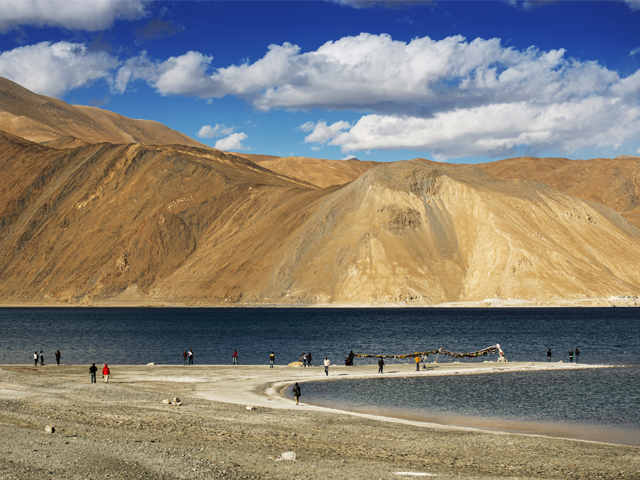
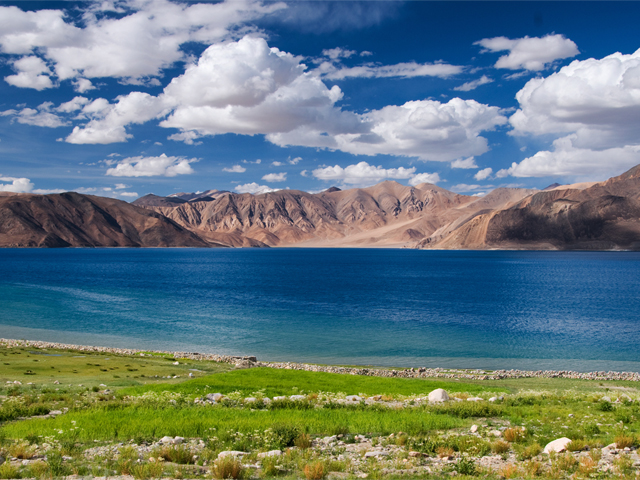
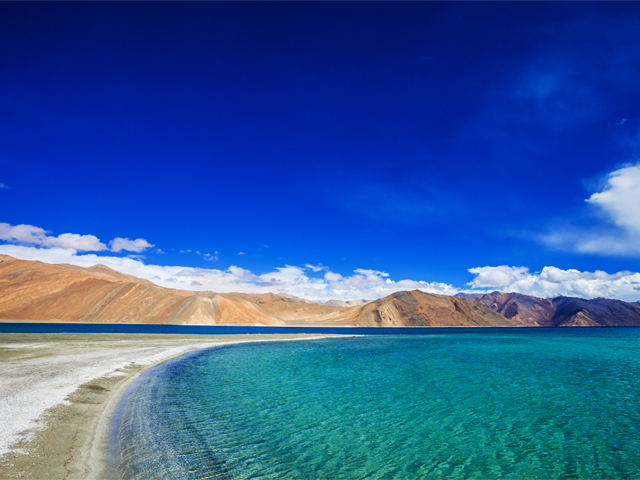
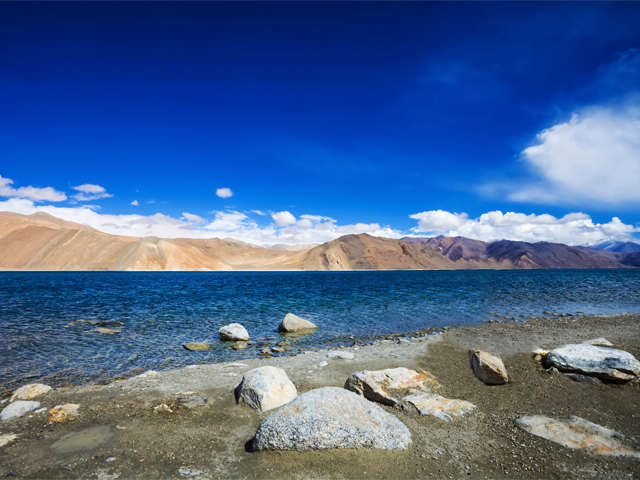
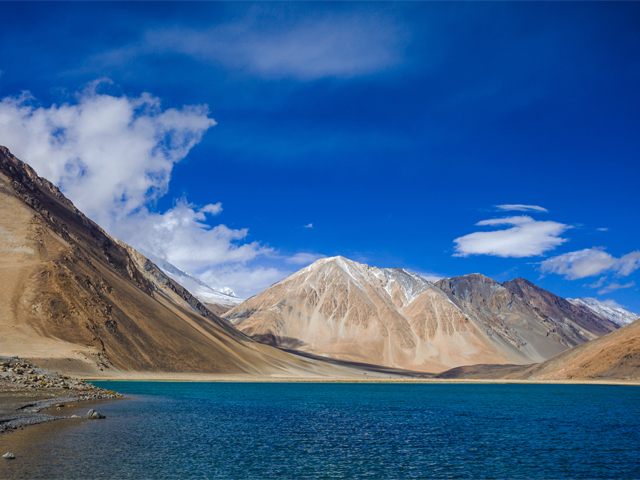
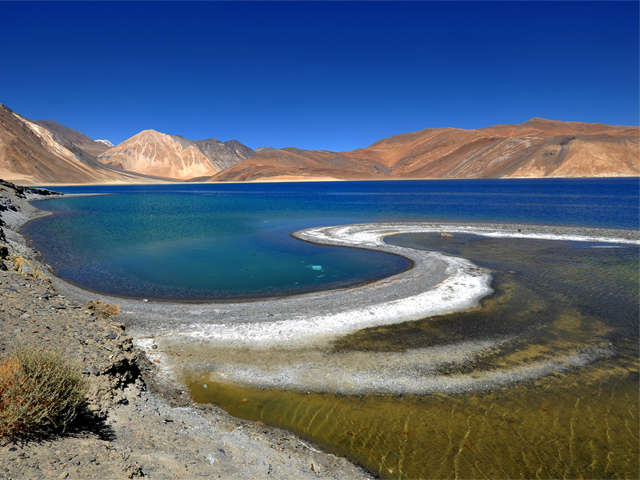
Pangong Tso, meaning "long, narrow, enchanted lake" in Tibetan, is one of the most photographed lakes in the Himalaya. It lies at about 4,350 m (14,270 ft) and extends 134 km from Ladakh in India across the border into Tibet, with around 60 percent of its length on the Tibetan side. At its widest it is only 5 km across, so the effect from the shore is of a long ribbon of colour: blue near the edges, deepening to green and grey as the light changes through the day.
The lake covers about 604 sq km and is a closed basin, not part of the Indus drainage. The water is brackish, yet in winter the surface freezes completely. Guides report that nothing lives in it except tiny crustaceans, so it is bare of fish, but the shores and marshes support breeding birds, including ducks, gulls and, in season, migratory species. Scrub and perennial herbs grow in the wet ground around the edge. The lake is being put forward for protection under the Ramsar Convention as a wetland of international importance, which would make it the first trans-boundary wetland in South Asia to be listed.
Visitors from Leh normally cross the Chang La and spend a night in a camp or guesthouse near the shore, since the drive is long. Access in this border area has been subject to restrictions and permits, which change, so check the current requirements in Leh before travelling. Altitude is the main health concern: spend a few days in Leh first, and avoid exerting yourself on arrival. Evenings are very cold even in summer, so pack warm layers and a good sleeping bag.