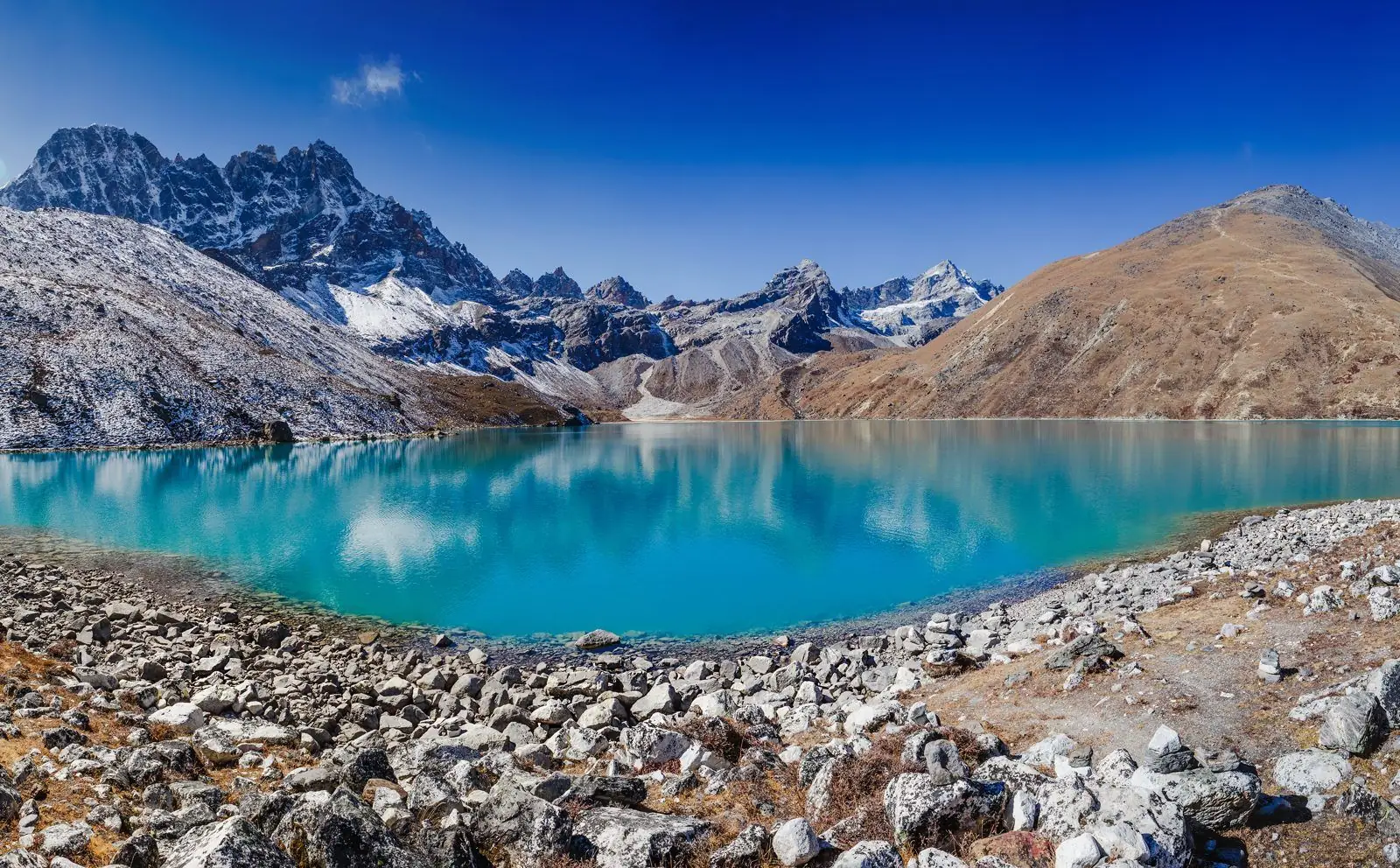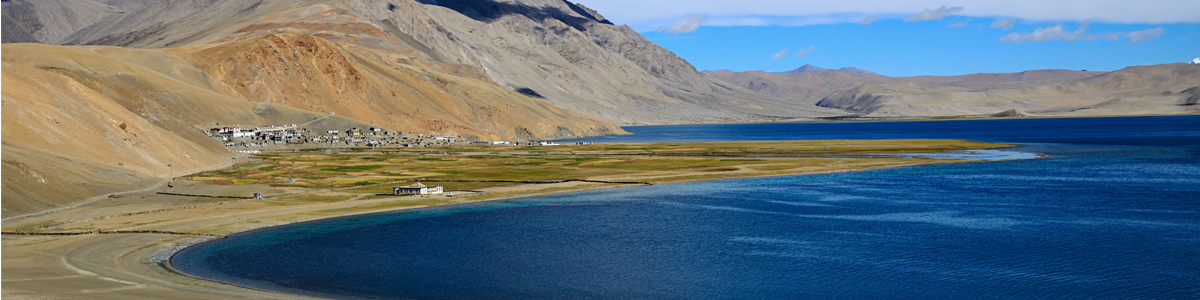
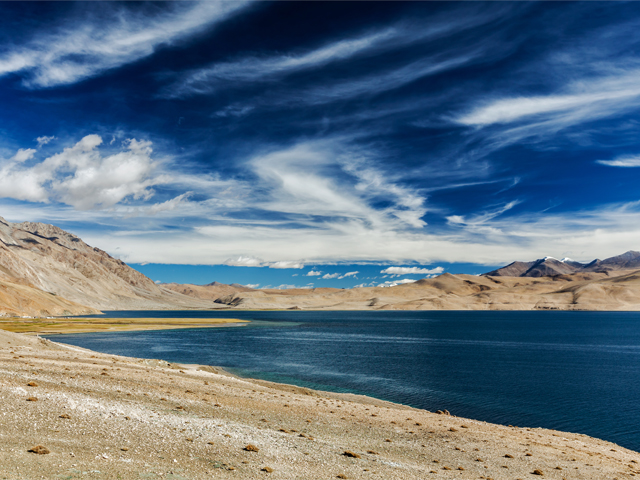
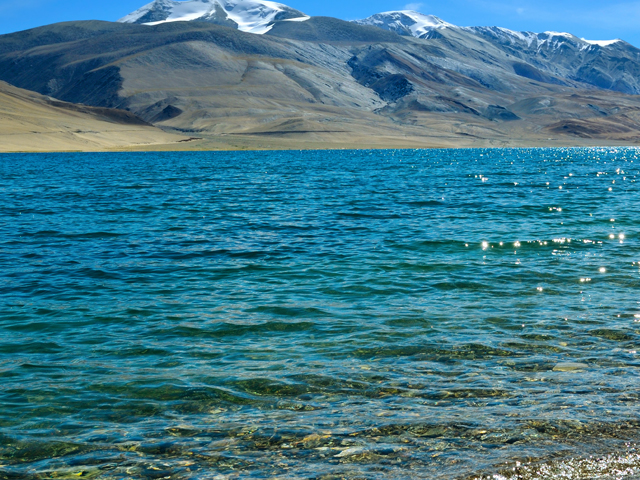
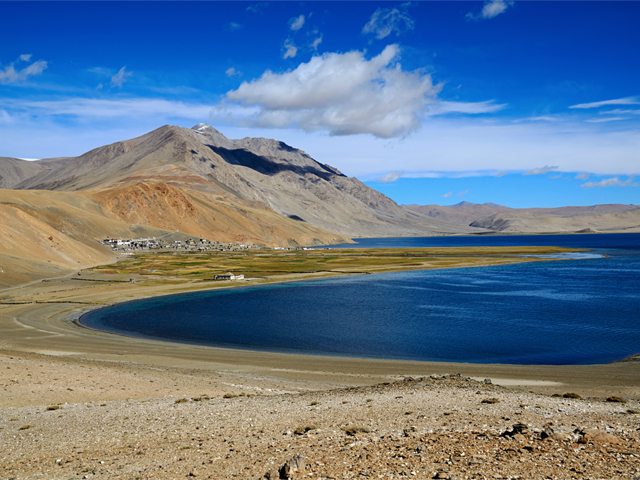
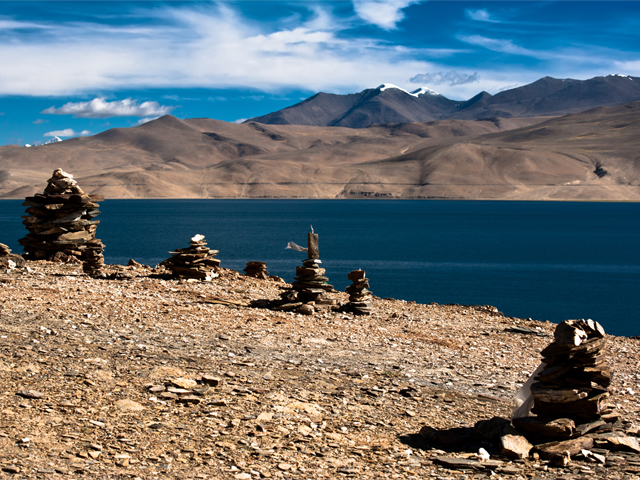
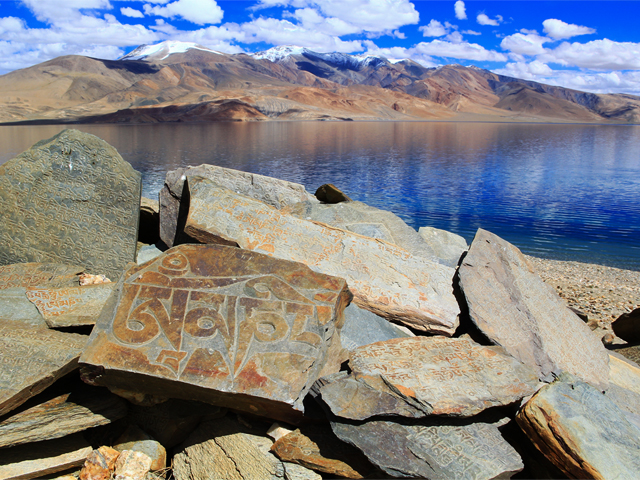
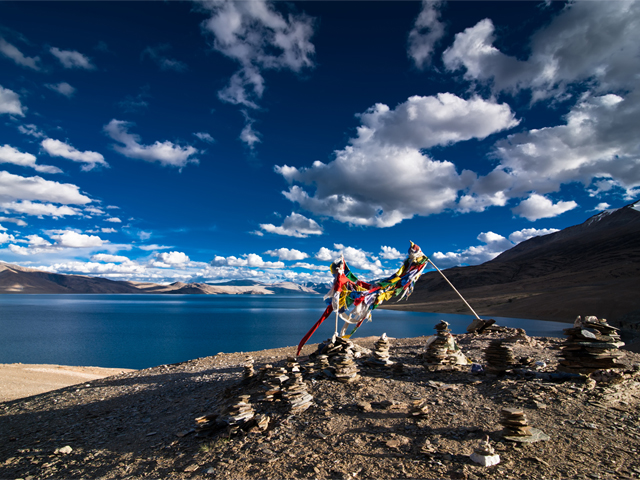
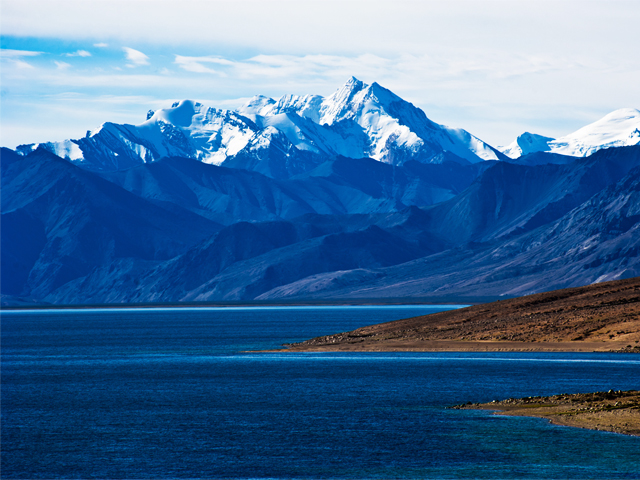
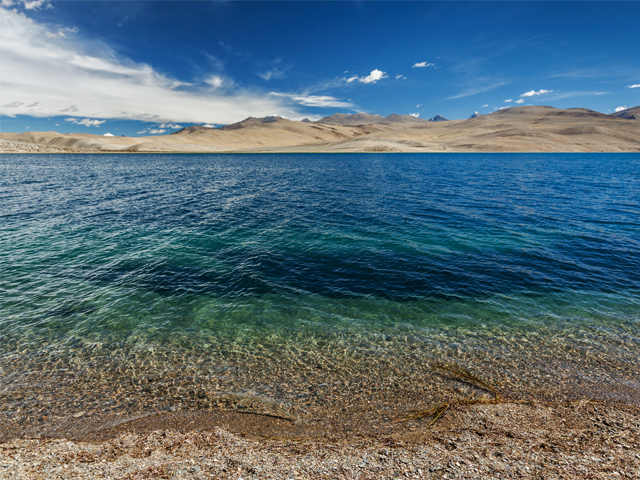
Tso Moriri sits on the Changthang Plateau at 4,522 m (14,836 ft), the largest of the high-altitude lakes that lie entirely inside India. The surrounding protected area is officially the Tso Moriri Wetland Conservation Reserve, and its wide, quiet scenery of dun-coloured hills, pale salt crusts and deep blue water feels a world away from the busier Pangong. A few Changpa nomad families graze pashmina goats and sheep near the shore, and the one village on the lake, Korzok, has a monastery above it.
Two main stream systems, one entering from the north and the other from the south-west, bring melted snow and spring water to the lake, and both spread out into marshes before reaching it. Those marshes are important habitat for birds: bar-headed geese, brown-headed gulls and other species breed here in summer, and the area is a stop for migratory birds. An older outlet to the south has silted up, so Tso Moriri is a closed lake, and its water is alkaline and low in nutrients.
The trip from Leh is long, usually via Chumathang and the hot springs, and many visitors travel on to Tso Kar. Given the altitude, a few days of acclimatisation in Leh are strongly advised, and nights by the lake are cold in every season. Permits are required for non-Indian visitors in some parts of the region, so check current rules. Travel in the shoulder months may be limited by snow on the roads, so the best window is generally mid-summer to early autumn.