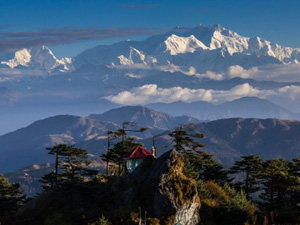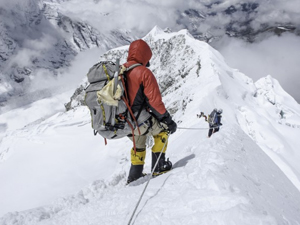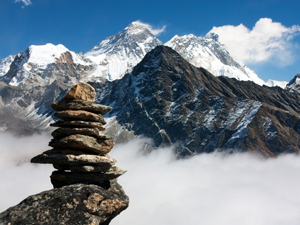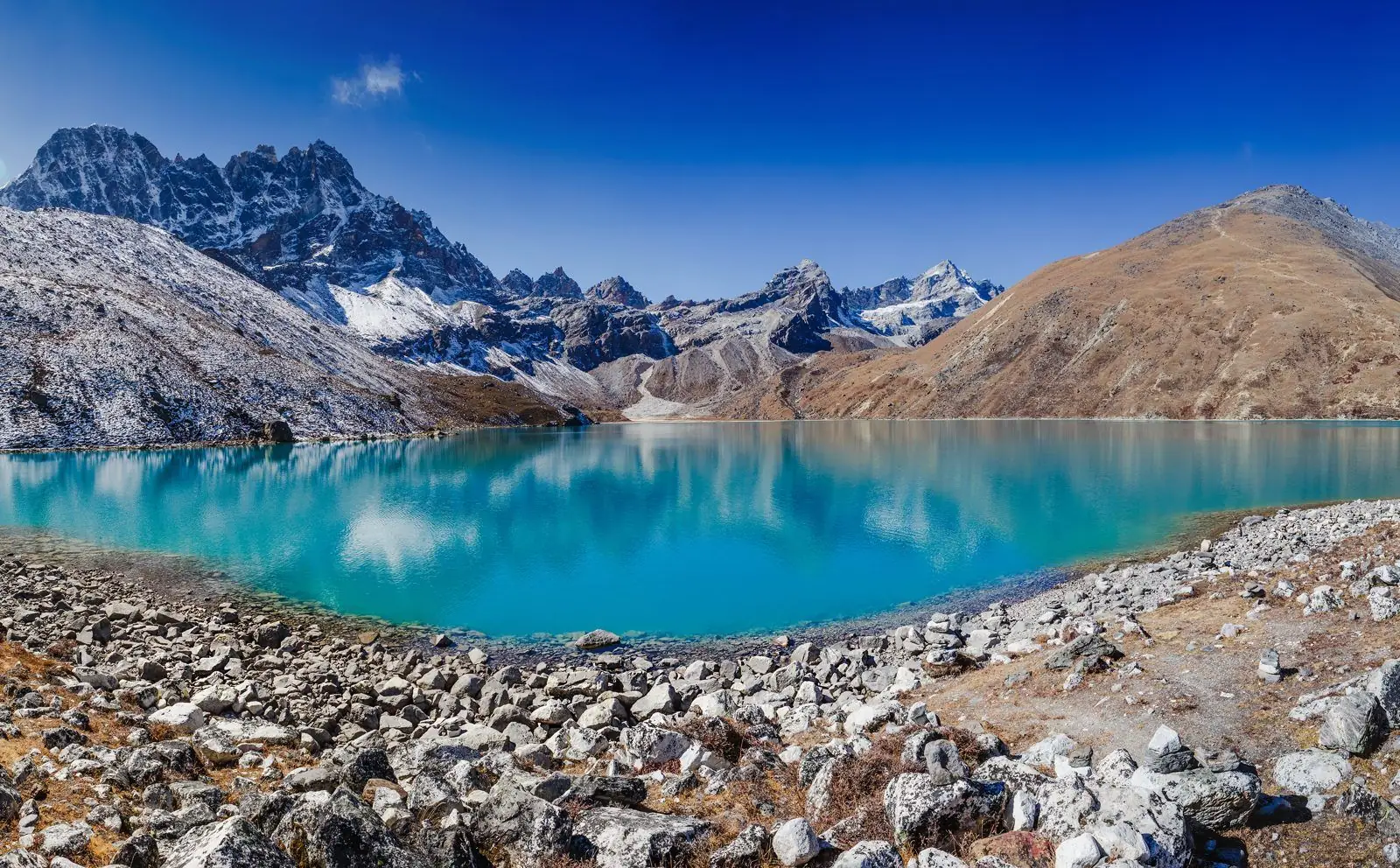
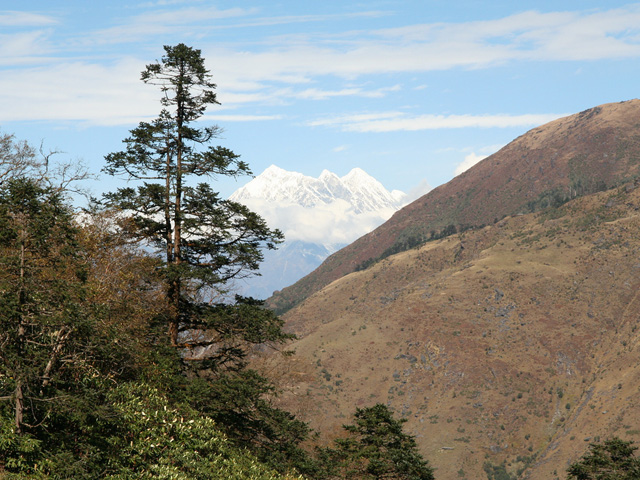
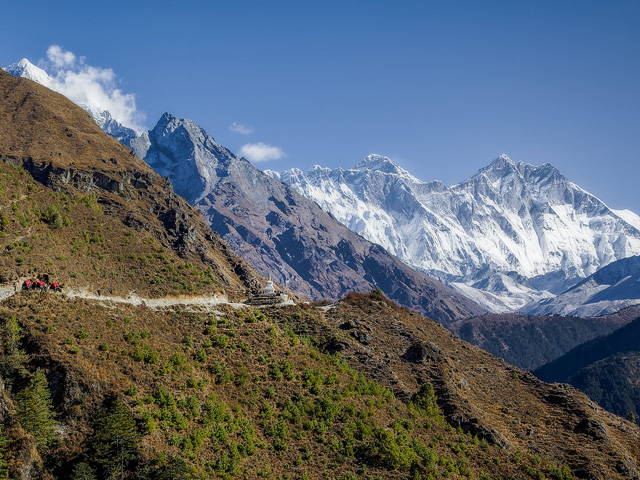
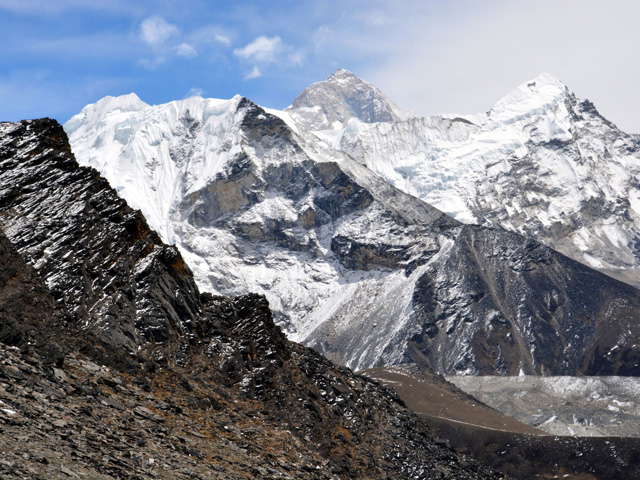
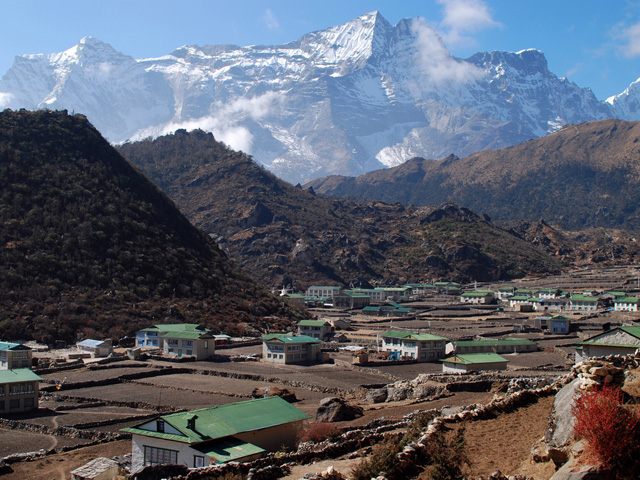
If you are looking for adventure, eastern Nepal is the place to find it. The region is remote and difficult to get in and out of, and it lacks the comfortable amenities common in the more popular trekking areas. If you go, plan well in advance and be prepared for a self-sufficient, camping-style trek. Get ready to be amazed by some of the world's tallest peaks as you hike through ancient villages and see first-hand the cultures of the Sherpas, Rais, Walungs and Limbus. The trekker has two primary options: the base camp of Makalu (8,463 m), the fifth highest mountain in the world, or that of Kangchenjunga (8,586 m), the third tallest.
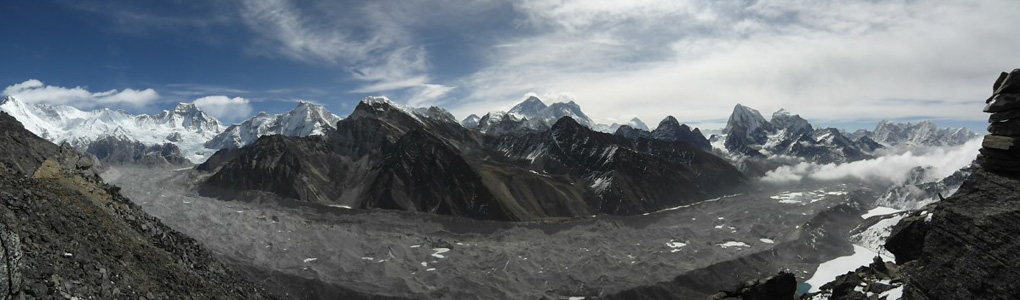
Makalu was first climbed in 1955 by a French expedition. The 18-day route to Makalu Base Camp starts at the tiny airstrip at Tumlingtar, where it is possible to find decent rooms and make phone calls from the Hotel Arun before setting out. It is a camping trek that starts just under 500 m at Tumlingtar and reaches 5,000 m at the base camp. The wide range of elevation makes it challenging, as you need to be prepared for hot weather in the lowland valleys and much colder conditions above. The actual base camp is much like that of Everest, in that it is strewn out on the Barun Glacier. The base camp and the view of Makalu are often referred to as the throne of the gods, and other peaks visible include Chamlang (7,319 m), Jaljale Himal, Lhotse Shar, Everest, Lhotse and Hongku Chuli.
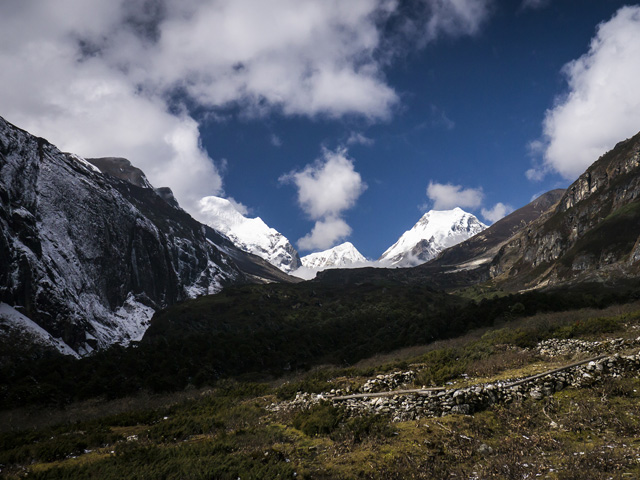
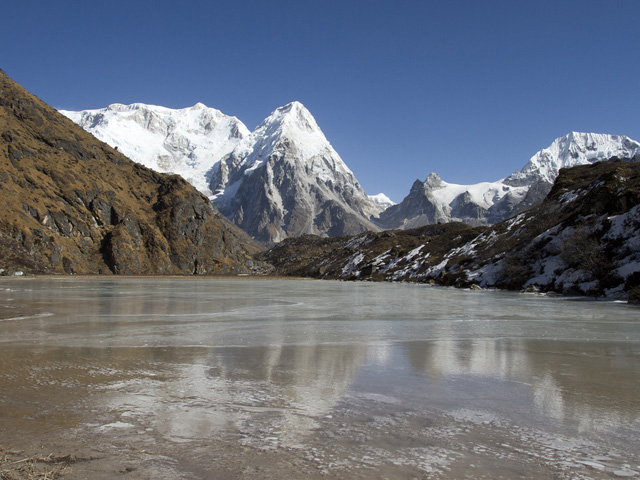
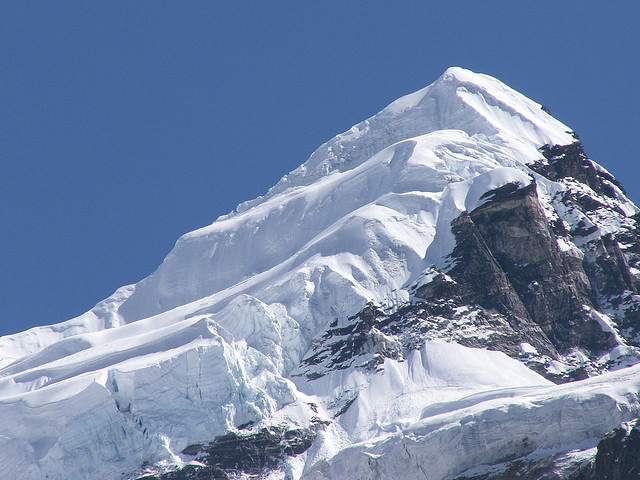
Kangchenjunga, at 8,586 m, is the third highest peak in the world, behind only Everest and K2. It was first climbed in 1955 by a British expedition. The mountain straddles the border of India and Nepal, making a complete circuit impossible, but for the most adventurous a four-week trek combining the North and South base camps is possible. The trek to the North Base Camp, Pang Pema (5,140 m), brings you to the north face of Kangchenjunga. The trek to the South Base Camp is a tough one, with a great deal of climbing up and down a series of ridges. The views on both treks are amazing, and trekkers are rewarded with solitude and a sense of how the Everest region must have felt fifty years ago.
The best seasons are spring (March to May) and autumn (October to November), with clearer skies and stable weather. Permits are required for both the Makalu Barun and Kangchenjunga conservation areas, and in Kangchenjunga a restricted-area permit must be arranged through a registered agency, with a guide, and sometimes a minimum group size. Flights from Kathmandu to Bhadrapur, Tumlingtar or Suketar shorten the journey considerably, but delays are common, so keep spare days.
Image From Flickr: Sebastian Werner, Jeff Ashton, Great Himalaya Trail, Vishnu V, Joachim Meyer, Frank Kehren, Davide Zanchettin, Aris Gionis
Top Treks
Kanchenjunga South Base Camp Trek
A 14-day trek to the south base camp at the foot of the Yalung Glacier. The trail cuts straight across a series of ridges, which means a huge amount of cumulative climbing and descending. It is a tough route, rewarded by close views of Kangchenjunga's southern face.
Kanchenjunga North Base Camp Trek
An arduous 20-day trek starting from Basantpur to the base camp known as Pang Pema (5,140 m). It can be shortened by three or four days by flying to Suketar and joining the trail at Chirwa. The route passes through rhododendron forest, Sherpa and Limbu villages and the Kangchenjunga Conservation Area.
Kanchenjunga North and South Loop
A four-week trek that combines both base camps by crossing either the Mirgin La (4,663 m) or the Lapsang La (5,160 m). These passes see very little traffic from other visitors, so trekking parties must be completely self-sufficient and experienced in high-altitude camping.
Makalu Base Camp Trek
An 18-day trek from Tumlingtar to Makalu Base Camp. It is an epic adventure in a little-visited part of Nepal, through amazing terrain to the base of the world's fifth tallest peak. The route climbs through the Arun valley and the Makalu Barun National Park.
Lukla to Tumlingtar Trek
This nine-day trek is used as an alternative approach into the Everest region. It also makes it possible to combine Everest Base Camp and Makalu Base Camp in one long journey, crossing the Salpa Pass area and several river valleys.
Quick Answers about Eastern Nepal
What is the best time to visit Eastern Nepal?
March to October.
Which cities and towns should I know in Eastern Nepal?
Biratnagar, Dharan, Damak.
What are the must-see places in Eastern Nepal?
Namche Bazaar.
Which peaks are found in Eastern Nepal?
Makalu, Lhotse, Chhamlang.