Both treks are among the most famous in the world, but they feel quite different. Annapurna Base Camp is shorter, greener and more intimate, while Everest Base Camp is higher, longer and more dramatic in scale. For a first Himalayan trek, many people choose Annapurna Base Camp and save Everest for later. Others go straight to Everest because of what it represents.
Time and logistics
Annapurna Base Camp takes about 9 to 12 days and starts from Pokhara, with an easy road transfer. Everest Base Camp needs about 12 to 16 days and almost always involves a flight to Lukla, a short mountain runway whose schedule depends on weather. Delays at Lukla are common, so Everest trips need more slack at the start and end.
Altitude and difficulty
ABC reaches about 4,130 m and EBC about 5,364 m, with Kala Patthar above 5,500 m. Higher altitude on Everest means more days to acclimatise and a greater chance of altitude problems. ABC has steeper staircases and humid forest, while Everest has long, steady days on dry paths. Everest is the bigger challenge overall.
Scenery
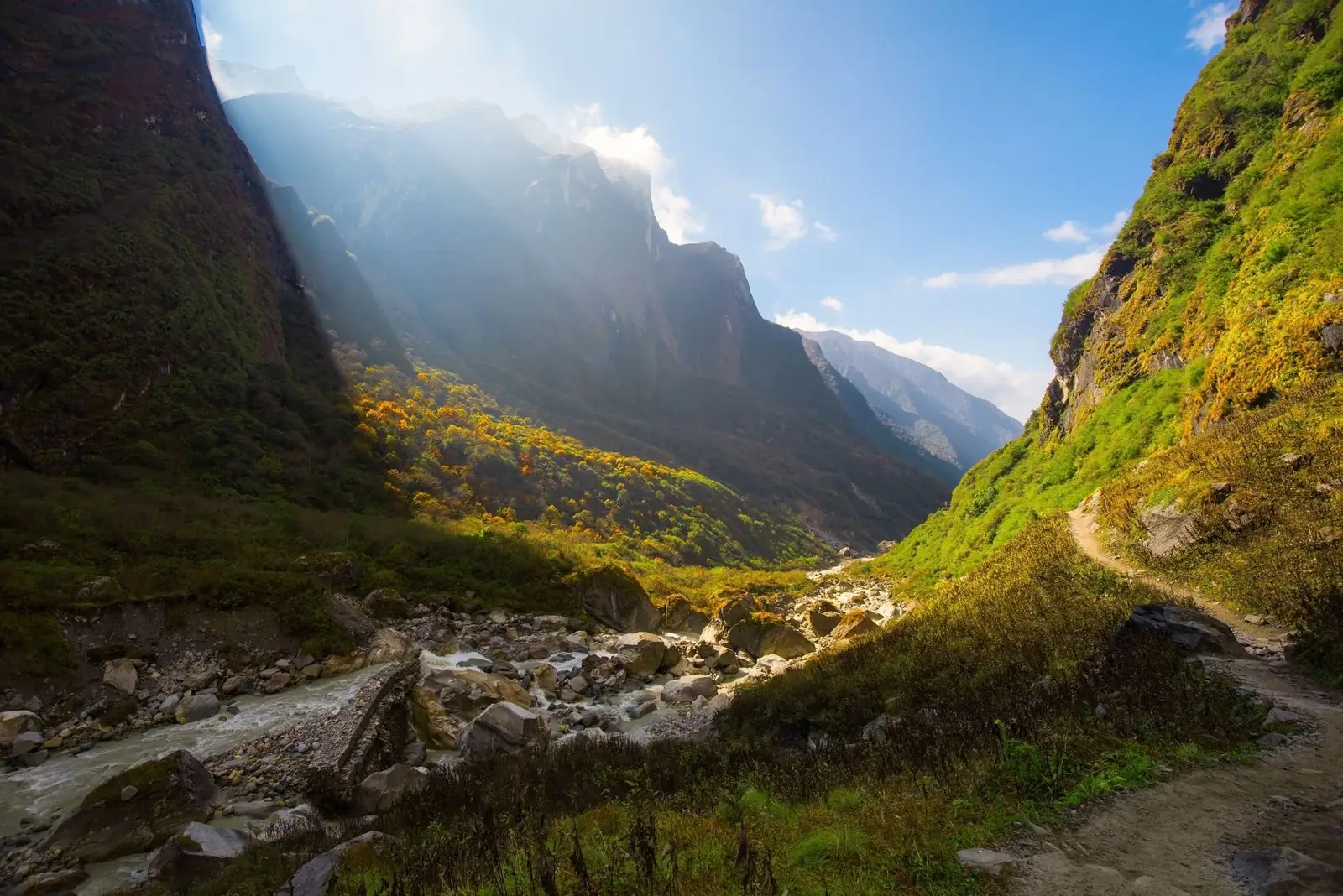
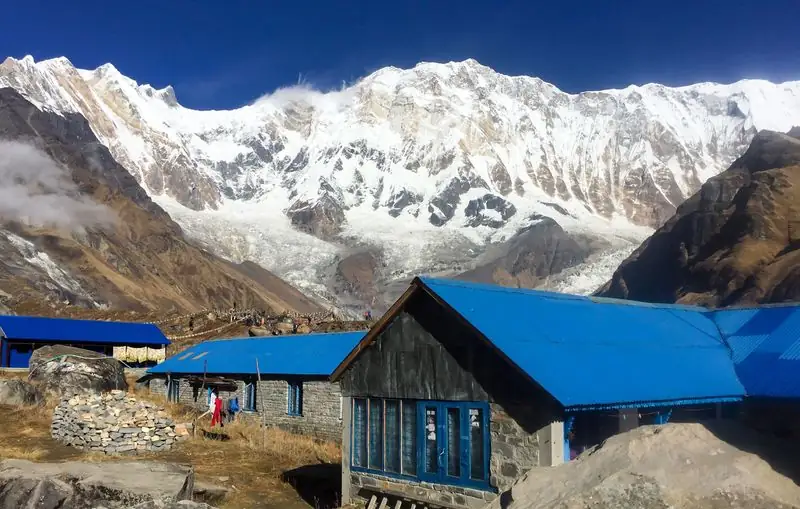
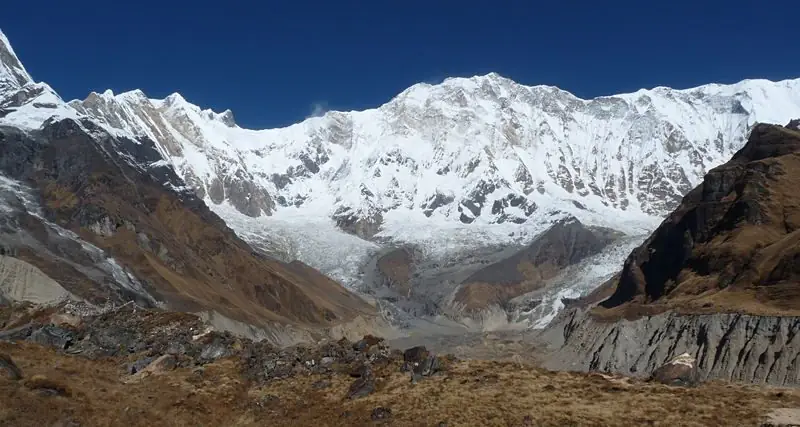
Annapurna is about variety, from terraced hills and rhododendron forest to a glacial amphitheatre with snow walls on every side. Everest is about grand mountain scale, Sherpa villages, monasteries and views of the highest peak on earth. If you want to see Everest itself, you need the Everest region. If you want to be surrounded by mountains, the Sanctuary is hard to beat.
Cost and crowds
- ABC is generally cheaper because of shorter duration and no flight to the trailhead.
- EBC costs more because of flights, longer time and higher lodge prices.
- Both routes are busy in autumn and spring, especially on the shared sections.
Who should choose which
Choose ABC if you have about ten days, want a moderate challenge, enjoy forest and village life and prefer an easier start from Pokhara. Choose EBC if you have two weeks or more, are comfortable with higher altitude and want the iconic Everest landscape. Many keen trekkers do both over successive years.
A third option
If you want a smaller commitment, the Poon Hill trek gives a taste of the Annapurna region in four or five days. If you like Everest but want less altitude, the shorter Everest View trek is a gentle introduction to the Khumbu.
Matching the trek to your life
If you work in a job with limited leave, Annapurna Base Camp fits within ten days including travel. Everest requires two weeks or more. If budget matters, Annapurna costs less. If you have a milestone birthday and want to say you have stood at the foot of Everest, the extra time and money may be worth it. There is no wrong choice, only different priorities.
Risk and weather
Everest has the weather risk of flights to Lukla and higher altitude. Annapurna has the risk of snow and avalanche in some seasons, and rain in the monsoon. Both have well-organised rescue systems, and both need insurance that covers helicopter evacuation. Neither is dangerous when planned well.
What people remember
Trekkers often remember Annapurna for its villages, forests and the sense of arriving in a hidden sanctuary. They remember Everest for the culture of the Sherpa valleys and the sheer scale of the mountains. Many say they would do both, and the order matters less than going at all.