For most Annapurna treks, the best months are March to May and late September to November, when the skies are generally clear and the trails are dry. The region is large, though, and different routes behave differently in different seasons, so it helps to look at each one separately.
Annapurna Base Camp and Poon Hill
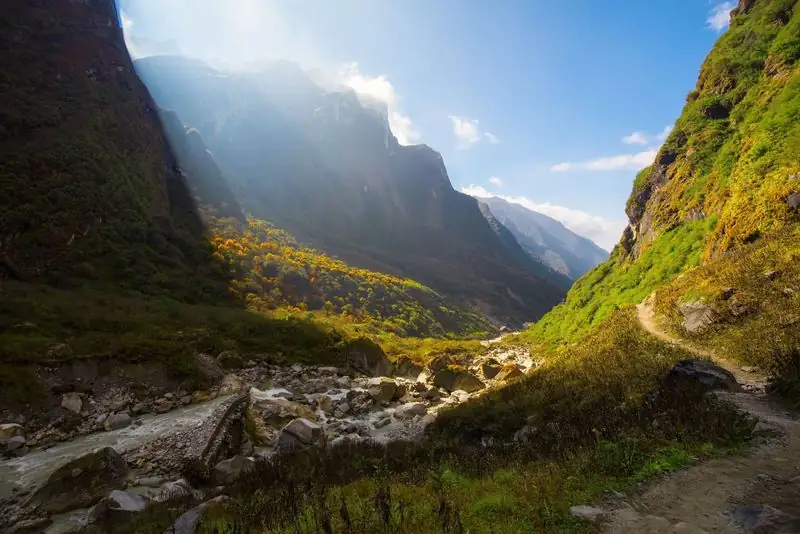
These routes climb through the wet southern slopes, where forests, rivers and steep stone stairs mean rain matters. Autumn is the most settled and gives the clearest mountain views. Spring is warm, with rhododendrons in flower on the lower trails, usually around March and April, though haze can soften the distant views. In winter, snow can build up near the sanctuary, and trekkers are advised to ask about avalanche conditions on the upper sections. The monsoon, from about June to August, brings heavy rain, leeches and cloud.
Annapurna Circuit
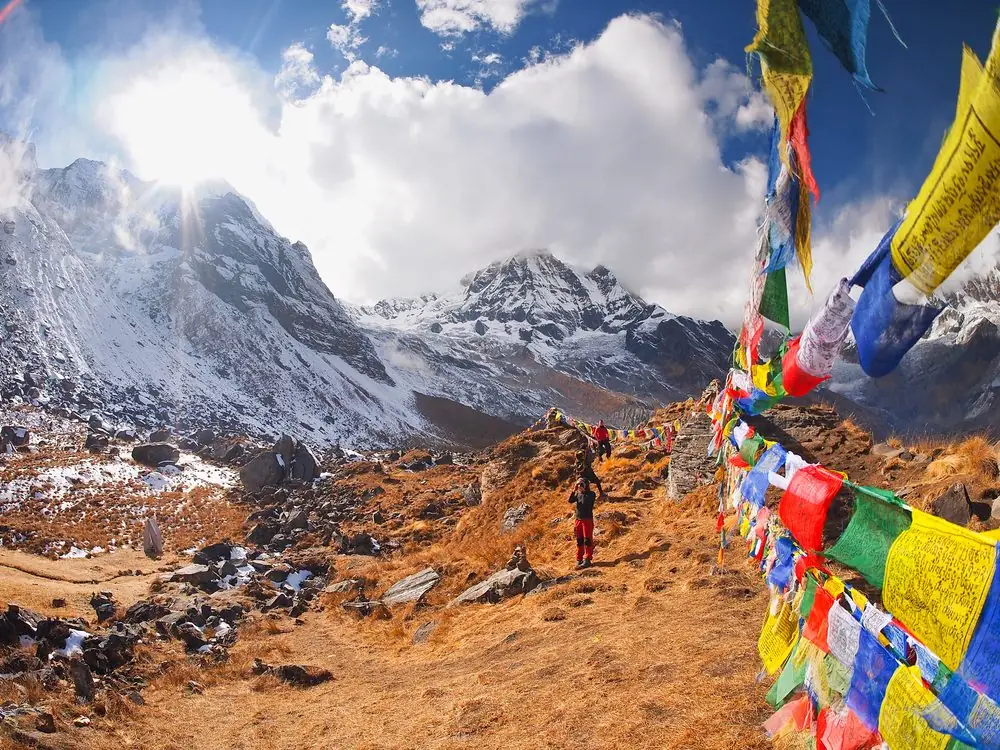
The Circuit crosses the Thorong La pass, so snow and wind decide the calendar. Autumn is the classic season, with stable weather for the crossing. Spring is also good, but late snow can linger on the pass. Winter crossings are possible in some years but carry real risk because heavy snow can close the pass. The upper Manang and Mustang sides of the Circuit sit in a rain shadow, so they are drier than the southern slopes in the monsoon, although the lower sections are still wet.
Month by month in short
- March to May: warm days, flowers, some haze, good for all routes.
- June to August: monsoon, wet and leech-prone on the south side, quieter trails, drier in the upper Manang region.
- September to November: clearest weather, busiest trails, best for the pass.
- December to February: cold and quiet, with snow risk on high sections.
Crowds
October is the busiest month, so book lodging and transport early. March and the end of November are quieter. Because the routes are well served by lodges, finding a bed is rarely a problem except at peak times in popular villages.
Plan flexibly
Mountain weather can change within hours, and landslides after rain can affect the road sections. Allow a few spare days, especially if you want to cross Thorong La, and follow the advice of your guide about conditions on the day.
Seasons by region, not just by month
The Annapurna region spans very different climates, so the same month can feel completely different from one valley to another. The southern side near Pokhara is one of the wettest places in Nepal in summer, while the northern side beyond the main range, around Manang and Mustang, lies in a rain shadow and stays far drier. This is why some people choose a northern route in the monsoon, while others avoid the region altogether in those months. Always ask what the weather pattern is for the exact route you are planning.
Spring colours and autumn clarity
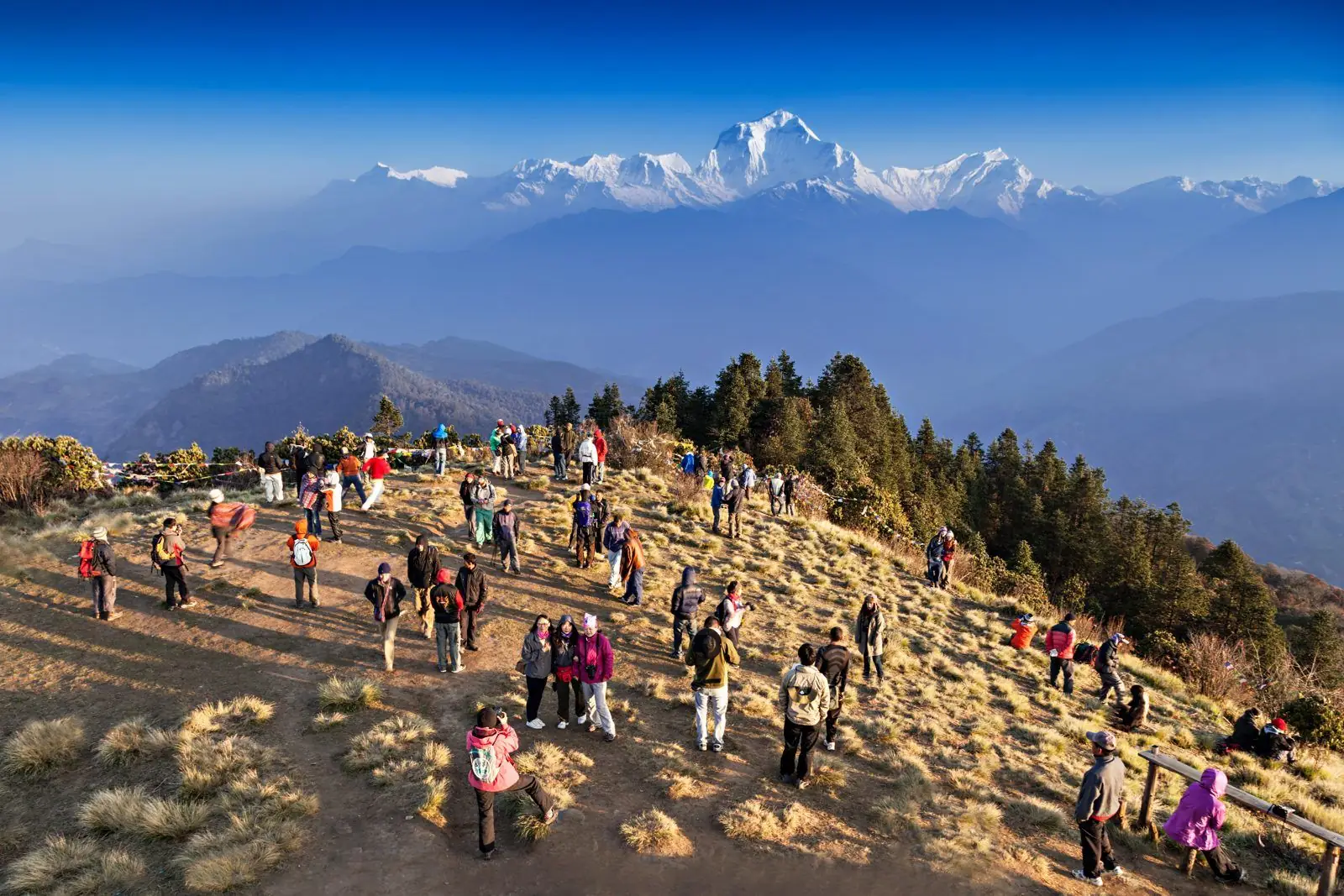
Spring brings warmer days, blooming rhododendrons on the lower slopes and long daylight, though haze can soften distant views in the afternoon. Autumn follows the monsoon and often has the clearest air, with crisp mornings and golden terraces in the villages. Both seasons are busy, especially around Poon Hill and Annapurna Base Camp, so book lodges and flights early and consider starting your trek on a weekday to avoid the heaviest crowds.
Choosing around festivals and holidays
Large Hindu and Buddhist festivals in autumn increase domestic travel, and buses and flights can be full around those dates. If you are travelling from India, keep in mind the school and office holiday periods that fall in October and May to June, when demand also rises. Tell your operator your dates early so that rooms and transport can be reserved.
A simple way to decide
- Want flowers and warmer weather: late March to April.
- Want the sharpest mountain views: October to mid-November.
- Want fewer people and are happy with cold: late November or February at lower altitudes.
- Have to travel in the monsoon: consider the drier northern side and keep plans flexible.
What our guests say
Excerpts from guest reviews of Himalayan Wonders, our parent company, on Tripadvisor.
“They took utmost care of our group of 5 friends from Kathmandu airport upto the completion of the trek”