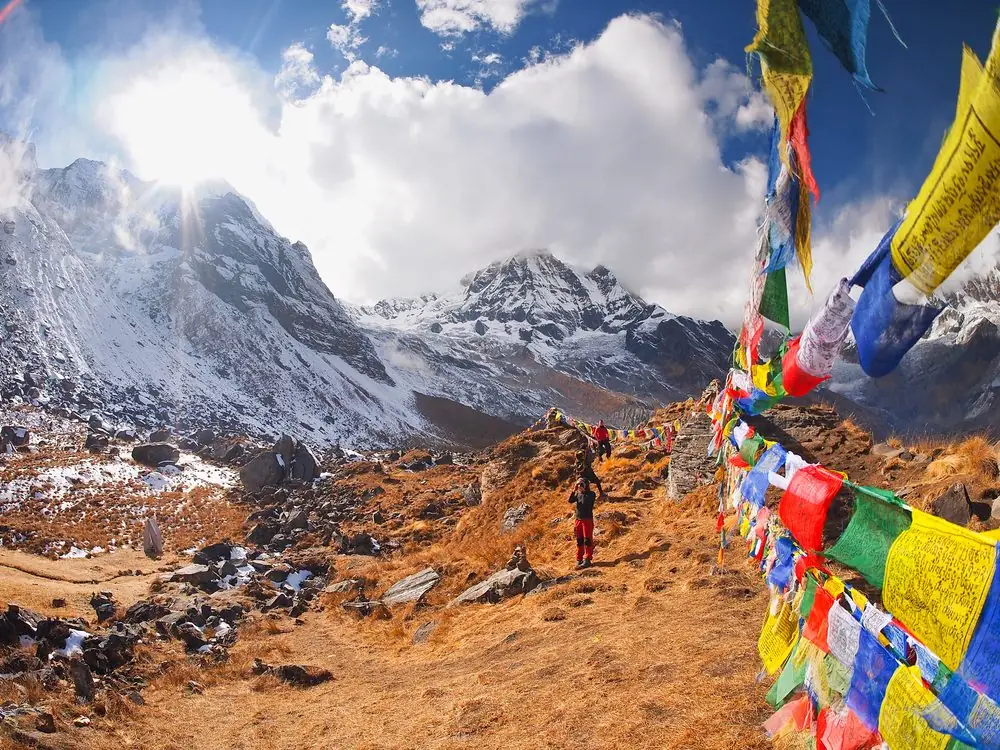
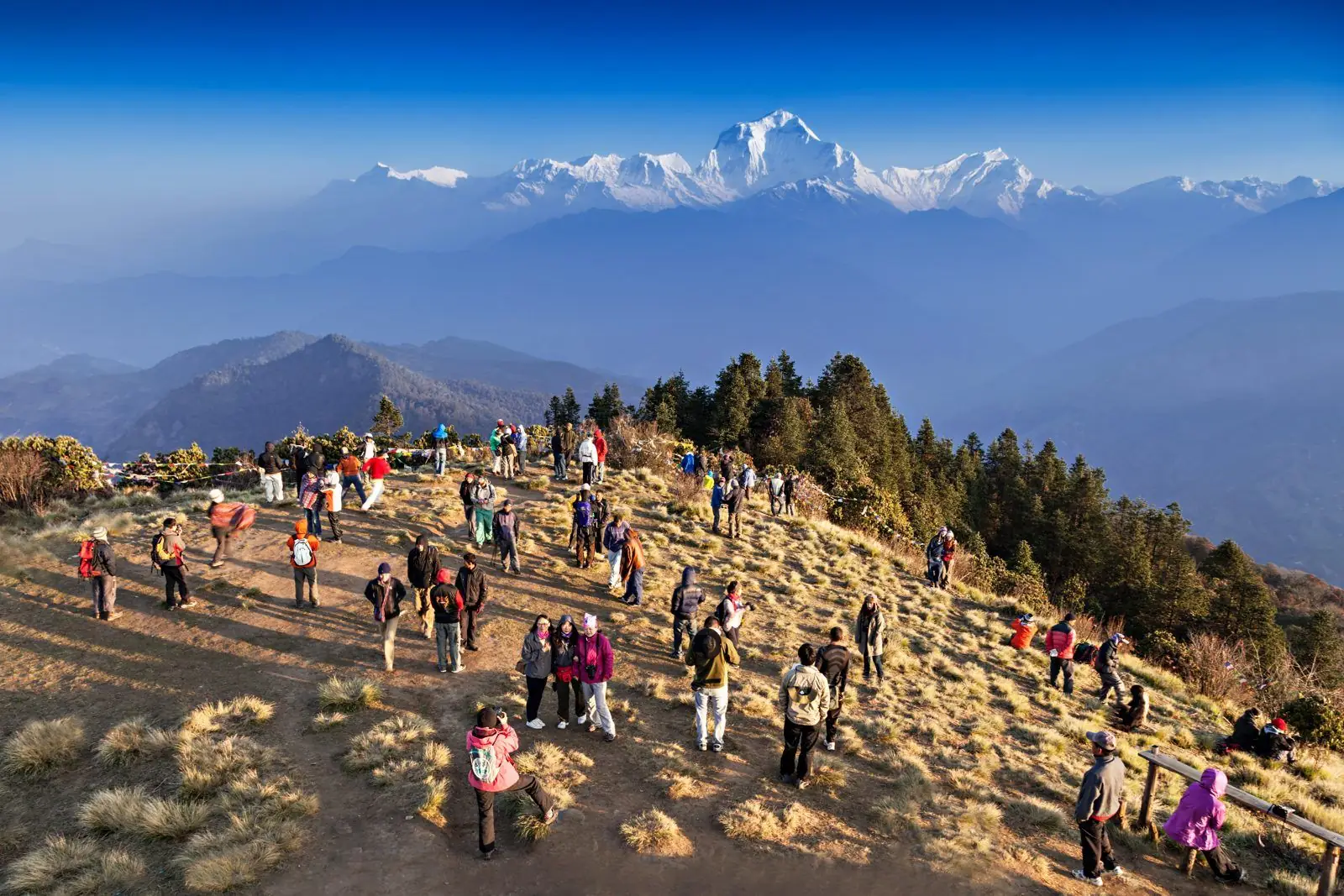
Poon Hill is one of the most popular short treks in Nepal. It reaches a viewpoint at about 3,210 m above the village of Ghorepani, where sunrise lights up a long line of peaks including Dhaulagiri and the Annapurna range. It suits people with limited time, modest fitness or no previous high-altitude trekking.
The usual route
The walk starts near Nayapul, about two hours by road from Pokhara. It climbs steadily through villages and forest, passing Ulleri and its long staircase before reaching Ghorepani. Early the next morning, trekkers climb to the viewpoint in the dark, watch the sunrise, then return for breakfast and continue down by a different route through Ghandruk, a large Gurung village.
How long it takes
The trek takes four to five days including travel from Pokhara. It can be extended by linking with the Annapurna Base Camp trek, which turns it into a longer route of around a week and a half.
Difficulty
The altitude is modest, so altitude sickness is much less likely than on higher treks, though people who are sensitive can still feel it. The challenge is mainly the steep stairs, which are tiring on knees, and the early start for sunrise. A moderate level of fitness is enough.
Best time
- Spring: warm, with rhododendron in flower on the lower slopes.
- Autumn: the clearest skies for sunrise views.
- Winter: cold at Ghorepani with possible snow, but quiet and clear.
- Monsoon: wet, with limited views and leeches on the forest trails.
Permits and rules
The Poon Hill to Annapurna Base Camp route is among those listed by the Nepal Tourism Board as requiring a licensed guide and an agency-issued TIMS card. You also need the Annapurna Conservation Area entry permit. Ask your registered agency to confirm what applies to your exact route.
Who it suits
Poon Hill is ideal for first-time trekkers, families with older children and anyone wanting a Himalayan view without a long commitment. It also works well as a warm-up before a bigger trek.
Why people love it
Poon Hill offers a large reward for a modest effort. The climb to the viewpoint is made before dawn, usually by headlamp, and the wait for sunrise on a cold ridge is part of the experience. As the light grows, the long wall of Dhaulagiri and Annapurna peaks turns from grey to pink and gold, and the valley below slowly appears. For many people this single morning is the highlight of their Nepal trip.
Villages and landscapes on the way
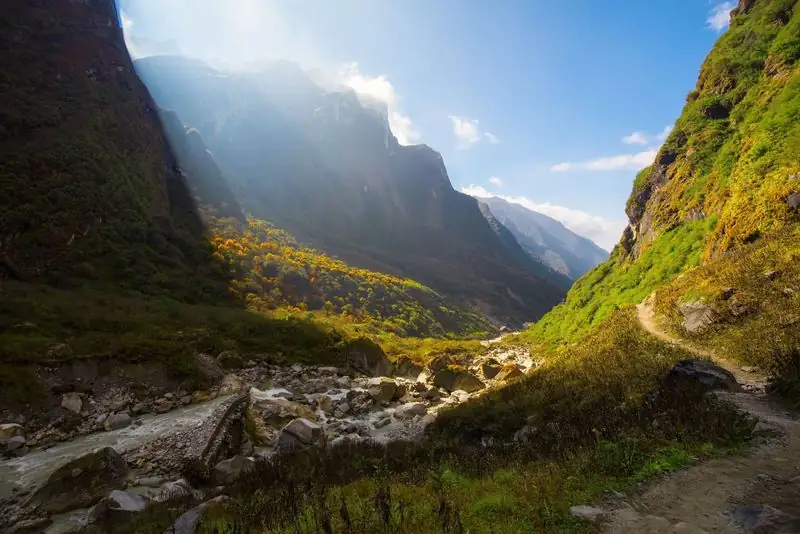
The route passes through rhododendron forests, terraced fields and traditional Gurung and Magar villages, with stone stairways and hospitable lodges. Ghorepani is the main overnight stop, a busy village at the head of a pass. Other villages offer a quieter atmosphere and the chance to see daily life, including farming, weaving and festivals. Take time to enjoy these places, and consider spending a night in a less crowded village if your schedule allows.
Making it extra comfortable
Because the trek is short, it suits families, groups of friends and first-time trekkers. Even so, the steps are long and knees can complain, so use poles, take your time and carry layers. The viewpoint is cold and windy before sunrise, so bring a warm jacket, hat and gloves. Apply sunscreen later in the morning and bring a camera or phone with a charged battery.
Ideas for extending the trip
- Add a side trip to Tadapani and Ghandruk for a longer loop.
- Continue to Annapurna Base Camp if you have time and a good level of fitness.
- Finish with a few days in Pokhara to rest, boat on the lake and enjoy the cafes.
What our guests say
Excerpts from guest reviews of Himalayan Wonders, our parent company, on Tripadvisor.
“They took utmost care of our group of 5 friends from Kathmandu airport upto the completion of the trek”