




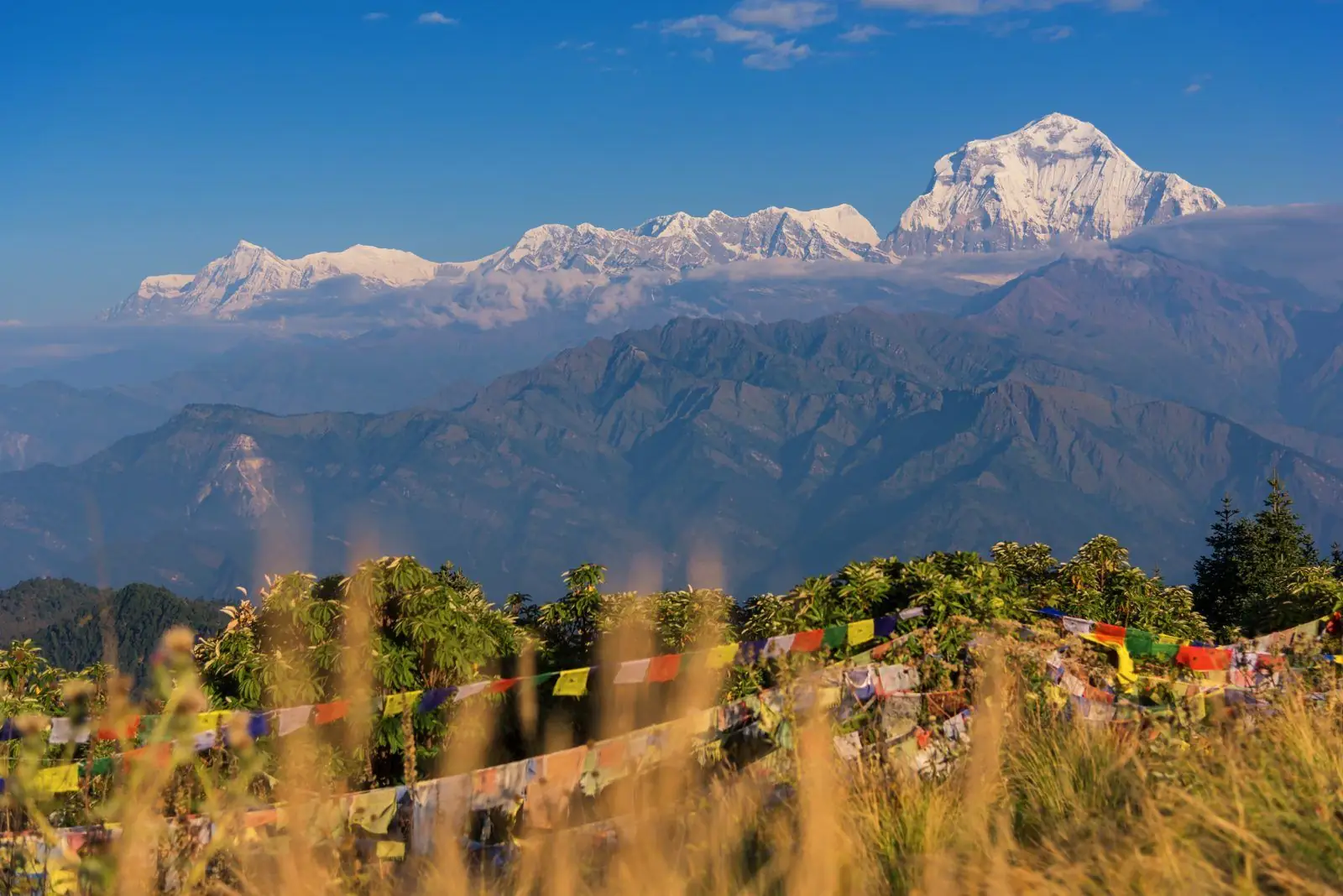
For experienced trekkers the best routes in Nepal are the Everest Three Passes, the Manaslu Circuit with Tsum Valley, Kanchenjunga, Makalu Base Camp, Upper Dolpo and the Dhaulagiri Circuit. The hardest of all involve glaciated passes, such as the Tashi Lapcha and Amphu Lapcha, and are close to mountaineering. Trekking peaks such as Mera and Island Peak are the natural next step.
The short list
- Everest Three Passes: 18 to 21 days, high point Kongma La, about 5,535 m. The complete Khumbu.
- Manaslu Circuit with Tsum Valley: 19 to 22 days, high point 5,106 m. Three weeks in restricted country.
- Kanchenjunga, north and south: 20 to 24 days, high point about 5,140 m. Long and remote.
- Makalu Base Camp: 16 to 20 days, high point 4,870 m. Steep and wild.
- Upper Dolpo: 22 to 26 days, high point several passes over 5,000 m. A camping expedition.
- Dhaulagiri Circuit: 16 to 20 days, high point French Pass, about 5,360 m. The hardest standard trek.
- Rolwaling and the Tashi Lapcha: 16 to 20 days, high point about 5,750 m. Trekking meets mountaineering.
- Great Himalaya Trail sections: weeks to months, high point various. For those who have done everything else.
The treks in detail
Everest Three Passes. Renjo La, Cho La and Kongma La, with Gokyo Ri, base camp and Kala Patthar. Lodges throughout, so the challenge is purely physical.
Manaslu Circuit with Tsum Valley. Culture and a high pass in one long journey.
Kanchenjunga, north and south. Two base camps and the passes between them.
Makalu Base Camp. The Shipton La and the empty Barun valley.
Upper Dolpo. Shey Gompa and Inner Dolpo.
Dhaulagiri Circuit. Glacier travel, Hidden Valley and two high passes.
Rolwaling and the Tashi Lapcha. A glaciated pass into Khumbu needing ropes, crampons and a climbing guide.
Great Himalaya Trail sections. Link regions across passes few people cross.
What "experienced" should mean
For these routes you should have completed at least one trek above 5,000 m without serious altitude trouble, be comfortable walking six to nine hours a day for two or three weeks, and be at ease with basic conditions: cold, simple food, no shower for days. For the camping treks, add a tolerance for tents at minus 15 C. For glaciated passes, add basic skills with crampons and an ice axe, or a willingness to learn them from your guide beforehand.
Lodge-based or camping
The Three Passes, Manaslu, Kanchenjunga and Makalu can be done from lodges, which keeps cost and logistics down. Upper Dolpo, Dhaulagiri and the technical passes need a full camping crew, which makes them several times more expensive and far more dependent on the quality of the team.
Risk and retreat
What separates hard treks from moderate ones is less the effort than the consequences. On the Annapurna Circuit, help is hours away. In Hidden Valley or upper Dolpo it may be days. Plan spare days, carry a satellite communicator, insure for helicopter evacuation from the highest point on the route, and agree turn-back rules with your guide before you start.
Stepping up to a peak
If you want a summit, Mera Peak (6,476 m) is the highest trekking peak and technically the simplest, Island Peak (6,189 m) adds a headwall and fixed ropes, and Lobuche East (6,119 m) is a little more technical again. See which peak first.
Season
April to May and October to November for the Himalayan routes. Dolpo is a summer trek. Dhaulagiri and the technical passes have narrow windows in late spring and October.
Training for a hard trek
Build up over three to four months. Aim for one long hill day a week with a loaded pack, rising to seven or eight hours, plus two or three shorter sessions of stairs, running or cycling. Back-to-back long days at weekends are the best preparation of all, because the difficulty of these treks is cumulative. If you can, spend a few nights above 3,000 m in the months before.
Choosing the team
On a hard route the guide and crew matter as much as the itinerary. Ask how many times the leader has done that specific trek, what communication equipment is carried, how porters are equipped and insured, and what the plan is if a pass is closed. A good answer to those questions is worth more than a low price.
Common questions
What is the hardest trek in Nepal?
Among standard routes, the Dhaulagiri Circuit. With technical passes included, routes over the Tashi Lapcha, Amphu Lapcha and Sherpani Col are harder.
Which hard trek has lodges?
The Three Passes, Manaslu, Kanchenjunga and Makalu.
Do I need mountaineering skills?
Not for the trekking routes. For glaciated passes and trekking peaks, basic skills and a climbing guide are needed.
How fit do I need to be?
Able to walk long days with a day pack for three weeks, after several months of training.
Heights, days, fees and rules are approximate and can change, so confirm the current details with us before you book.


