




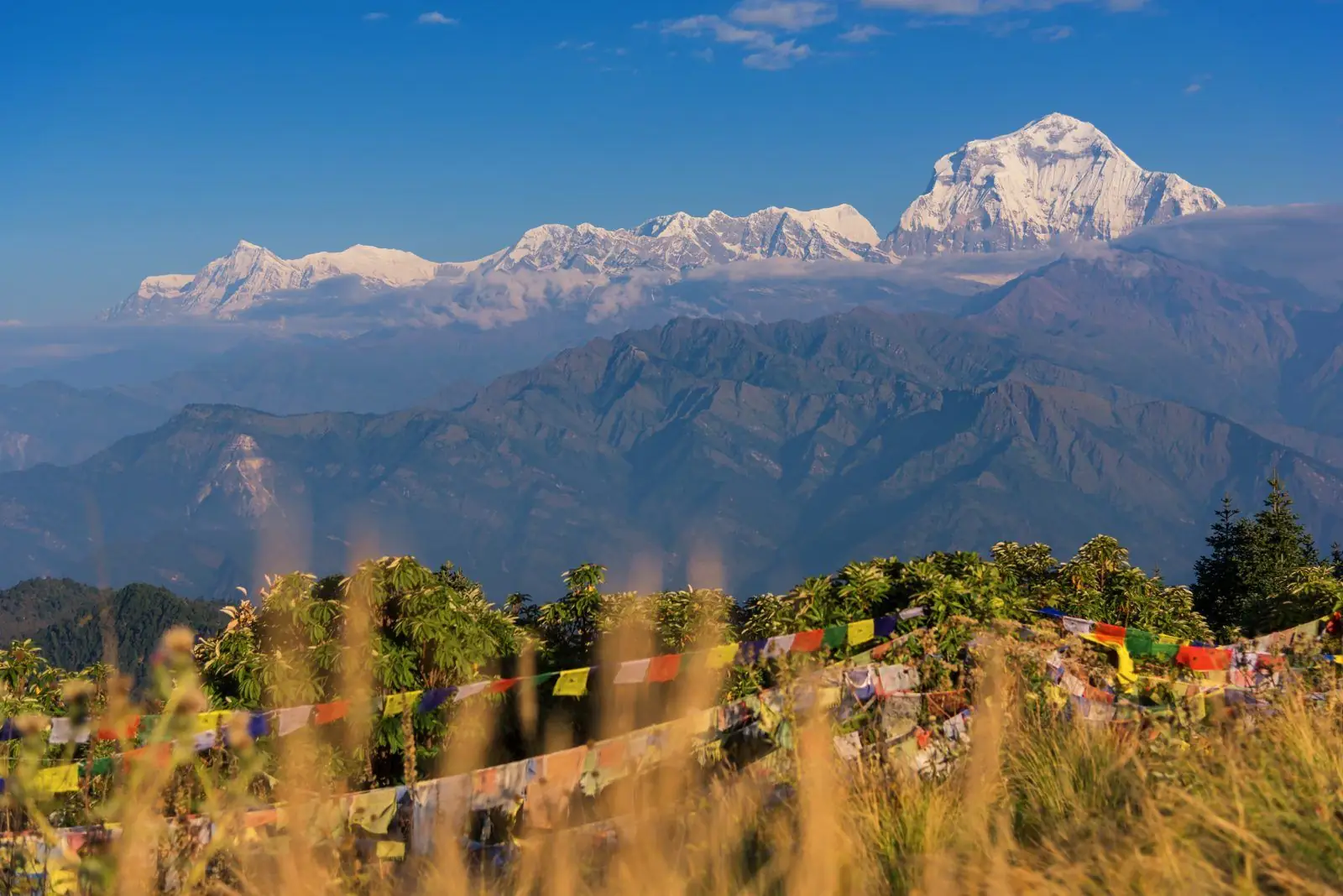
The best Nepal treks for Indian travellers are Everest Base Camp for a two-week leave, Annapurna Base Camp for 8 to 10 days, Poon Hill or Mardi Himal for a long weekend plus leave, Langtang for a no-flight week and the Jomsom Muktinath trek for pilgrims. Indians need no visa, pay lower SAARC permit fees and can pay in rupees.
The short list
- Everest Base Camp: 12 to 14 days, high point 5,364 m. The one most people dream of.
- Annapurna Base Camp: 7 to 10 days, high point 4,130 m. The best first Himalayan trek.
- Poon Hill: 4 to 5 days, high point 3,210 m. For families and first-timers.
- Mardi Himal: 5 to 7 days, high point about 4,200 m. For fit weekend trekkers stepping up.
- Langtang Valley: 7 to 8 days, high point 3,870 m. No flights after Kathmandu.
- Jomsom and Muktinath: 5 to 9 days, high point 3,710 m. Trek and pilgrimage together.
- Annapurna Circuit: 12 to 16 days, high point 5,416 m. For those who have done Indian high passes.
The treks in detail
Everest Base Camp. Fits a two-week leave with a weekend at each end. Direct flights reach Kathmandu from Delhi, Mumbai, Bengaluru and Kolkata.
Annapurna Base Camp. Moderate altitude and good lodges, starting from Pokhara.
Poon Hill. Works with a week off, including travel.
Mardi Himal. Similar in spirit to Kedarkantha or Sandakphu, and higher.
Langtang Valley. Good value and close to the city.
Jomsom and Muktinath. Muktinath is one of the most important Vaishnava shrines, visited by many Indian families.
Annapurna Circuit. A step up from Rupin Pass, Hampta Pass or Goechala.
Entry, ID and money
Indian citizens do not need a visa for Nepal. Carry a valid passport or voter ID; an Aadhaar card alone is not accepted for air travel to Nepal. Children can travel on a school ID with a parent in most cases, but a passport is simpler. Indian rupees are widely accepted in notes of 100, and higher denominations may be refused, so change money or carry smaller notes. Indian debit cards work in many ATMs in Kathmandu and Pokhara, and UPI is accepted in a growing number of places, but carry cash on the trail.
Permit fees for SAARC nationals
National park and conservation area fees are lower for SAARC nationals than for other foreigners, which makes a real difference on a family trip. Restricted area permits are charged separately. Our cost guides give prices in rupees for the main routes.
How Nepal compares with Indian treks
If you have done Kedarkantha, Brahmatal or Sandakphu, you are ready for Poon Hill, Mardi Himal or Langtang. If you have done Roopkund, Hampta Pass or Goechala, you can manage Annapurna Base Camp or Everest Base Camp. The main differences in Nepal are tea-house lodging in place of tents, hot meals from a menu and, on the bigger treks, greater height.
Holidays and timing
The Dussehra and Diwali break falls in the best season, so flights fill early. Summer school holidays in May and June suit Everest and Annapurna until the monsoon arrives in mid-June. Christmas and New Year suit the lower treks. See treks for the Diwali and Dussehra holidays.
Food
Vegetarian food is available everywhere, and dal bhat is the staple. Jain meals can be arranged with notice. Above about 3,000 m meat is not fresh, and most guides suggest avoiding it.
Getting there
Fly to Kathmandu from the main Indian cities, or travel overland through Sunauli near Gorakhpur for Pokhara and Lumbini, Raxaul for Birgunj and Kathmandu, or Kakarbhitta near Siliguri for the east.
Insurance and health
Buy travel insurance that names trekking up to the highest altitude on your route and covers helicopter evacuation; many Indian policies exclude it unless an adventure add-on is taken. Carry your regular medicines, and see a doctor before a trek above 4,000 m if you have blood pressure, heart or breathing conditions.
Phone and internet
Indian SIM cards roam in Nepal at high rates. A local Ncell or Nepal Telecom SIM is cheap and available at the airport with ID. Lodges on the main routes sell Wi-Fi, which becomes slow and costly higher up.
Common questions
Do Indians need a visa for Nepal?
No. A valid passport or voter ID is enough.
Can I use Indian rupees in Nepal?
Yes, mainly notes of 100. The exchange rate is fixed at 1 Indian rupee to 1.6 Nepali rupees.
Which Nepal trek is best for Indian beginners?
Poon Hill, followed by Annapurna Base Camp.
Is Everest Base Camp harder than Indian treks?
It is higher than most. Fit trekkers who have done a week-long Himalayan trek in India cope well with a 14-day plan.
Heights, days, fees and rules are approximate and can change, so confirm the current details with us before you book.


