




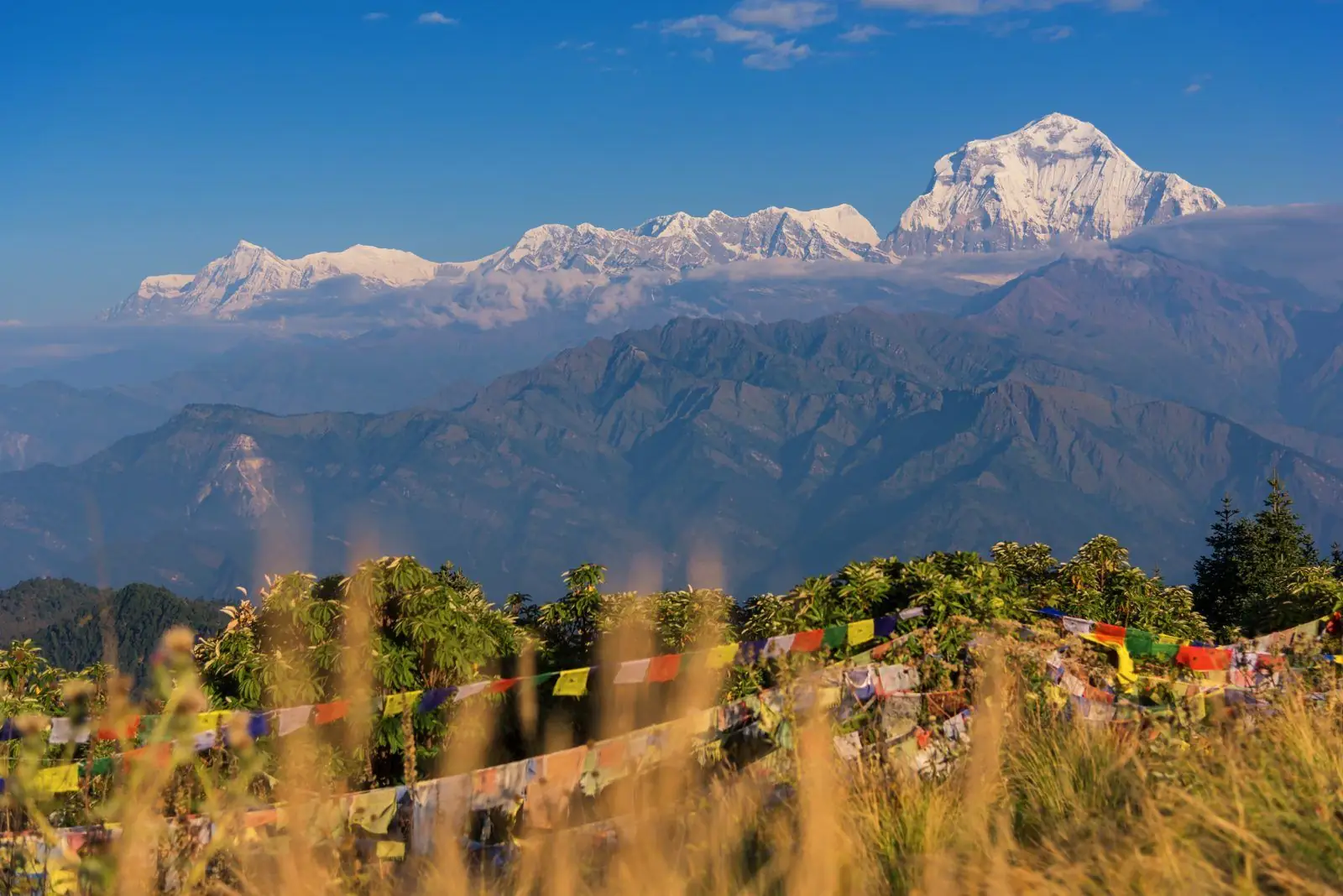
For fresh snow underfoot, trek between late December and February: Kalinchowk, Poon Hill, Mardi Himal, Langtang and Annapurna Base Camp all see regular snowfall then. For snow-covered peaks without walking in snow, any trek in any season will do, since the mountains above 5,500 m are white all year.
The short list
- Kalinchowk: 2 to 3 days, high point about 3,842 m. The easiest place to see snow from Kathmandu.
- Poon Hill: 4 to 5 days, high point 3,210 m. Snow on the hill, sun in the villages.
- Mardi Himal: 5 to 7 days, high point High Camp 3,550 m. A snowy ridge.
- Langtang Valley: 7 to 8 days, high point 3,870 m. A high valley under snow.
- Annapurna Base Camp: 7 to 10 days, high point 4,130 m. A white amphitheatre.
- Everest View trek: 6 to 8 days, high point about 3,880 m. Snow peaks all round.
- Everest Base Camp: 12 to 14 days, high point 5,364 m. Ice and snow at any time.
The treks in detail
Kalinchowk. A short trip by road and cable car to a hilltop temple that is reliably snowy in mid-winter.
Poon Hill. Ghorepani and Poon Hill are often white in January and February.
Mardi Himal. The upper ridge holds snow from December to March.
Langtang Valley. Kyanjin Gompa in winter is cold, quiet and beautiful.
Annapurna Base Camp. Snow lies deep in the Sanctuary in winter and early spring; guides watch avalanche conditions.
Everest View trek. Namche and Tengboche get occasional snowfall and are surrounded by glaciated peaks all year.
Everest Base Camp. The Khumbu Glacier and icefall are there year-round.
Snowfall and snow views are different things
Many visitors, especially from warmer parts of India, want to see snow fall or to walk and play in it. That depends on weather and season and can never be guaranteed. Seeing snow on the mountains is certain on any clear day. Decide which you want. For falling snow, choose mid-winter and a trek that reaches 3,000 to 4,000 m. For views alone, choose the clearest months, October to December.
When it snows
Most snowfall on trekking routes comes from western weather systems between late December and early March, in bursts of one to three days followed by clear spells. January and February are the likeliest months. Snow can also fall above 4,000 m in spring and autumn storms. The summer monsoon brings snow only to the highest elevations.
How low does snow reach?
In a normal winter snow settles down to about 2,500 to 3,000 m and melts within days on sunny slopes. It rarely reaches Kathmandu or Pokhara. Above 3,500 m it can lie for weeks on shaded ground.
Staying safe in snow
Fresh snow hides trails and makes stone steps slippery. Carry microspikes and poles, start later on icy mornings, and follow your guide's judgement on avalanche-prone sections, above all between Deurali and Machapuchare Base Camp. Keep feet dry with waterproof boots and gaiters, and protect eyes with good sunglasses, since snow glare is intense.
For families
Kalinchowk and Poon Hill are the best choices with children: short, low enough to be safe and likely to have snow in season. See Kalinchowk snow season and weather.
What to wear
Waterproof boots, warm socks, thermal layers, a down jacket, a waterproof shell, insulated gloves, a hat and sunglasses. Gaiters help in deep snow.
A sample snow trip from India
A six-day winter plan: fly to Kathmandu; next day drive to Kuri and ride or walk up to Kalinchowk for snow and the temple; return to Kathmandu; fly or drive to Pokhara and walk the two-day Ghandruk or Australian Camp loop for close snow peaks in comfortable weather. It gives both snow underfoot and classic mountain views with no high altitude.
Lodges in snowy weather
Dining rooms have a stove lit in the evening, and blankets are provided, but bedrooms are unheated and pipes may freeze, so hot showers are not always available. A warm sleeping bag and a flask of hot water for the night make a great difference.
If it does not snow
Some winters are dry for weeks. If fresh snow is your main aim, keep the plan flexible, watch the forecast a few days ahead and be ready to go higher, for example from Ghorepani towards Khopra or from Lama Hotel up to Kyanjin, where old snow usually lies even in dry spells.
Common questions
Which month has snowfall in Nepal?
January and February most often, with December and March possible.
Where can I see snow near Kathmandu?
Kalinchowk is the most reliable, a few hours away by road.
Does it snow in Pokhara or Kathmandu?
Almost never.
Can I trek during snowfall?
On lower routes, yes, with a guide and the right footwear. High passes close.
Heights, days, fees and rules are approximate and can change, so confirm the current details with us before you book.


