




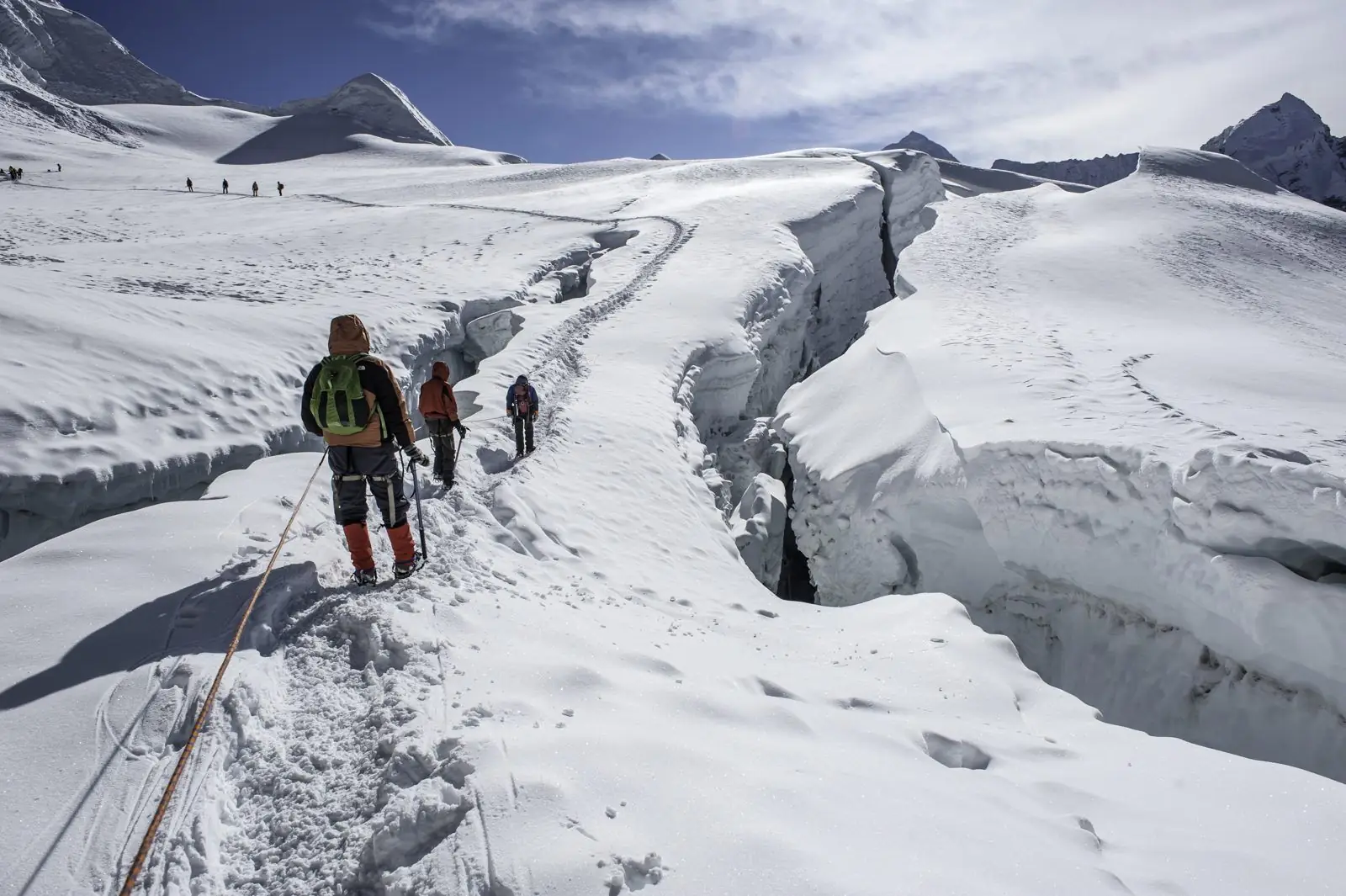
Chulu Far East, at about 6,060 m, is the lowest of the group and is often chosen for a first 6,000 m summit. Chulu West, at about 6,419 m, is a step up, and Chulu East, at about 6,584 m, is the highest and the most demanding.
Chulu Far East
Chulu Far East, about 6,060 m, is a trekking peak with a high camp and a long summit day on snow. It is a common choice for a first 6,000 m climb because the height is lower, but the route is still serious and needs rope skills.
Chulu West
Chulu West, about 6,419 m, is a popular trekking peak near Manang. The approach passes through Manang and a base camp at around 4,900 m. The summit day is long and steep in parts, with fixed lines placed on difficult sections.
Chulu East
Chulu East, about 6,584 m, is higher still and needs more time and experience. The route includes steep snow and sometimes ice, and the upper slopes are exposed to wind.
Which one first
If you have never climbed above 5,500 m, a smaller peak or the Far East summit is a more sensible choice. Many climbers choose Chulu West after Island Peak or Mera Peak. Chulu East is for climbers who feel strong at altitude.
Who climbs them
Climbers on Chulu peaks usually combine the climb with the Annapurna Circuit route, so the approach doubles as an acclimatisation walk. Teams are smaller than on Island or Mera Peak.
Permits
Each peak has its own permit and fee. Your agency arranges them, and fees depend on the peak and the season. Confirm the current rates before you book.
The approach
All three peaks are approached from the Marsyangdi valley by Besisahar, Chame and Pisang, and then to Manang. The route has lodges and gives a natural acclimatisation. From Manang, teams walk to a base camp near the peaks. Read our Annapurna Circuit guides for the first part of the route.
Combining peaks
Some climbers attempt more than one summit on a long trip, but weather and fitness decide. Plan spare days, and do not push for a second summit if the first took everything you had.
Bad weather and turning back
Strong wind, fresh snow and cold can close the summit routes for days. Good teams turn back when conditions are unsafe, and a turned-back climb is a sensible decision, not a failure.
Plan it
See how hard they are and permits and best time. Compare with Island Peak and Pisang Peak.


