




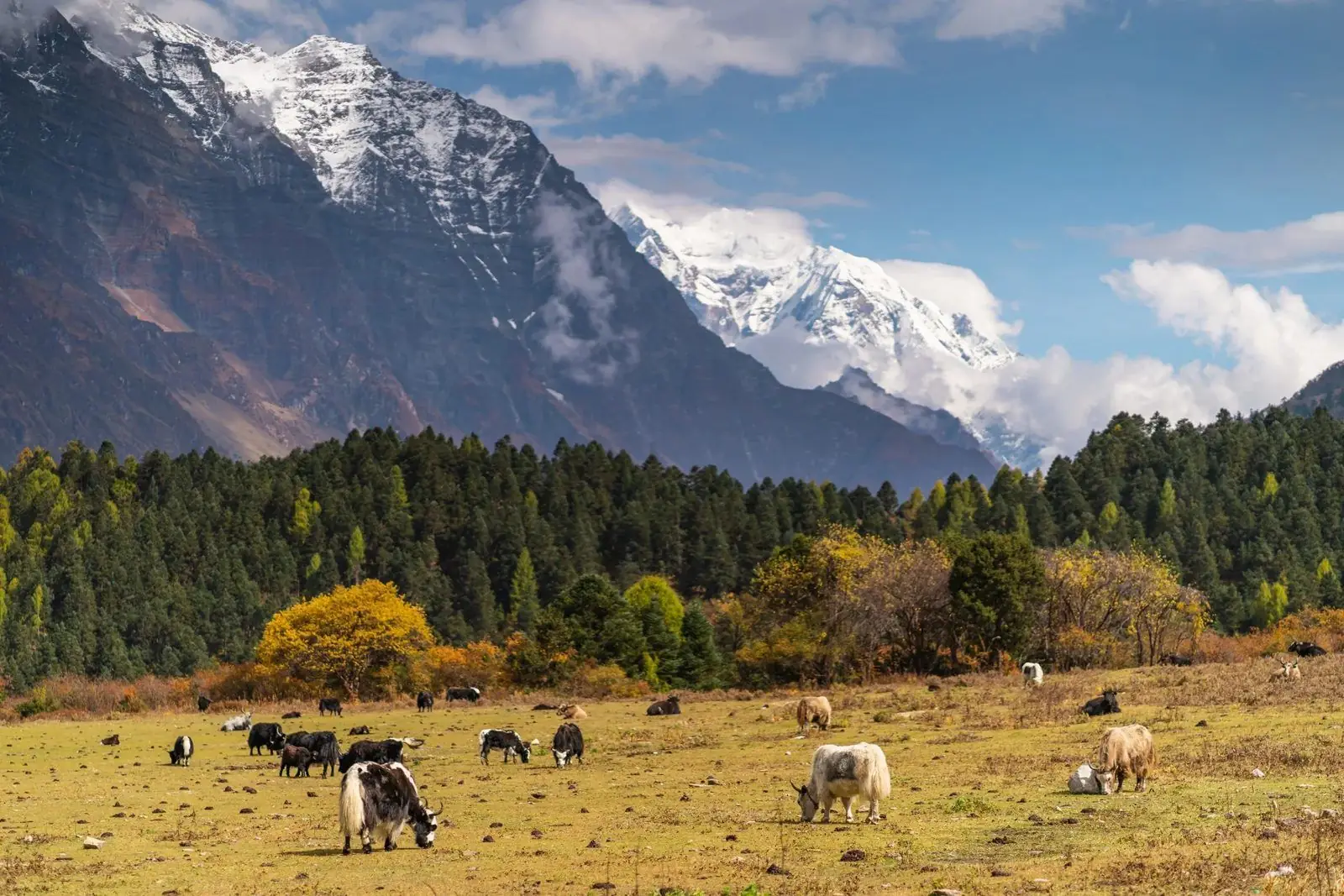
Langtang Lirung, at 7,227 m, is higher and dominates the Langtang valley. Dorje Lakpa, about 6,966 m, lies to the east and is seen from a wider range of trekking routes.
Height
Langtang Lirung reaches 7,227 m, and Dorje Lakpa about 6,966 m. Both are well above the height of trekking peaks.
Position
Langtang Lirung stands at the head of the valley above Kyanjin Gompa. Dorje Lakpa is further east and visible from Helambu and Gosainkunda.
Views for trekkers
Trekkers in Langtang see Lirung up close. Trekkers in Helambu and Gosainkunda are more likely to see Dorje Lakpa. See Langtang Lirung guides.
Climbing
Both are serious mountains that need expedition experience. Avalanches are a hazard on both.
Culture
Each area has its own traditions, from Tamang villages in Langtang to Yolmo communities in Helambu.
Choosing a trek
If you want a close view of a big peak, choose Langtang. If you prefer a quieter trail with distant views, choose Helambu.
Names and meaning
Dorje Lakpa has a Tibetan Buddhist name often translated in connection with the thunderbolt or vajra, and the name of Langtang Lirung is tied to the valley and its local geography. Translations vary, so treat any single meaning with care.
Risks
Both mountains face avalanche and serac hazards, and their high faces catch the full force of winter storms. Even strong teams may turn back in poor conditions. For trekkers the main risks are altitude and weather on the approach, not the mountains themselves.
Permits
Expedition permits are required for peaks of this size, and fees and rules depend on the peak and season. Agencies arrange them for climbers, while trekkers need only the usual area permits for Langtang National Park and the trekking zones.
Planning
If you can only visit one area, Langtang gives the clearest view of a major peak. If you have time, add Helambu and Gosainkunda for variety and to see Dorje Lakpa in the distance.
Plan it


