The short version: three of the most asked questions, answered in a line each. The rest of the page goes into detail.
- Is 14 days enough for Gokyo and Everest Base Camp with the Cho La? It can be, since the trek usually takes 14 to 16 days from Lukla to Lukla.
- Who should choose the Gokyo route instead of the direct trek? Trekkers with 14 or more days who want a quieter first week and an extra Everest viewpoint, and who are comfortable with a longer, tougher trek.
- When is the best time to cross the Cho La? Autumn and spring give the best odds of stable weather.
Is 14 days enough for Gokyo and Everest Base Camp with the Cho La?
It can be, since the trek usually takes 14 to 16 days from Lukla to Lukla. But add at least two spare days, because snow can delay the Cho La and weather can delay Lukla flights. Check the plan with your operator.
Who should choose the Gokyo route instead of the direct trek?
Trekkers with 14 or more days who want a quieter first week and an extra Everest viewpoint, and who are comfortable with a longer, tougher trek. If your time is limited or you want the simplest logistics, the direct trek is the better choice.
When is the best time to cross the Cho La?
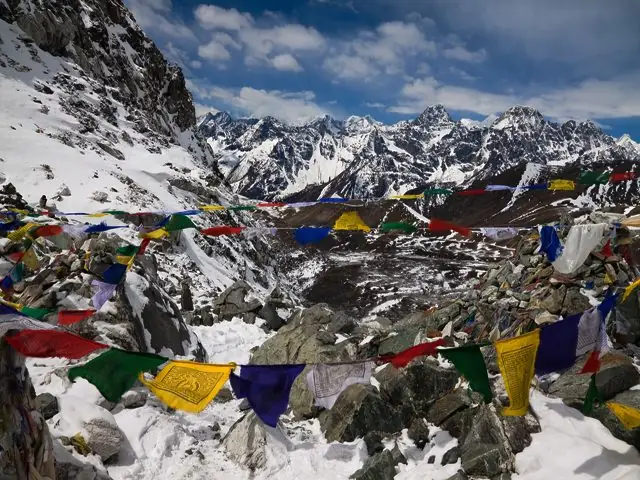
Autumn and spring give the best odds of stable weather. Winter snow often closes the pass. Because the Cho La is most likely to be open in the main seasons, plan around those months and keep spare days.
What do I gain from climbing Gokyo Ri before base camp?
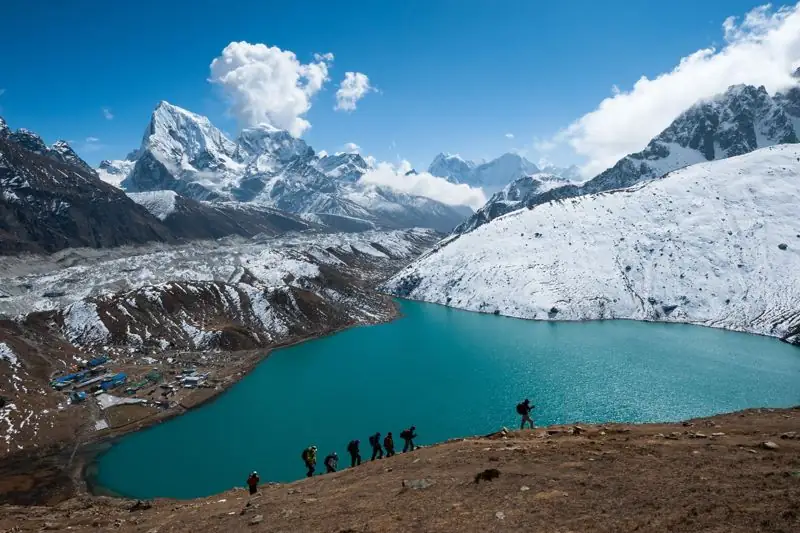
Gokyo Ri, at about 5,357 m, gives a wide view of Everest, Lhotse, Makalu and Cho Oyu. It also adds time at altitude before base camp, which helps acclimatisation. You get a quieter first week on the trail as well.
How many extra days does going back via Namche add?
Two or three. Instead of crossing the Cho La, you return from Gokyo to Namche and follow the standard route to base camp. It costs time but avoids the pass and its glacier section. Talk to your operator early, because it changes lodge bookings, your flight dates and how many spare days remain.
Is the Gokyo route harder than the standard Everest Base Camp trek?
Yes, generally. It means more days, more cost and more weather exposure, plus higher sleeping altitudes at Gokyo, about 4,790 m. If you cross the Cho La, it also includes a real pass crossing. It is a different trek, not just a longer one.
Which rest days does the Gokyo itinerary include?
A typical plan has a Namche rest day with an acclimatisation hike and a Gokyo rest day with the Gokyo Ri climb. Ask your operator whether it adds more, and whether any spare days are separate from these.