




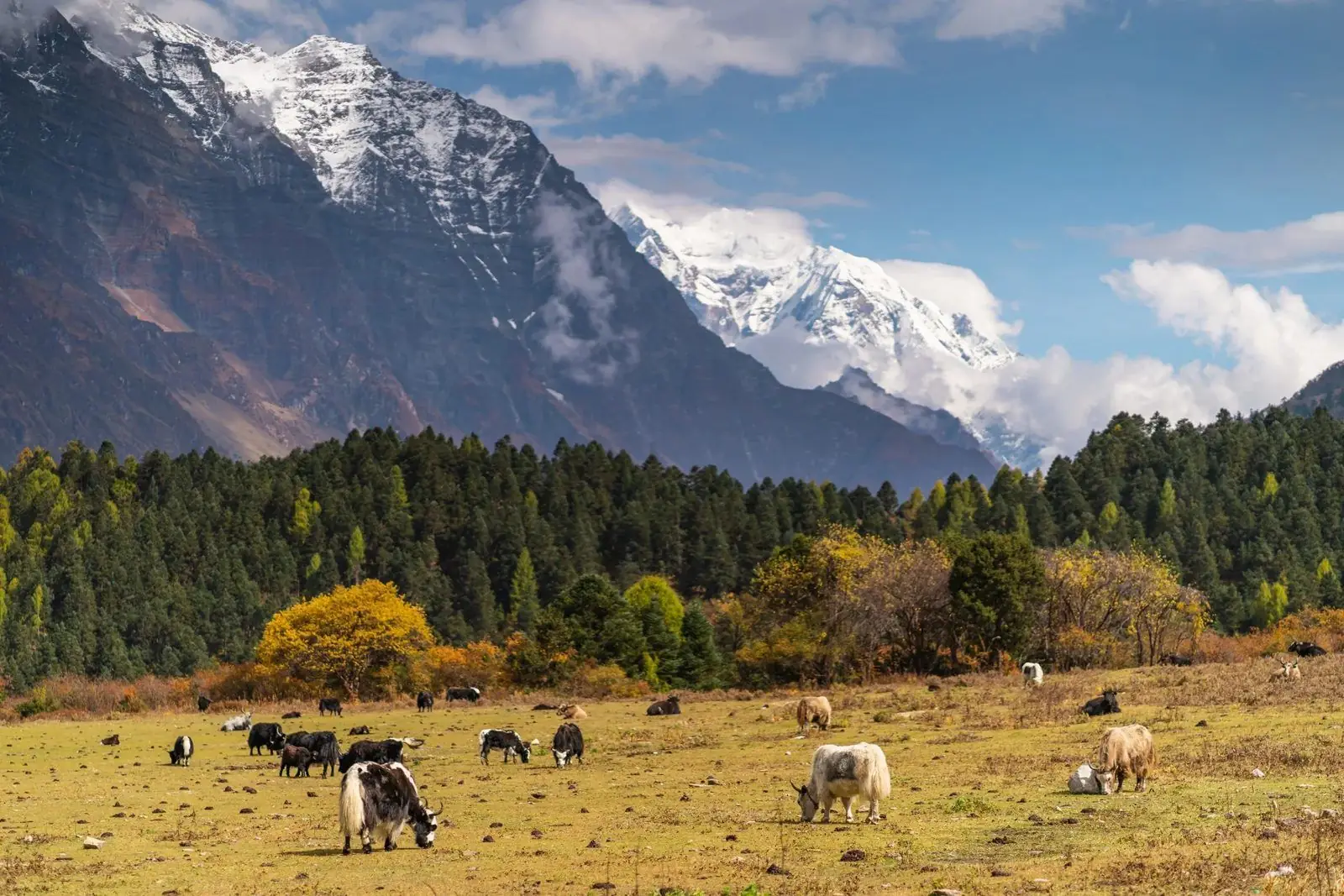
Ruby Valley and Tsum Valley lie on opposite sides of the Ganesh Himal. Ruby Valley, to the south, is a trek of 7 to 10 days through Tamang and Gurung villages with homestays, a high point of about 3,850 m at the Pangsang Pass and no restricted permit. Tsum Valley, to the north, takes 12 to 14 days, reaches 3,700 m at Mu Gompa and needs a restricted area permit. Ruby Valley is shorter and cheaper; Tsum is more remote and more Tibetan.
Ruby Valley and Tsum Valley at a glance
- Days. Ruby Valley: 7 to 10. Tsum Valley: 12 to 14.
- Highest point. Ruby Valley: Pangsang Pass, about 3,850 m. Tsum Valley: Mu Gompa, 3,700 m.
- Permit. Ruby Valley: no restricted permit. Tsum Valley: restricted area permit; minimum two trekkers.
- Lodging. Ruby Valley: homestays and a few lodges. Tsum Valley: lodges and homestays.
- Culture. Ruby Valley: Tamang, Gurung; mixed Hindu and Buddhist. Tsum Valley: Tibetan Buddhist.
- Access. Ruby Valley: Dhading or Syabrubesi, a day from Kathmandu. Tsum Valley: Machha Khola, a long day from Kathmandu.
Ruby Valley
The route links Syabrubesi in the Langtang area with Dhading across the southern slopes of Ganesh Himal. You walk through Gatlang, cross the Pangsang Pass with its view of the whole Ganesh range, and descend through villages such as Tipling, Chalish and Borang. The valley takes its name from rubies and crystals once mined here. Nights are spent in village homes. See the Ganesh Himal and Ruby Valley guides.
Tsum Valley
Tsum is reached up the Budhi Gandaki on the Manaslu trail and then a side gorge. Its upper valley is wide, high and devoutly Buddhist, with nunneries, monasteries and long mani walls. See the Tsum Valley guides.
Mountain views
From the Pangsang Pass you see Ganesh Himal, Langtang Lirung and, in clear weather, Manaslu and the Annapurnas. In Tsum the same Ganesh peaks are seen from the north, with Sringi Himal and Himalchuli, and can be approached closely on the Ganesh Himal Base Camp side trip.
Comfort and cost
Neither is a comfort trek. Ruby Valley is the more basic, with simple homestays and shared meals. It is also cheaper, with no restricted permit and fewer days.
Season
October to November and March to May for both.
Difficulty and trail
Ruby Valley has steep climbs between villages and a long ascent to the pass, on paths used more by locals than by trekkers. Tsum's trail is better defined but longer, with a hot, rough approach up the lower Budhi Gandaki. Neither involves high altitude by Nepali standards.
Who goes
Ruby Valley attracts repeat visitors to Nepal looking for something new, students and volunteers, and trekkers who want village stays. Tsum attracts those interested in Tibetan Buddhism and people already planning the Manaslu Circuit.
Combining with other treks
Ruby Valley links with the Tamang Heritage Trail and Langtang at its eastern end. Tsum links with the Manaslu Circuit. See the Manaslu Circuit with or without Tsum Valley.
Guide
A licensed guide is needed on both. In Ruby Valley a guide who speaks Tamang, or at least knows the host families, makes the homestays far more rewarding.
Choose Ruby Valley if
- You have about a week.
- You want an inexpensive, low-altitude trek off the main routes.
- You enjoy homestays.
- You are trekking alone and cannot form a pair for a restricted permit.
Choose Tsum Valley if
- You have two weeks.
- You want Tibetan Buddhist culture.
- You want a remote valley near the Tibet border.
- You may add the Manaslu Circuit.
Plan it
Ask us for either itinerary, including transport from Kathmandu.
Common questions
Is Ruby Valley a restricted area?
No.
Which is harder?
Tsum is longer; Ruby Valley has rougher lodging. Both are moderate.
Are there really rubies?
Rubies and crystal have been found in the area, but there is no mining for visitors to see.
Which has fewer trekkers?
Both are quiet. Ruby Valley probably sees the fewest.
Heights, days, fees and rules are approximate and can change, so confirm the current details with us before you book.


