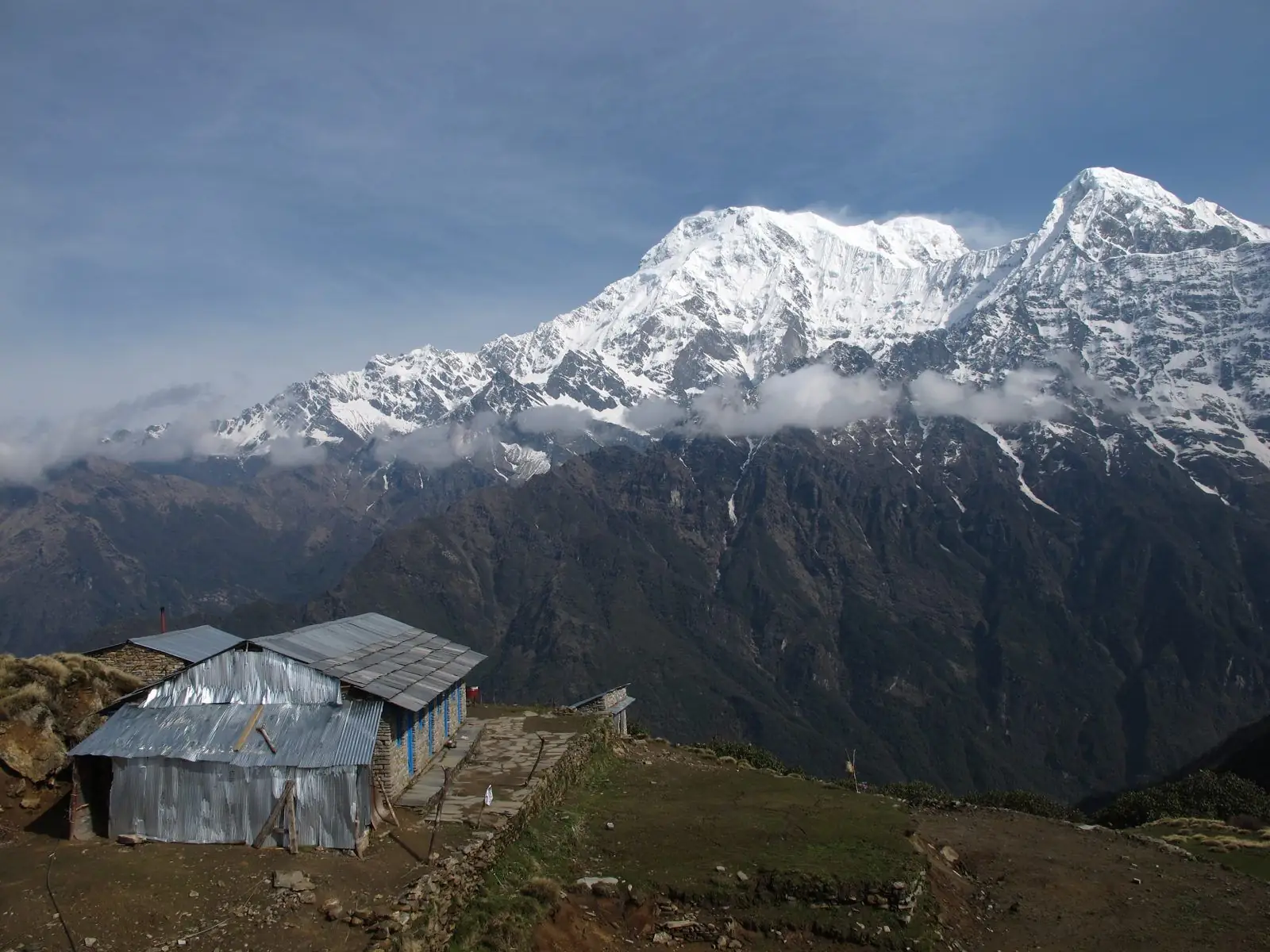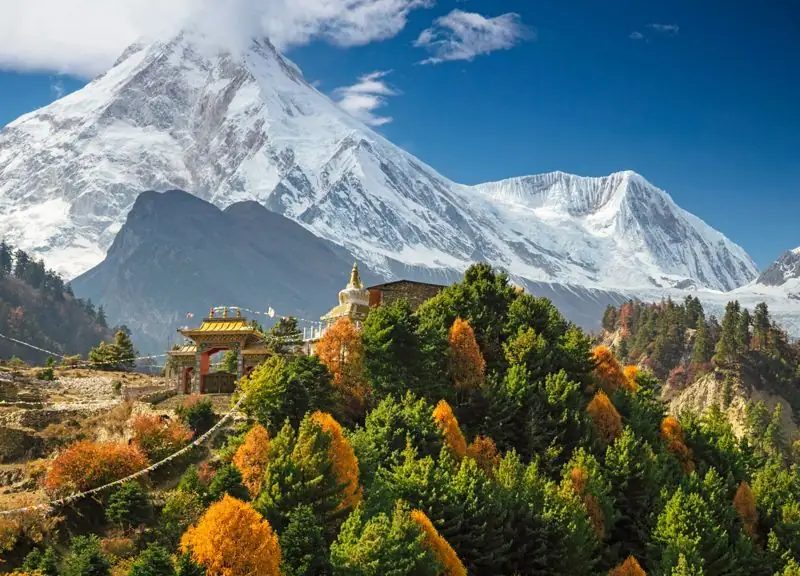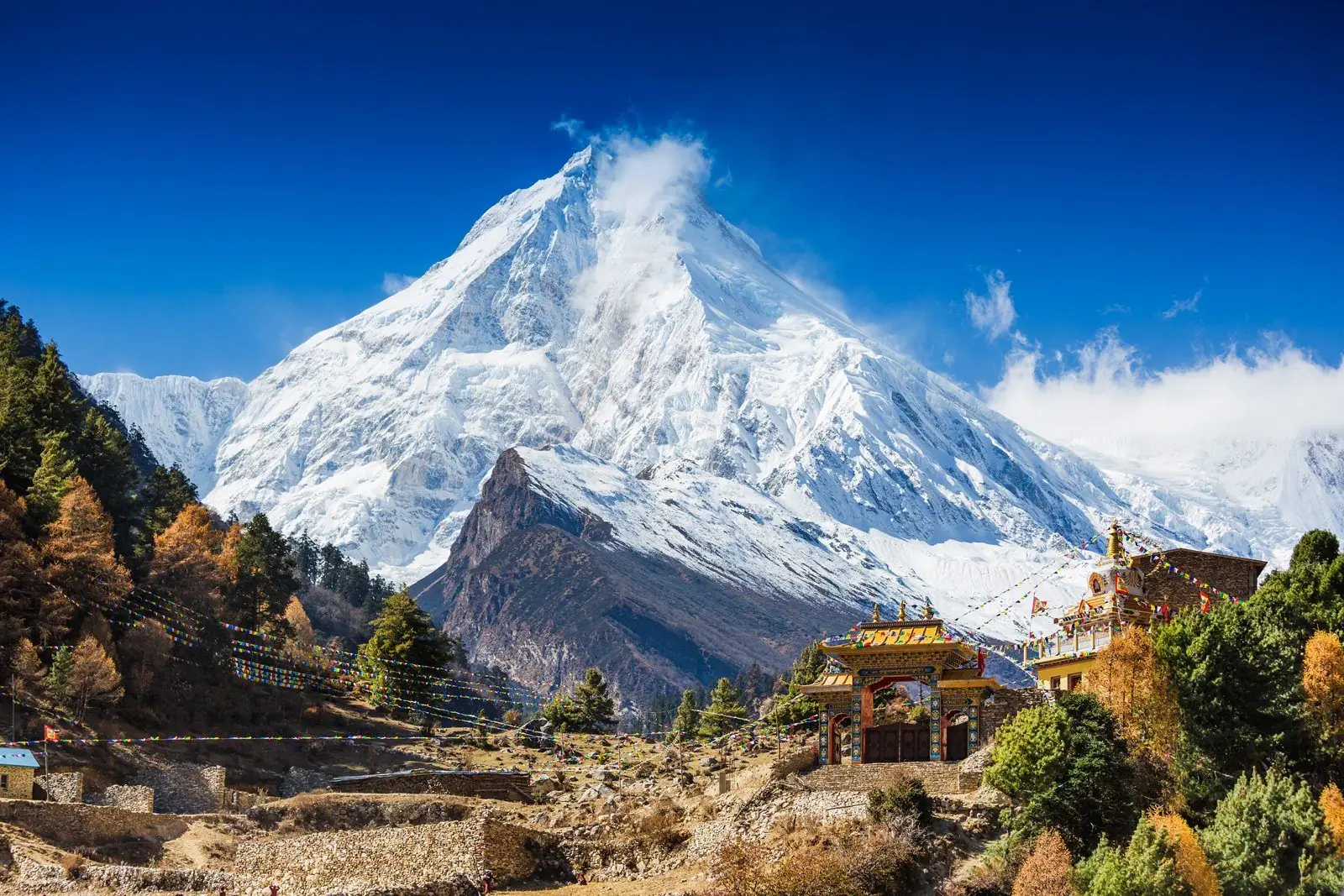
The Manaslu Circuit crosses a high pass, so weather and snow decide when it is safe and comfortable. Most trekkers go in autumn or spring, but the other seasons have their own character.
Autumn: September to November
This is the classic season. The air is clear after the monsoon, the trails are dry, and the high pass is usually open. October and early November are the busiest weeks, so lodges in the larger villages fill up. Note that the restricted-area permit costs more in September to November than in other months, according to the fee schedule supplied to us.
Spring: March to May
Rhododendrons bloom in the lower forests, and the days are warm. Snow on the pass can linger into early spring, especially after a heavy winter, so March is colder than April and May. Clouds tend to build in the afternoon, giving better views in the morning.
Monsoon: June to August
Rain, leeches and landslides are common on the lower valley. Trails can be washed out, and mountain views are often hidden. The high villages are drier, but the walking is still demanding. It is not the first choice for most trekkers.
Winter: December to February
The route is cold, the days are short, and snow on the pass can make a crossing unsafe or impossible. Some higher lodges close. This is a season for experienced, well-equipped trekkers with flexibility.
Which month?
- Clearest weather: October to early November.
- Flowers and fewer people: April and May.
- Lower permit fee: December to August.
Confirm current permit rates when you book. Tell us your dates and we will check conditions and availability.
What each season feels like on the trail
In autumn the valleys are clear, fields are golden and the snow peaks stand out sharply. Evenings are cold at the higher lodges but dry. Spring brings rhododendron blossom on the lower slopes, longer days and a softer, hazier light, with the pass sometimes holding more snow early in the season. The monsoon makes the lower valley green and wet with landslide risk, and winter brings deep snow at the pass and short days.
How timing affects the pass
The Larkya La crossing is the most weather-sensitive part of the trek. Heavy snow can close the pass for days, and strong wind can make the crossing unsafe. This is why many operators build in extra days in the schedule, and why the safest months are those with stable weather. Do not plan a tight return flight right after the expected end of the trek.
Crowds and lodges
Even in the busy months, Manaslu is quieter than the better-known treks, but lodges at the higher camps are small and fill quickly. Book early and travel in a small group if possible. If you want solitude, ask about shoulder months, but be ready for colder weather and fewer open lodges.
Choosing your window
- For stable weather and views: October to early November.
- For flowers and longer days: April to early May.
- For fewer people and a flexible schedule: late November or early spring, with warm gear.
Daylight, temperature and snow
In October the lower valleys are warm in the day and cold at night, while Samagaon and Dharamsala are well below freezing after dark. Days are about eleven hours long, so early starts matter. Snow on Larkya La is lightest in October, can arrive any time in November and is common in spring. Plan for variable conditions on the pass in every season.
Festival and holiday weeks
Dashain and Tihar fall in autumn and can affect transport availability and lodge staffing in some villages. Check dates when planning and confirm your road transport and lodge bookings in advance.