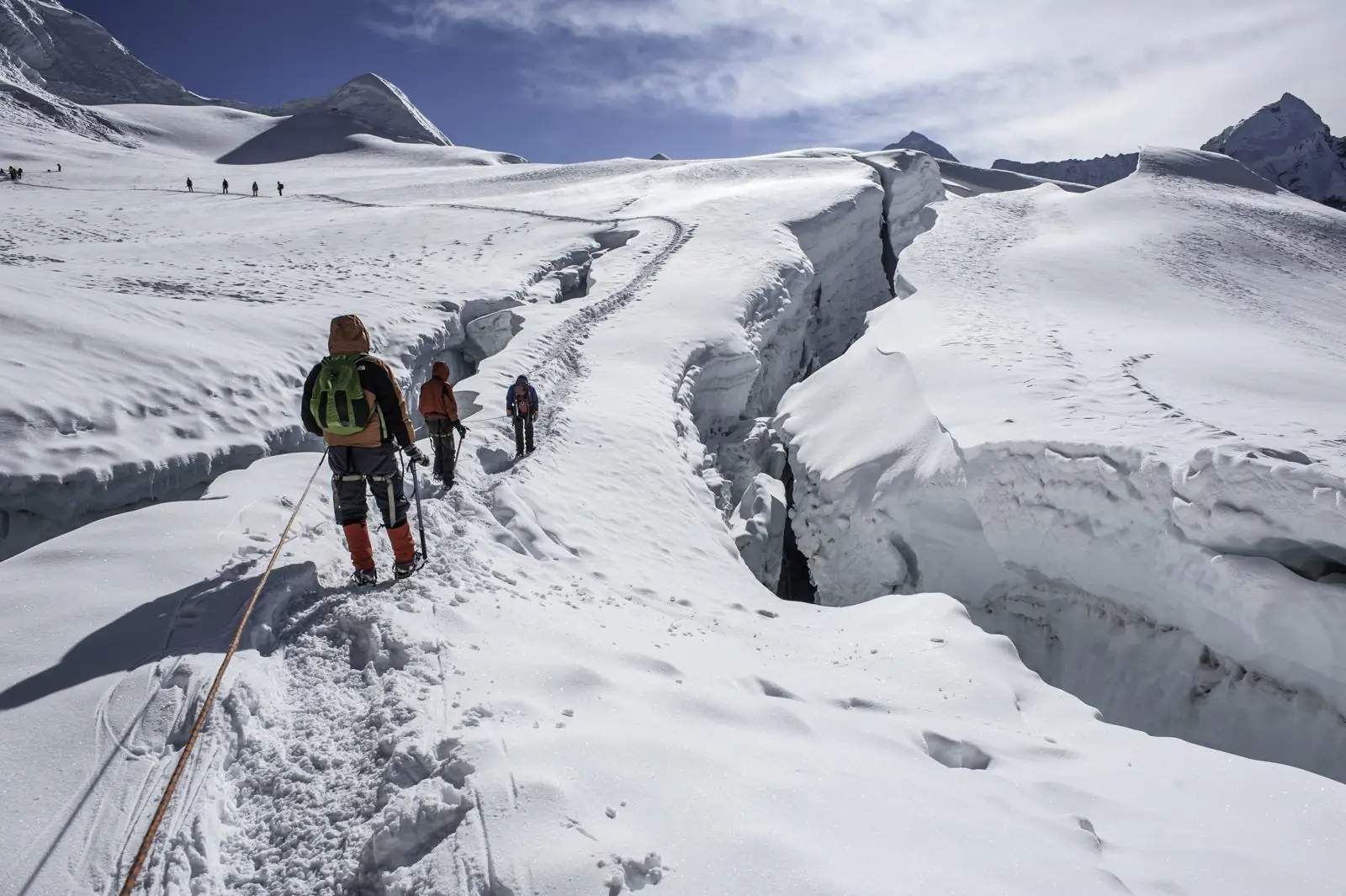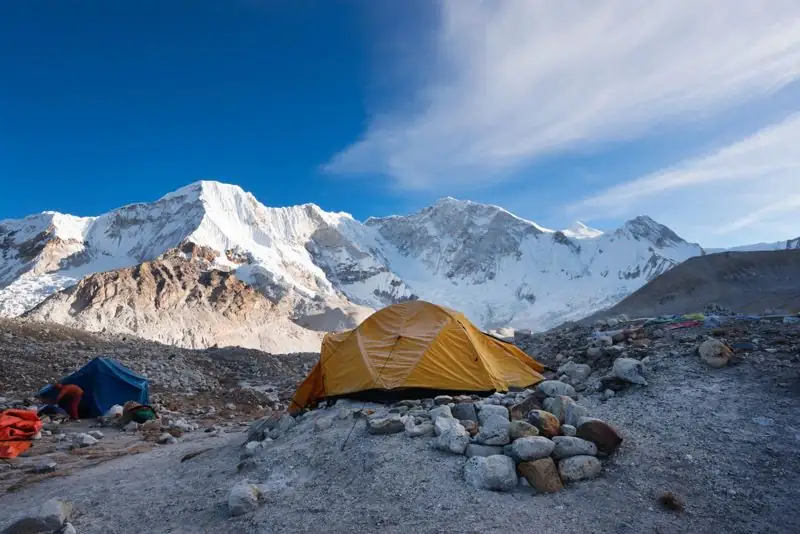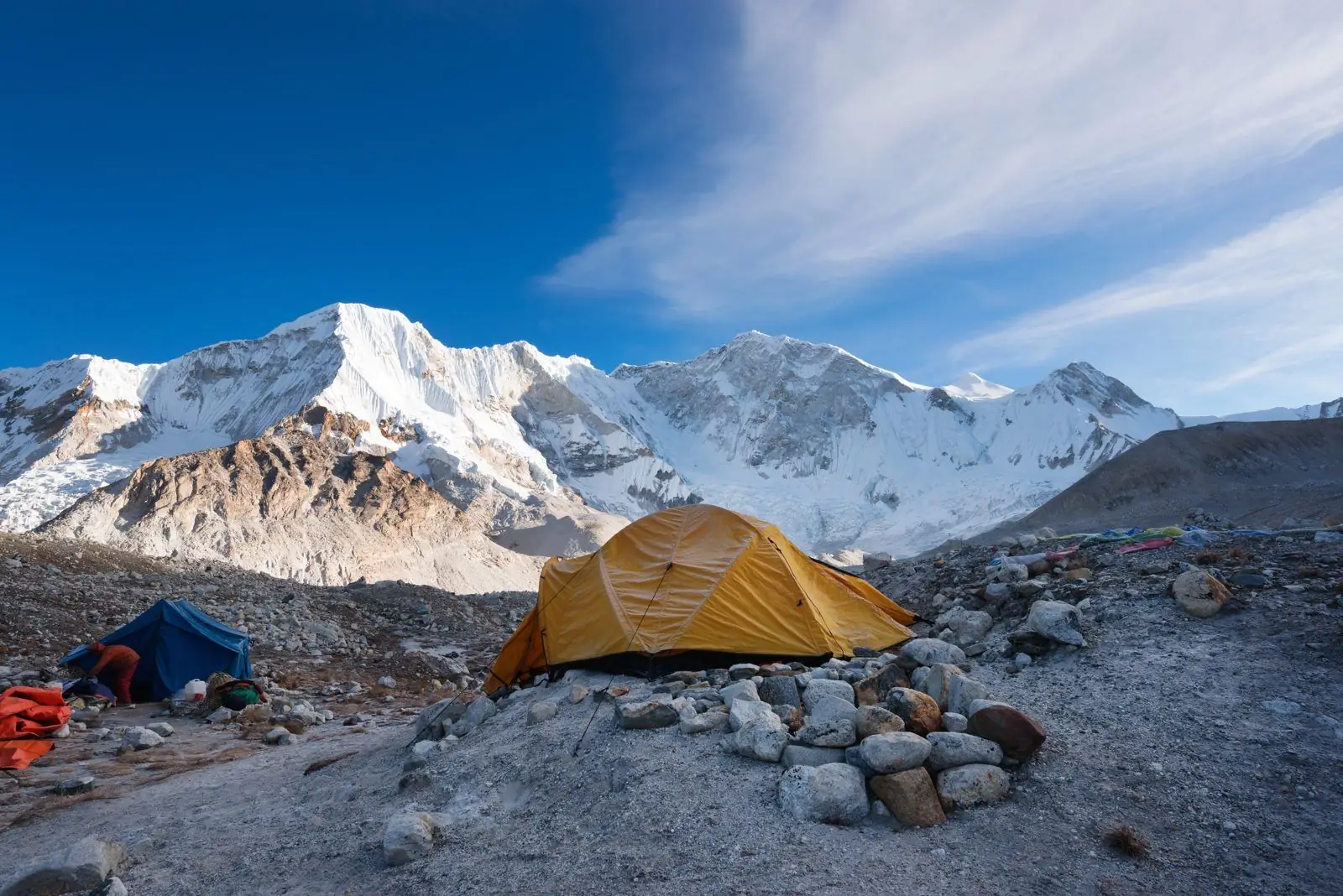
Mera Peak is a cold mountain at any time of year, so the best time is when conditions are as stable as possible and the days are long enough for the push.
Autumn: October and November
This is the most popular season. The monsoon has passed, skies are clear and stable, and the approach is dry. Nights at high camp are cold, and by late November temperatures drop and the wind increases.
Spring: April and May
Spring is warmer, and the days are longer. Snow conditions can be good, though afternoon clouds are more common as May goes on. Lower valleys have blooming rhododendrons.
Other months
Summer has heavy cloud and snow and is not recommended. Winter is extremely cold with short days, and the push is more difficult.
Comparing the windows
- October: most stable weather, busiest.
- Early November: a good balance, though colder.
- April: warmer, with a decent chance of clear days.
- May: warmest but with an increasing risk of cloud.
Flexibility
Pick your summit day according to the forecast and conditions. Extra days in the itinerary allow you to wait for a good window.
Flights
Flights to Lukla depend on weather, so keep a buffer on both ends of the trip.
Tell us your preferred dates, and we will check conditions.
What the seasons feel like
Autumn often brings cold, clear days and sharp views of Everest, Lhotse, Makalu and Kangchenjunga from the summit. Spring is warmer on the trail but may bring afternoon cloud and shifting snow. Winter is very cold and monsoon is wet and cloudy, so most climbers choose the shoulder seasons.
Crowds and lodge space
Because the Hinku valley is quieter than the main Everest route, lodges are usually less crowded, but they are also fewer and simpler. Booking early still helps, especially if you want a particular date and a small group.
Plan flexibility
Add buffer days for flights in and out and for weather on the mountain. The more flexible your plan, the more likely you are to enjoy the trip rather than feel rushed.
- Check the forecast with your guide on the approach.
- Pack for much colder temperatures than the lower valleys suggest.
- Carry extra snacks for long cold days.
What the approach is like in each season
In autumn the Hinku valley is dry and cold, with clear mornings and stable weather. In spring it is warmer, with flowers on the lower slopes and more afternoon cloud. Monsoon makes the approach muddy and risky, and winter makes it very cold with deep snow on the passes. Each season has its own character and risks.
Summit window
Summit success depends on a few stable days. Autumn windows are typically longer, while spring windows can be shorter but more flexible. A guide with experience in the Hinku valley will know how to read the weather and pick the right day.
How to stay flexible
Do not book tight flights home. Allow at least one spare day at each end of the trip. Remember that flights to Lukla can be delayed for days, and your itinerary should absorb that.