The walk to Mera Peak does not follow the busy Everest trail. Instead, it heads east from Lukla into a quieter region with fewer lodges and more forest and pasture.
Crossing to the Hinku valley
After leaving Lukla, you climb to a ridge crossing, commonly through the Zatrwa La pass, and descend into the Hinku valley. Weather can make this stage challenging. A lower, longer route avoids the highest part and gives more time to acclimatise, which some operators prefer.
Up the valley
The trail follows a river through rhododendron forest, then climbs through meadows and yak pastures. Lodges become simpler as you rise, and the villages are small. You see few other trekkers, which many people enjoy.
Khare and beyond
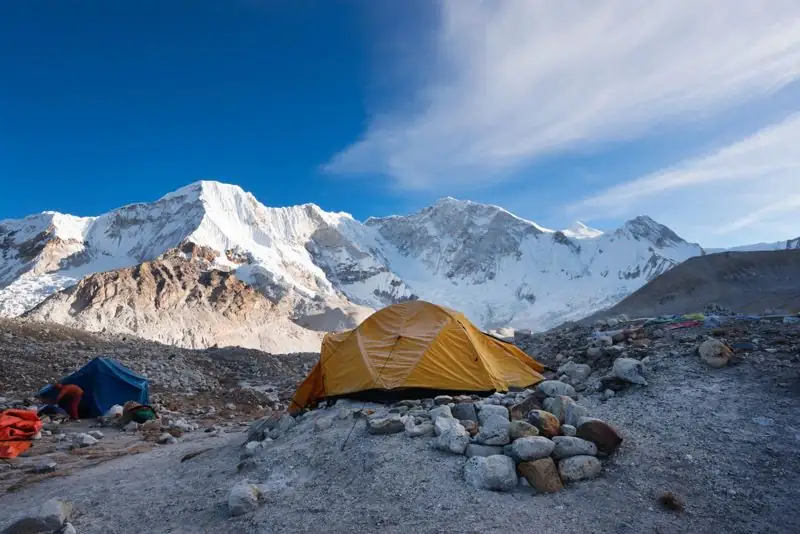
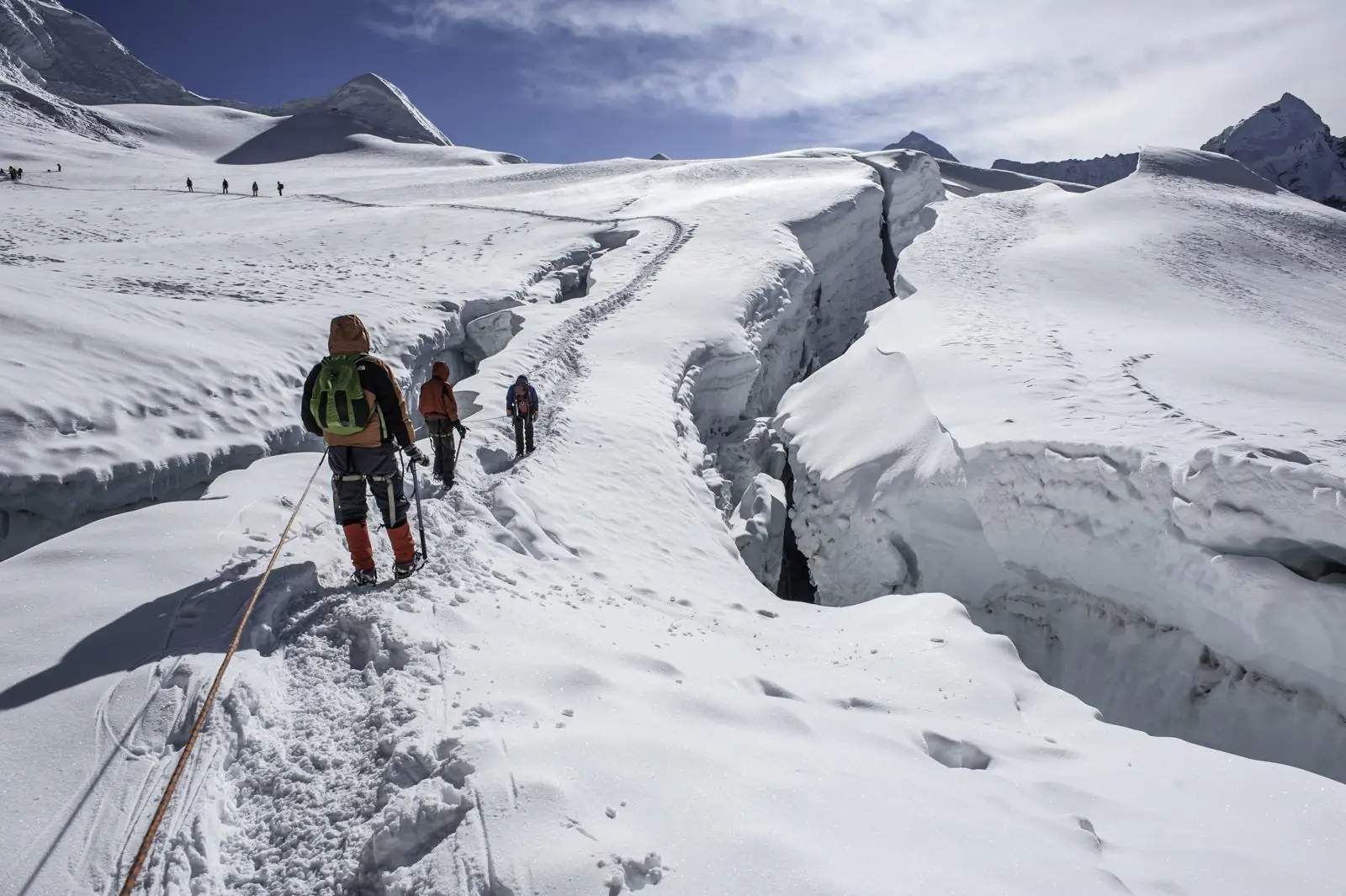
Khare is the last village before the glacier, and it serves as the base for acclimatisation and practice. From there, the route reaches a base camp, then a high camp on the glacier near the pass called Mera La.
The scenery
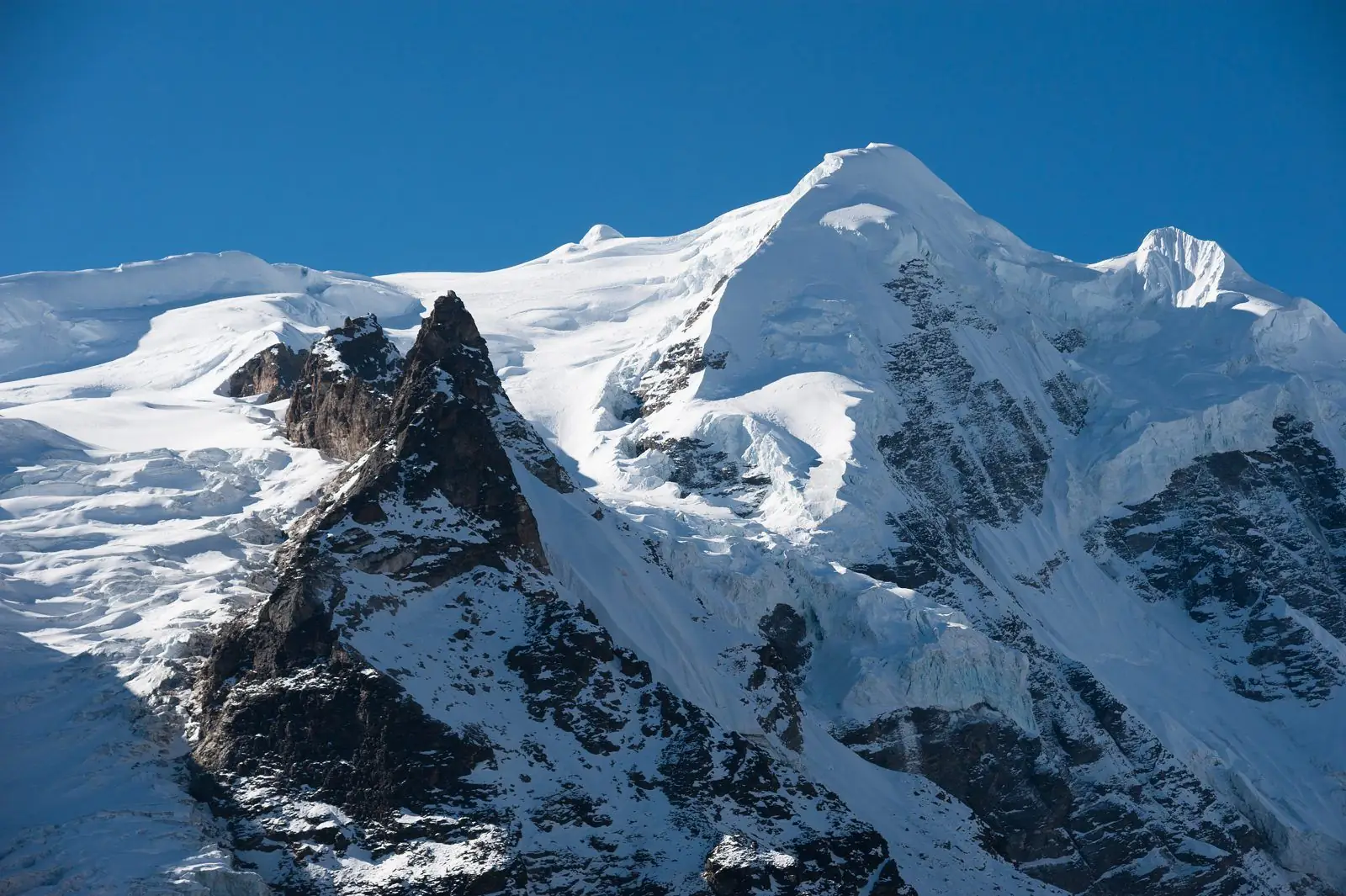
Views open gradually onto big peaks, and from the top of Mera, you can see five of the world's highest mountains in clear conditions. The lower hills are quiet and green.
Return options
You can retrace your steps, or cross Amphu Labtsha or another pass to the Everest side in some extended itineraries. These options need more time and experience.
Practical notes
- Lodges are simple, with fewer services than in the Khumbu.
- Mobile coverage is poor.
- Cash is needed, and there are no machines.
A different kind of trek
The Hinku valley feels remote compared with the main Everest route. You walk through rhododendron and bamboo forest, cross ridges and pass small seasonal settlements where life is simple. The trail is quieter and the views open gradually as you gain height, which makes the journey feel like a real expedition.
Water, food and lodges
Lodges are basic, with simple menus and limited choice. Dal bhat, noodles, eggs and soup are common. Bottled drinks are expensive and sometimes unavailable, so carry purification tablets or a filter and bring snacks you enjoy.
Mental preparation
With fewer comforts and less contact with the outside world, the trip rewards patience and a flexible attitude. Many climbers say the slow rhythm and quiet nights are among the best parts of the experience.
Wildlife and environment
The Hinku valley sits inside the Makalu Barun National Park and buffer zone, which protects rich forests and wildlife. You may see Himalayan monal pheasants, musk deer, tahr and, rarely, red pandas. The forest is home to rhododendron, bamboo and giant ferns. Walking quietly increases your chances of seeing animals.
Local culture
The villages are home to Sherpa, Rai and other communities. Small prayer walls, mani stones and monasteries mark the route. Respect local customs, walk clockwise around religious structures and ask before photographing people.
Challenges in the valley
- Landslides and trail damage after the monsoon.
- Limited lodges and food choices.
- Rapid weather changes.
- Long days with little shelter.