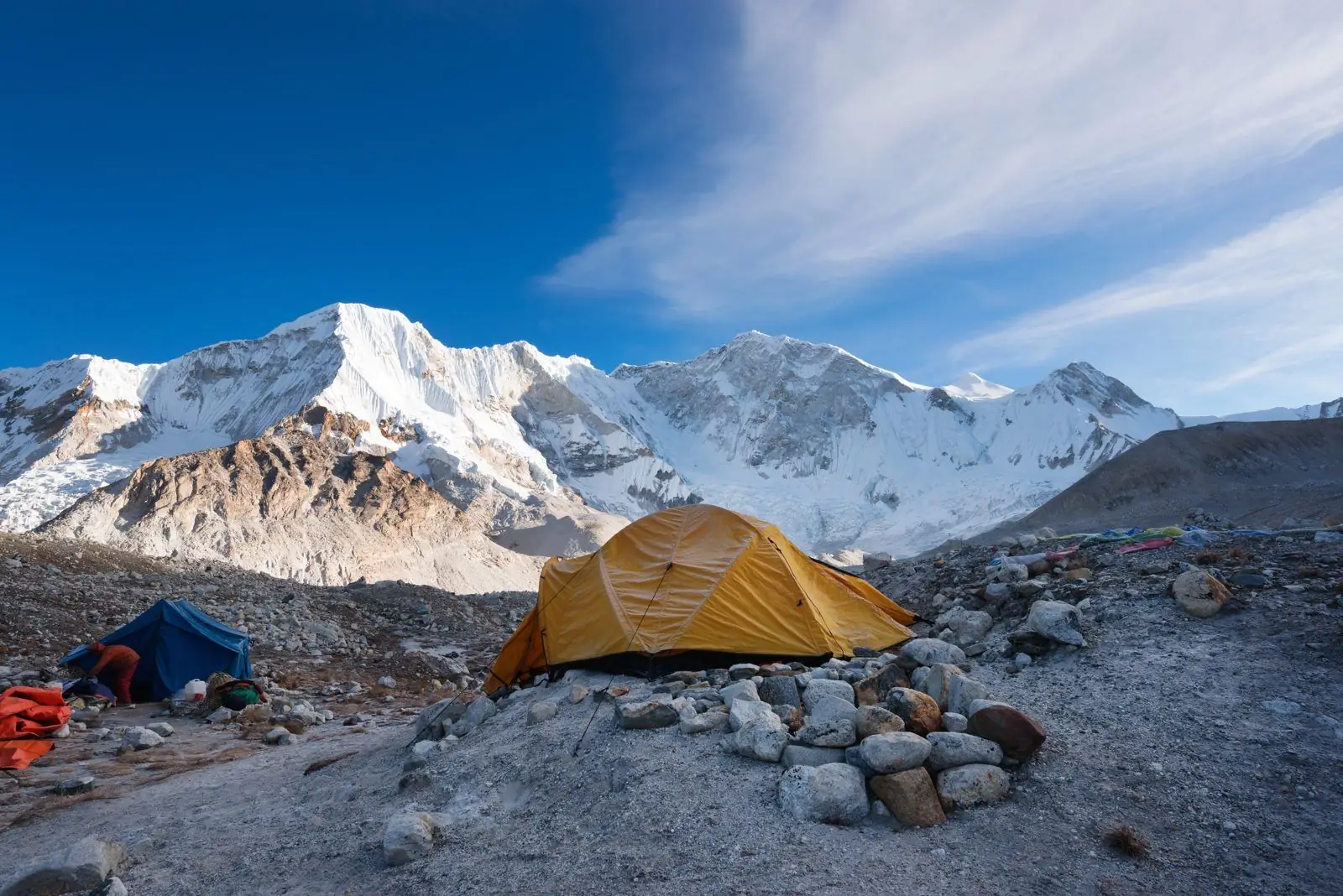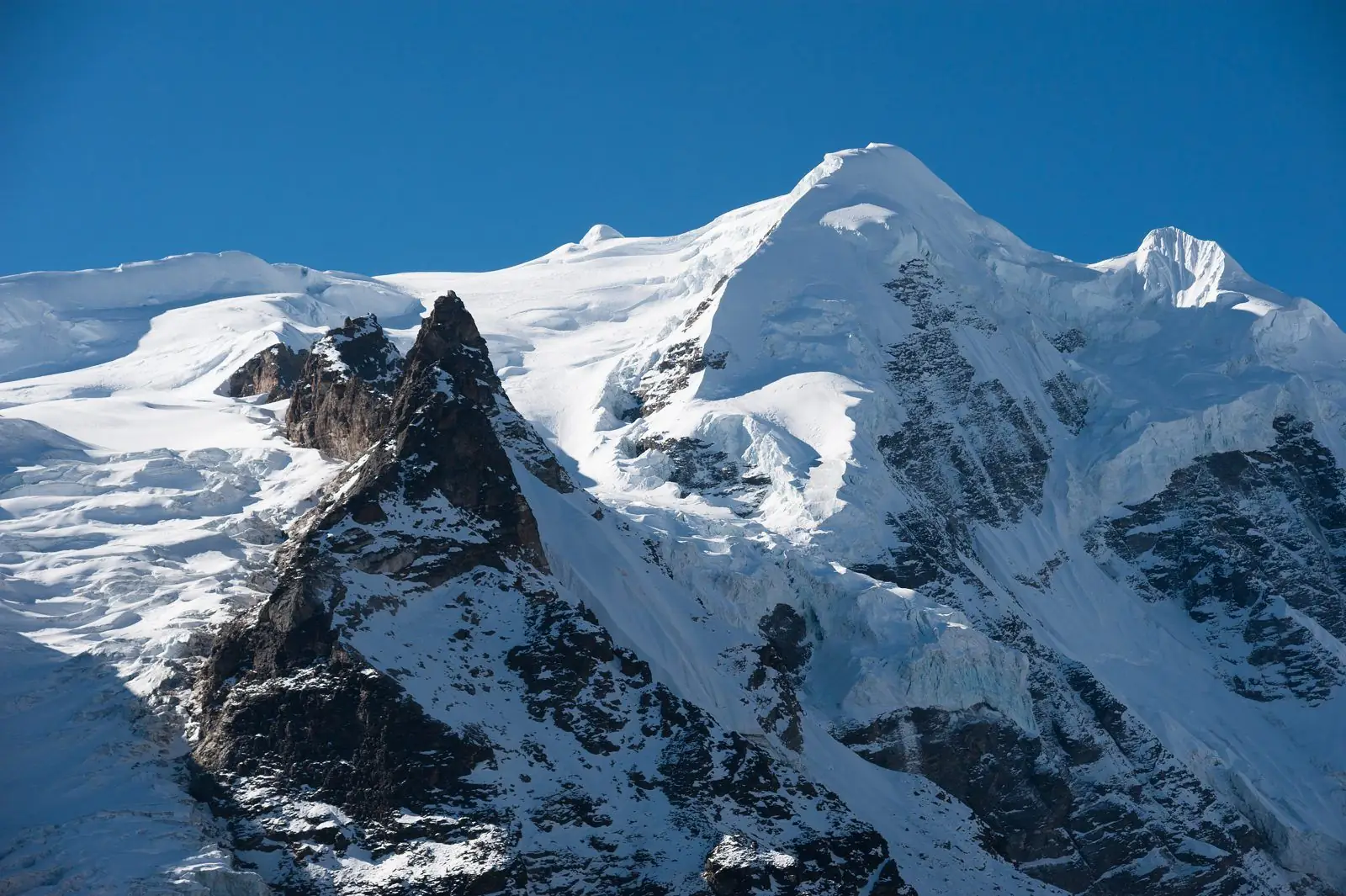
Most Mera Peak programmes take around seventeen to twenty days, including flights and rest days. The route heads east from Lukla into a remote valley, which is very different from the busy Everest Base Camp trail.
A typical outline
- Kathmandu for preparation and permits.
- Flight to Lukla and walk into the forest to the first village.
- Crossing the Zatrwa La ridge or a lower alternative, then descending into the Hinku valley.
- Walk up the valley through villages and yak pastures.
- Acclimatisation day at Khare, the last village before the mountain, with a practice session on ice.
- Mera La base camp and then a high camp on the glacier.
- Summit day, starting in the middle of the night.
- Spare day for weather.
- Return by the same route or by a different pass to Lukla.
Route variants
Some programmes cross to the Hinku valley by a high ridge, while others use a longer, lower route that gives more time to acclimatise. A few itineraries combine Mera Peak with Island Peak, giving a longer expedition with two summits.
Spare days
Include at least one spare day for the climb, plus a buffer for flights from Lukla. Delays are common in the Khumbu.
Why not shorter
Rushing the ascent risks altitude illness and reduces your chance of success. A slower approach is a safer and often more successful plan.
We can adjust the programme to your time.
Understanding the pace
The itinerary is deliberately slow in the first week. Descending and climbing through forest and ridge lines builds fitness while giving your body time to adapt. The days are not long in distance but are demanding because the trail rises and falls repeatedly, and you spend nights at progressively higher altitude.
Khare and the high camps
Khare is the last real settlement before the climbing begins, and many groups rest here for a day to check gear and practise on the lower slopes. From there you move to base camp and then to high camp, where the cold, thin air and basic camping become the main challenge. Sleep may be poor at high camp, which is normal, and the summit day starts early.
Using the spare days
A spare day is the best insurance against weather and altitude. If the forecast looks poor or someone in the group is not acclimatised, an extra day can make the difference. Do not plan to use every day, but be glad to have them.
Heading out
After the climb, most itineraries return via the Hinku valley or cross into the Hongu or Khumbu region, depending on route choice. Allow buffer days for flights and be ready for tired legs on the descent.
The typical shape of the days
A common 17-day plan starts in Kathmandu, flies to Lukla or an alternative airstrip, then climbs and descends through Chutanga, Thuli Kharka, Kothe, Thangnak and Khare. Rest days at Khare and base camp help acclimatisation. The summit attempt takes place from high camp, followed by a return along the same valley or a crossing to Lukla. The route is remote, so allow for slower days.
The Zatrwa La crossing
Many itineraries cross the Zatrwa La pass at about 4,600 metres between Lukla and the Hinku valley. It is a steep, rocky pass with a long descent, and in poor weather it can be challenging. Some operators take a different route to avoid it, so ask which one applies to your trip.
Why a spare day matters more here
Because the route is remote and weather can change quickly, a spare day is a basic safety margin. If someone falls ill or snow arrives, the guide can wait instead of pushing on. Build one or two buffer days into your plan.
After the summit
Most groups descend to Khare and then continue to Kothe and Lukla over three to four days. Some cross the Amphu Laptsa pass to the Everest region, but this is a more serious undertaking and requires extra skills and time.