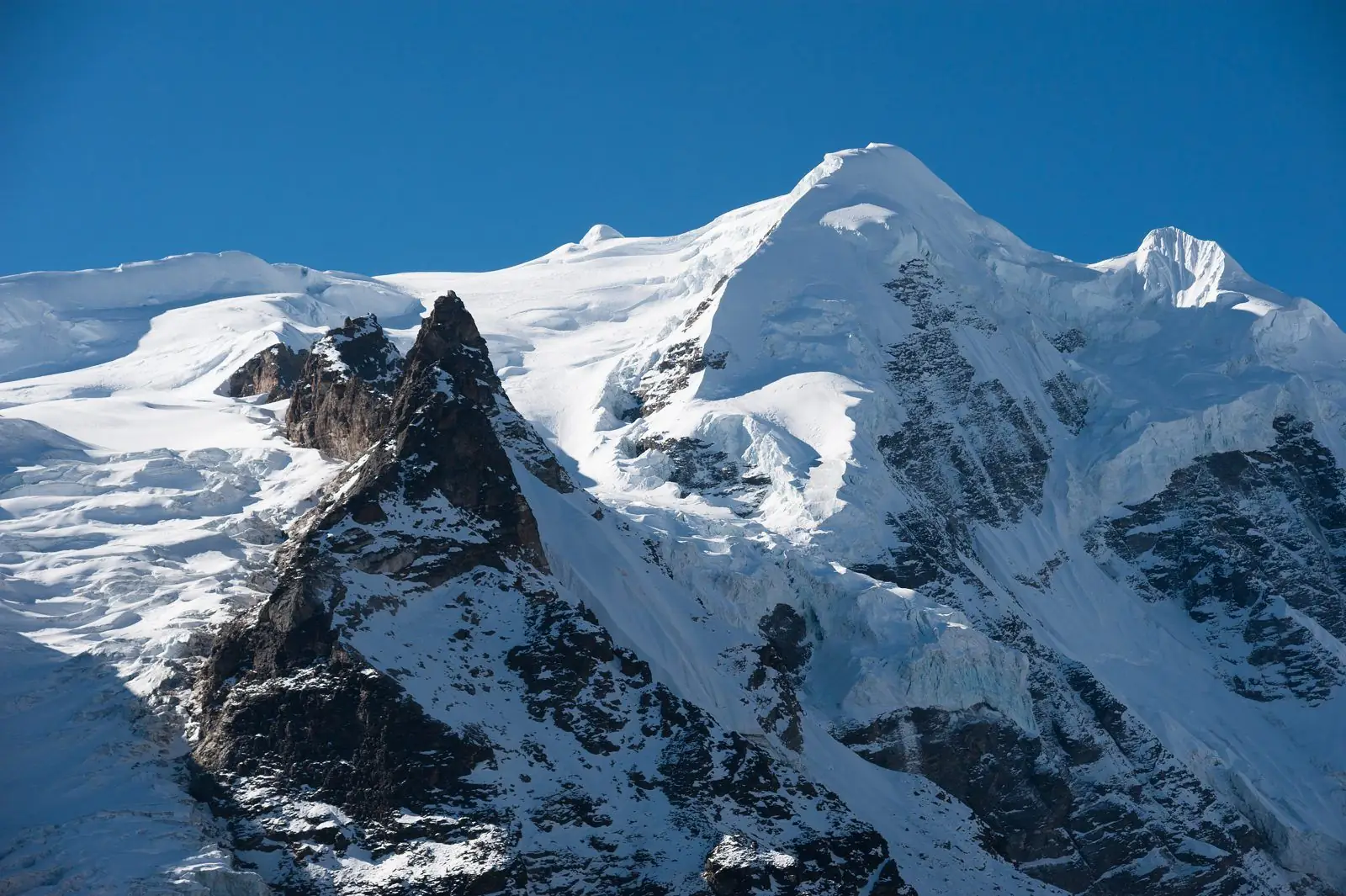
Mera Peak is among the highest trekking peaks in Nepal, and its summit is well above six thousand metres. The slopes on the standard route are mostly glaciated and moderate, so people often describe it as a long walk on snow. That description can be misleading, because the main challenge is altitude and cold.
Where the difficulty lies
- Altitude: The summit is higher than Island Peak and Lobuche East, and the higher you go, the less oxygen your body gets.
- Remote approach: The trek in takes several days through quieter valleys with simple lodges and limited help.
- Cold and wind: High camp and the summit slopes are cold and exposed.
- Long summit day: The final push takes many hours and requires steady pacing.
Technical level
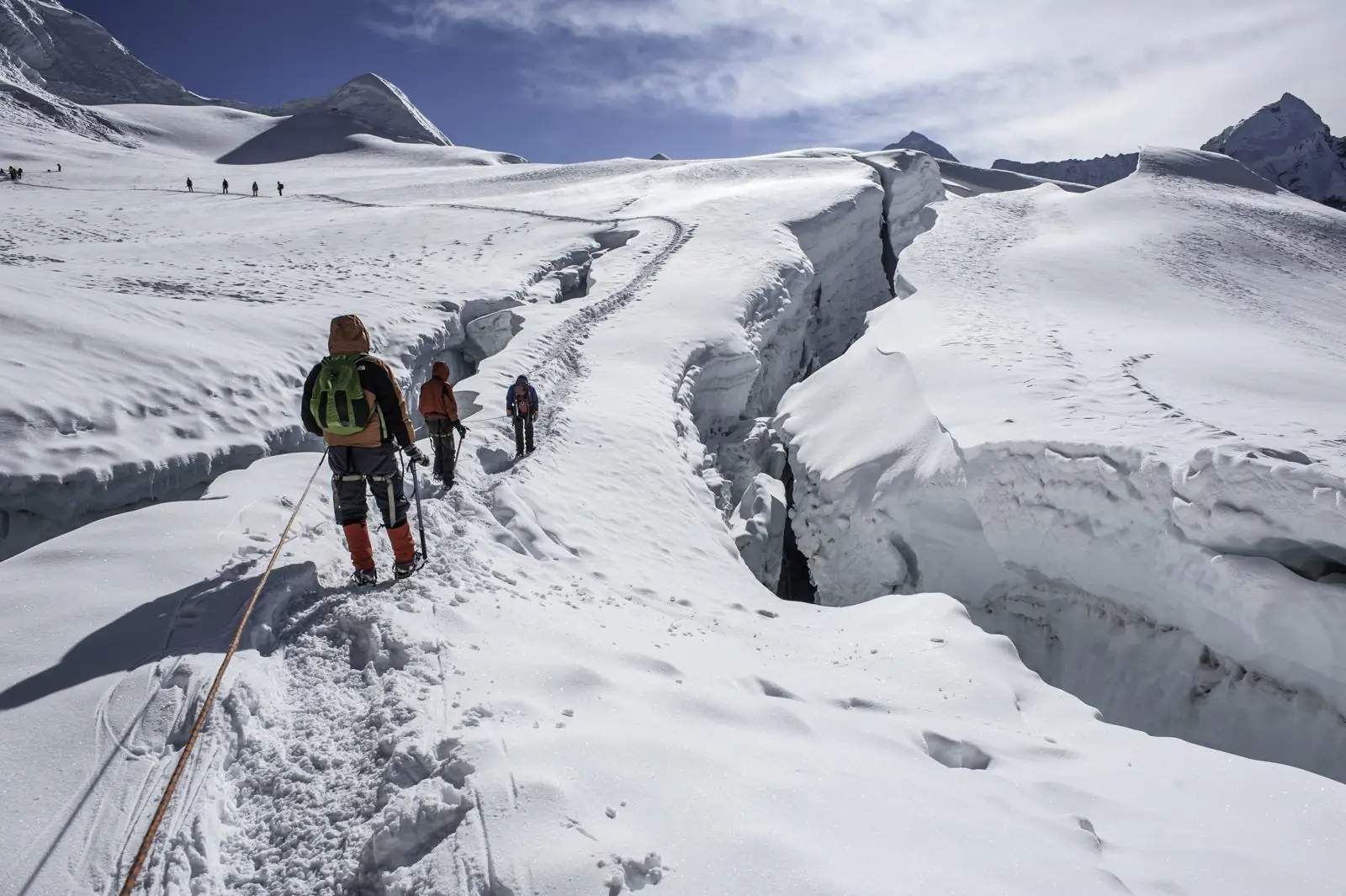
You walk on a glacier in crampons, roped together, and use an ice axe for balance. Crevasses exist, so route-finding by the guide is important. A steeper section near the top may involve a fixed rope. The skills are basic, and they are usually taught at the high camp or on an easy slope before the climb.
Fitness
You need strong endurance for long days at altitude, and a willingness to be cold and uncomfortable. If you have trekked at altitude before, you have a useful base.
Who it suits
Mera Peak suits fit trekkers who want a high summit without steep climbing. It is less suited to those who cannot tolerate cold or who have had altitude problems.
Realistic expectations
No summit is guaranteed. Weather and acclimatisation decide, so a good itinerary has spare days.
Tell us your experience and we will advise.
Why people underestimate it
Because Mera Peak is often described as a non-technical trekking peak, some climbers arrive with too little preparation. The slopes are gentle, but the altitude is serious, the days are long and the cold is real. A walk that would be easy at sea level becomes slow and tiring at 6,000 metres, and each step feels heavier than expected.
The remote approach
The route through the Hinku valley is quieter and wilder than the main Everest trail. Lodges are simpler, help is further away and communication is limited. That isolation adds to the sense of adventure but also means you should be self-reliant, healthy and well prepared before you set out.
What matters most
The three things that most affect success are acclimatisation, warmth and pacing. Take the rest days seriously, keep hands and feet warm, and walk slowly enough that you can talk comfortably. Climbers who rush the early days often struggle later.
- Practise long days with a pack in the months before departure.
- Learn how to wear and walk in crampons.
- Pack proper high-altitude boots and warm gloves.
- Be honest with your guide about how you feel.
A closer look at height and effort
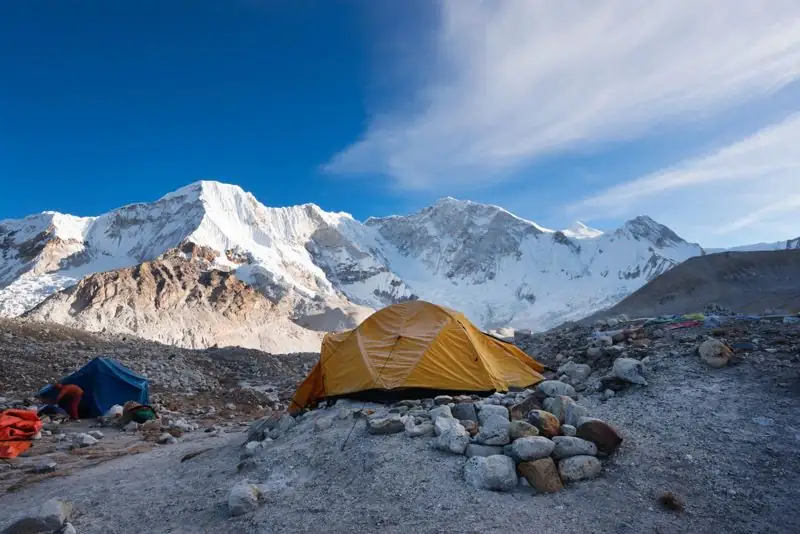
Mera Peak reaches about 6,476 metres, making it the highest trekking peak in Nepal on the standard list. Base camp sits at roughly 5,000 metres, and high camp at about 5,800 metres. The climbing itself is a long, steady walk across a glacier, but the oxygen is thin and every step takes effort. Many climbers describe summit day as a slow, patient grind rather than a technical challenge.
Why people succeed or fail
Success usually depends on acclimatisation, warmth and pacing. People who rush the approach, drink too little or ignore early symptoms often struggle. People who respect the schedule, eat well and stay warm usually do better than stronger but impatient trekkers. Good guiding makes the difference between a pleasant climb and a miserable one.
A note on glacier travel
Crevasses are present on the glacier, so you are roped to a guide or climbing partner for safety. The route is marked and usually well trodden, but conditions change each season. Listening to your guide and keeping the rope taut but not tight are basic rules of safe travel.
- Never unclip from the rope on the glacier.
- Follow the footsteps of the person in front.
- Keep a steady rhythm and avoid sudden movements.
- Tell your guide at once if you feel unsteady.