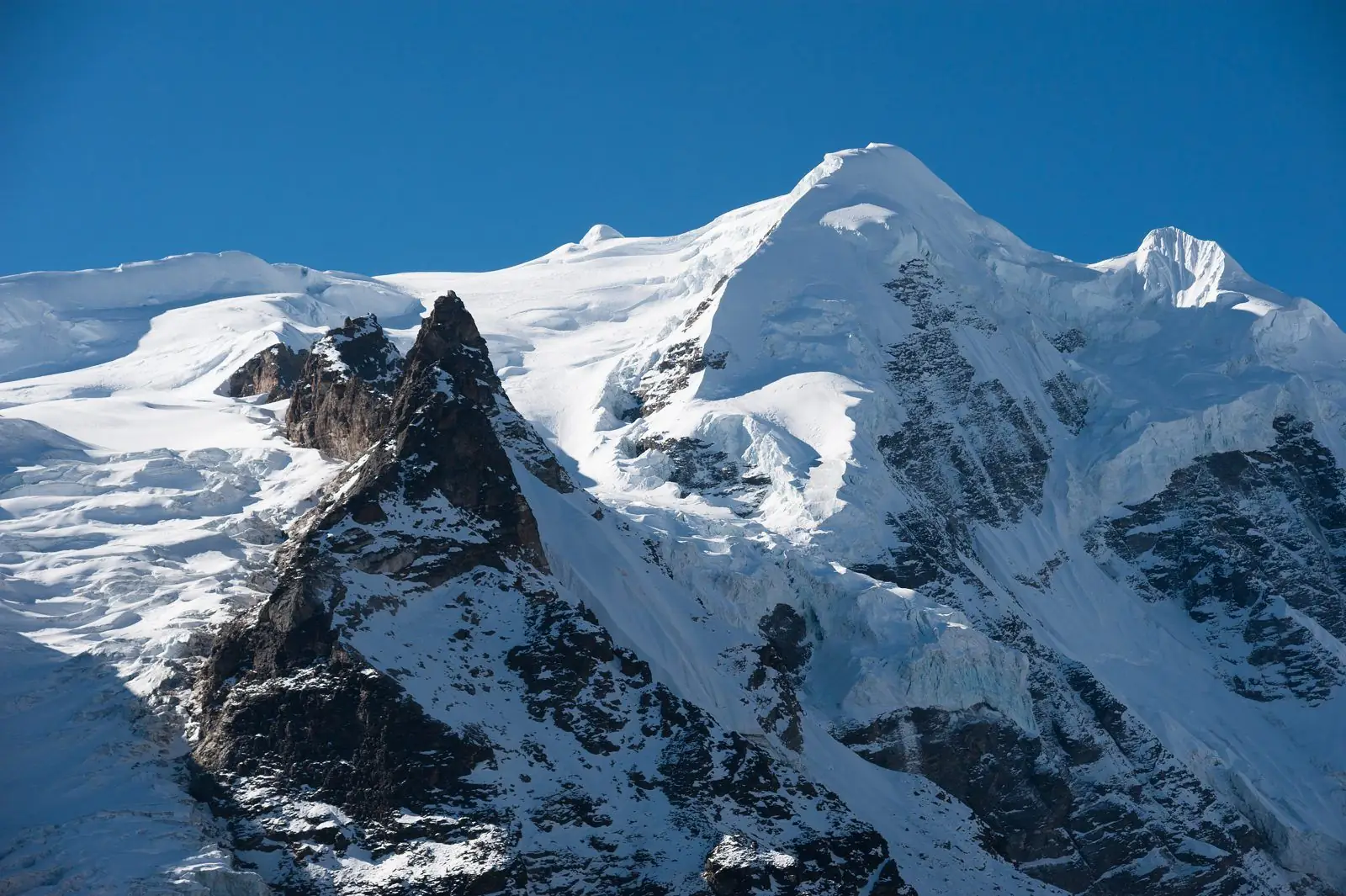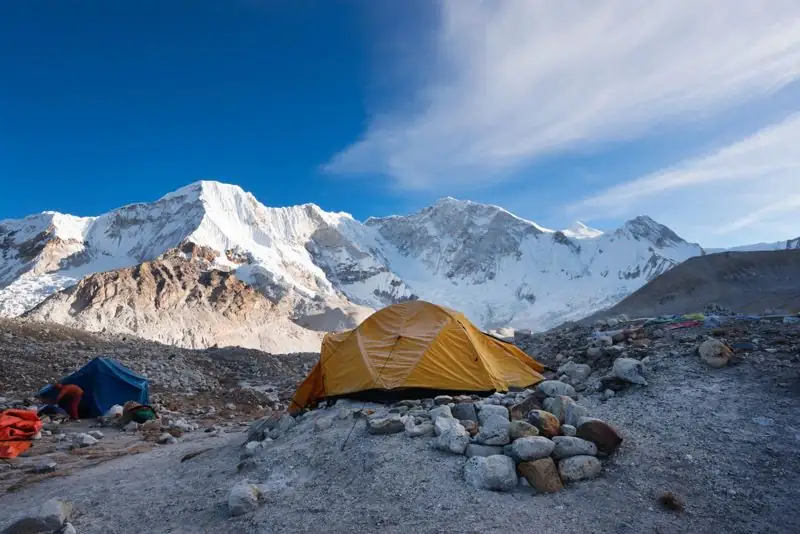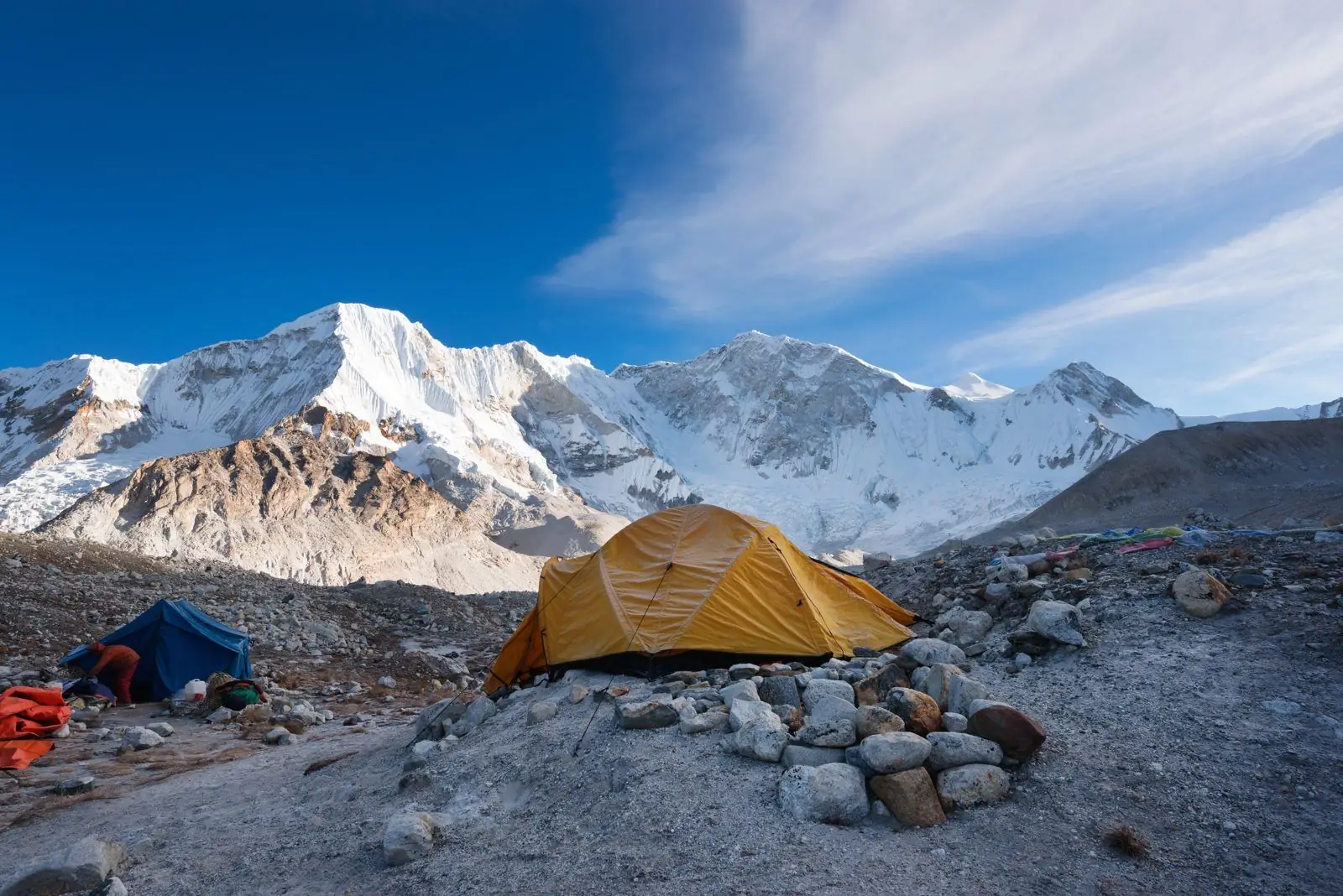
Summit day on Mera Peak is a test of patience and endurance more than technical skill. It begins in the night and continues for many hours.
Start
You leave high camp in the dark, usually between midnight and early morning, wearing warm clothes, crampons and a harness. The cold at this hour can be severe, so manage your hands and feet carefully. Sip warm drinks and eat a little.
The glacier walk
The route climbs a broad glacier on moderate slopes. You are roped to teammates, and your guide chooses the way past crevasses. Progress is slow and steady, with frequent short rests. The goal is to maintain a pace at which you can breathe comfortably.
The upper slopes
As you approach the top, the slope steepens, and a fixed rope may be used on the last stretch. The air is thin, and every step seems heavy. When the sun comes up, the views of five of the world's highest mountains can be spectacular in clear weather.
Summit and descent
You spend a short time on top, since the descent is long. You return to high camp, and sometimes continue to lower elevations the same day. Fatigue increases risk, so stay alert.
Warning signs
- Severe headache, vomiting or confusion.
- Loss of coordination.
- Frostbite signs, such as numb, waxy fingers or toes.
Turn-around
Your guide sets a turn-around time and may decide to stop earlier because of weather or your condition. Respect that call.
Dressing for the climb
Start with a base layer and a warm mid layer, add a down jacket and windproof shell, and wear a warm hat and a hood. Gloves and boots should be your warmest, since cold hands and feet are the most common reasons for turning back. Pack spare gloves and a thermos of hot drink in your small summit pack.
Pacing on the glacier
The glacier is a long, steady slope where rhythm matters more than speed. Walk in a line with your rope team, breathe deeply, and take short breaks. Resist the urge to push ahead; saving energy for the upper slopes and the descent makes the day safer.
At the top
The summit rewards you with a wide view of five of the world's eight-thousanders on a clear day. Take a few minutes to enjoy it, but do not stay long, because cold and fatigue build quickly. The descent requires as much attention as the ascent.
Timeline and rhythm
Summit day often begins at about midnight or 1 am from high camp, with a slow, steady walk across the glacier under the stars. The sun rises as you reach the upper slopes, and the summit is typically reached between 7 and 9 am. Descent takes three to four hours back to high camp, followed by a rest and possibly a further descent to base camp.
What you will see
From the summit you can see five of the world's eight-thousanders on a clear day: Everest, Lhotse, Makalu, Cho Oyu and Kangchenjunga. The view stretches in all directions, and many climbers describe the silence and scale as unforgettable.
Staying safe on the glacier
- Stay roped and keep a safe distance from others.
- Use your crampons correctly and watch for hidden crevasses.
- Do not remove goggles or gloves for photographs in strong wind.
- Turn back if the guide advises, even close to the top.