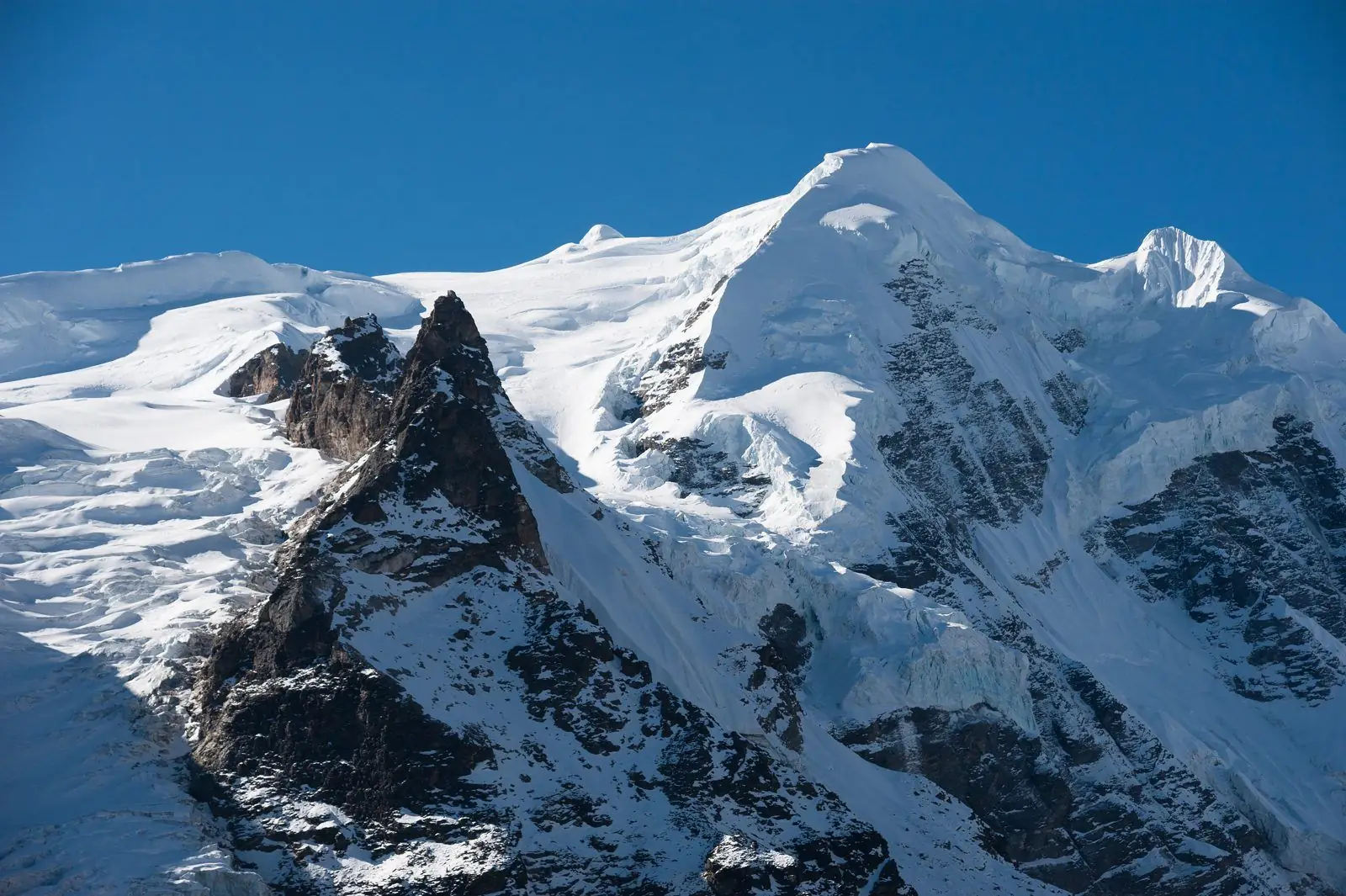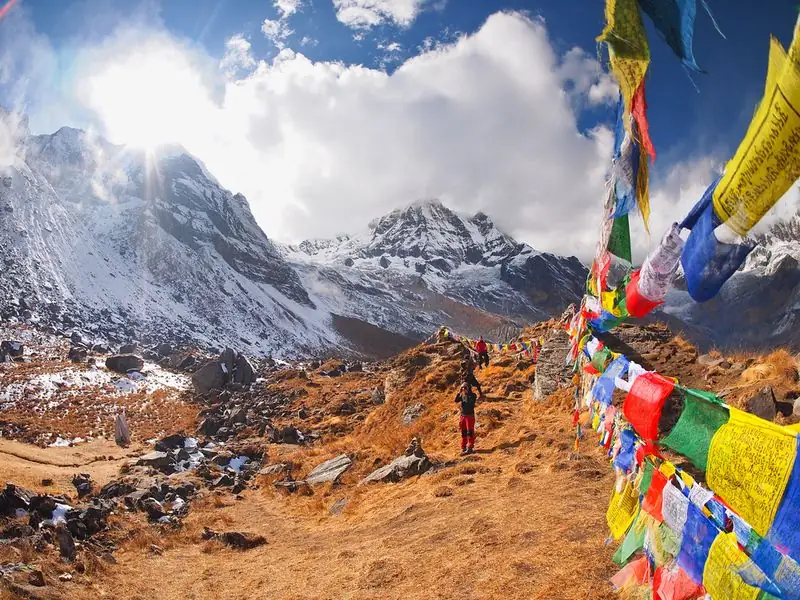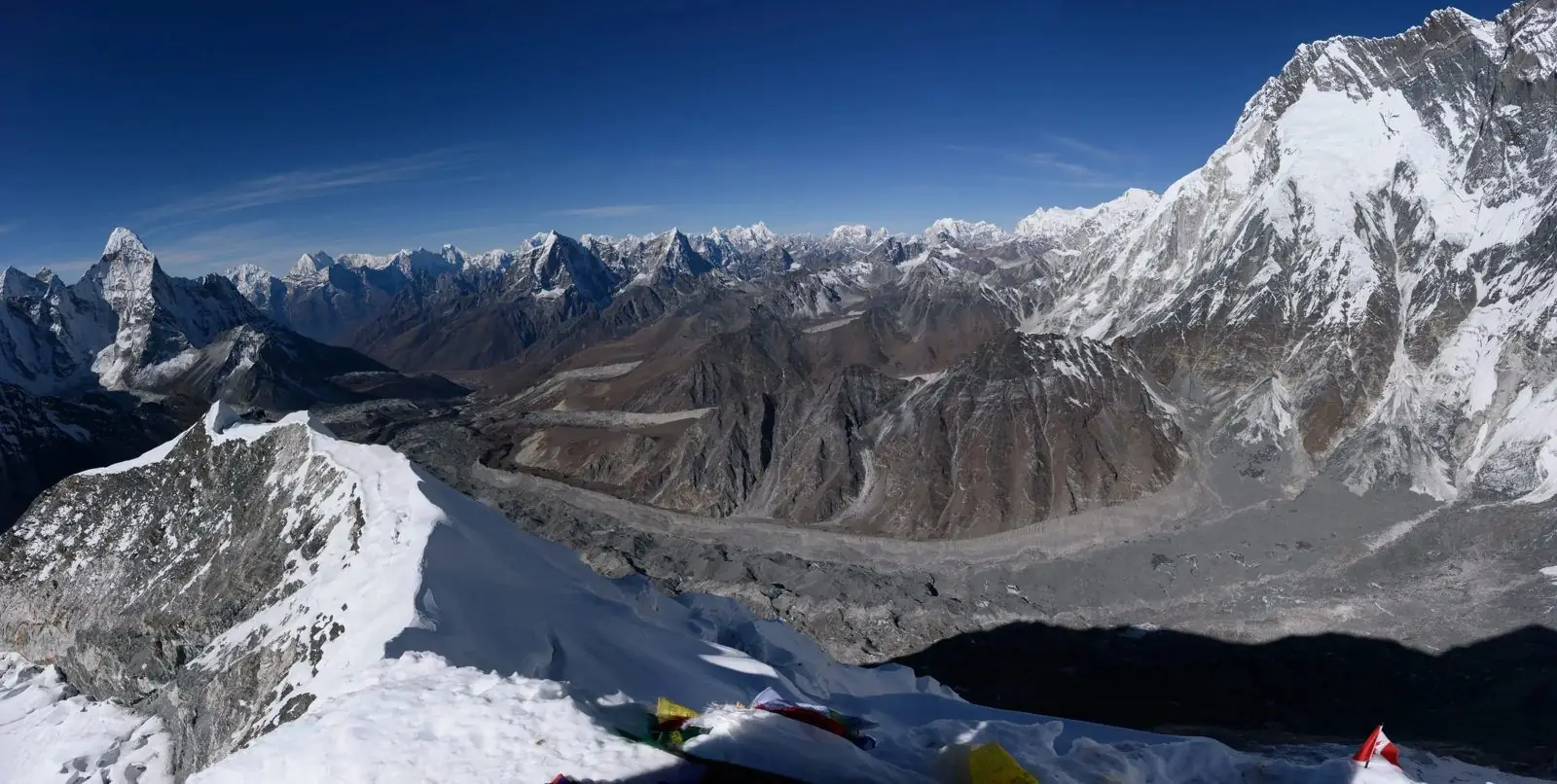
Kyajo Ri is a peak of about 6,186 m in the Khumbu, in the hills near Lukla and the Namche area. It is a technical climb, not a simple trekking summit, so it suits people with real mountaineering experience or those ready to train with a guide first. Route details and conditions vary, so confirm the current picture with us before planning.
Where Kyajo Ri sits in the Khumbu
Kyajo Ri is in the Khumbu region of eastern Nepal, in the broad area between Lukla and Namche Bazaar. Its height is usually given as about 6,186 m, though published figures for Himalayan peaks differ slightly between sources.
Many trekkers on the Everest region trails pass within sight of this part of the Khumbu without ever thinking of climbing here. That is a useful reminder that a famous valley can hold quieter peaks that see far fewer visitors than the main trails.
Because this peak is less documented than the better known trekking summits, treat any single description, including this one, as a starting point. We would rather tell you what we are unsure of than guess about access, camps or the current state of the approach.
How hard is the climb
Kyajo Ri should be treated as a technical climb. At this height you can expect steep ground, exposure, and the need for rope work, crampons and an ice axe, depending on the line chosen and the conditions in that season.
It is not a good first peak for someone whose only experience is a teahouse trek. A realistic step up is to begin with a lower trekking summit, or a mountaineering course, and then come to a peak like this with a guide who knows the terrain.
Fitness matters, but so does judgement: reading snow, weather and your own fatigue. Altitude also plays a part, and a summit day at over 6,000 m is demanding even for fit people.
Who this peak suits
This peak suits climbers who already have experience on snow and ice, who are comfortable moving roped together, and who have spent time above 5,500 m before. It also suits those who want a quieter objective than the busiest trekking peaks.
It does not suit people who want a straightforward walk to a summit, or those with limited time. A climb like this needs spare days for weather and acclimatisation, and a schedule with no slack is a poor fit.
- Prior snow and ice experience is strongly advised.
- Previous time above 5,500 m helps.
- Flexible dates are important.
- A licensed guide and a proper permit are needed.
- Travel insurance should cover climbing at this height.
Acclimatisation and health
Time in the Khumbu before any attempt is part of the plan, not an extra. Gaining height gradually, with rest days, lowers the risk of altitude illness, though it never removes it.
Know the warning signs: persistent headache, nausea, unusual tiredness, poor sleep, dizziness, and breathlessness at rest. If these worsen, the safe response is to stop climbing and descend. Severe symptoms such as confusion or loss of balance are an emergency. This is general information, not medical advice, so speak to your doctor before travelling.
Plan for cold, wind and short weather windows, and carry kit suited to those conditions. Do not rely on a summit date as fixed, because conditions on the day decide.
Season, permits and planning
Spring and autumn are the usual seasons for climbing in Nepal, as they offer steadier weather than the monsoon or deep winter. Even then, conditions on the peak can change quickly.
Climbing peaks in Nepal generally requires a permit arranged through a registered agency, and rules and fees change, so confirm before you travel. We do not quote fees here. Your plan also needs a licensed guide, insurance that covers the activity, and a realistic buffer for weather.
If you would like to attempt this peak, tell us your climbing background, your dates and your fitness. We will give an honest view on whether Kyajo Ri is the right choice or whether a gentler objective would serve you better this year.
Common questions
Is Kyajo Ri a trekking peak?
It is better treated as a technical climb. Trekking peaks are usually simpler, but at about 6,186 m with steep ground, you should expect rope work and snow skills. Check current classification and rules with us.
How high is Kyajo Ri?
It is usually given as about 6,186 m. Figures for Himalayan peaks differ a little between maps and sources, so treat the number as approximate rather than exact.
Can a beginner climb Kyajo Ri?
Not as a first climb. A beginner should build experience on lower trekking peaks and take a mountaineering course first, then consider a peak like this with a guide who knows the area well.