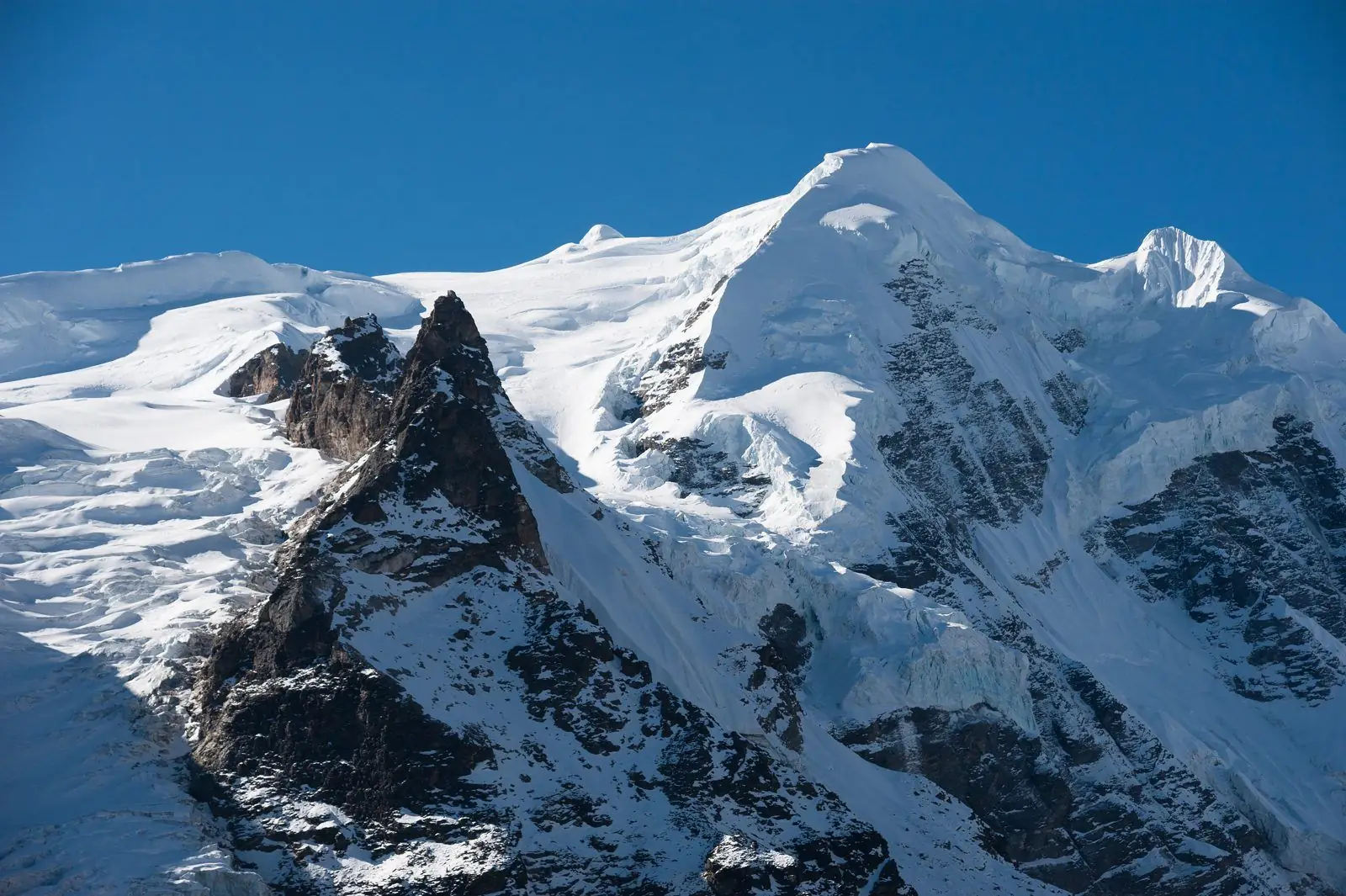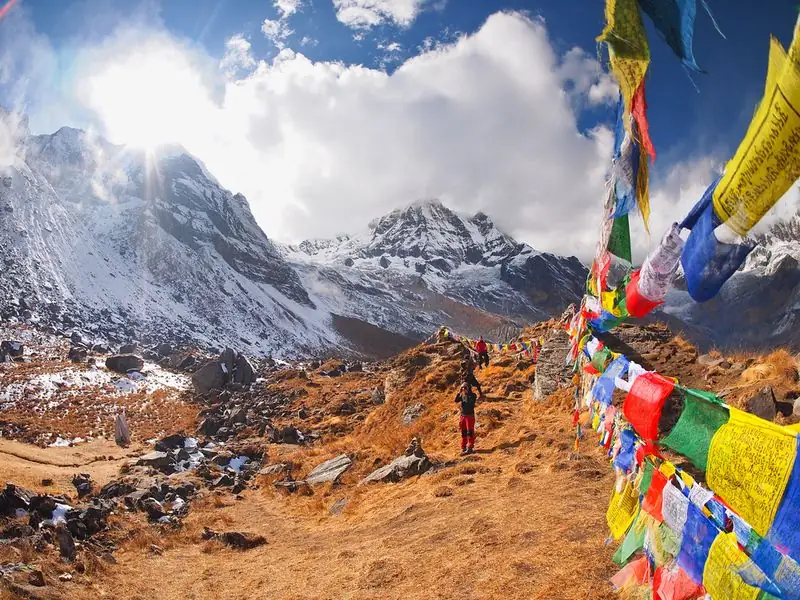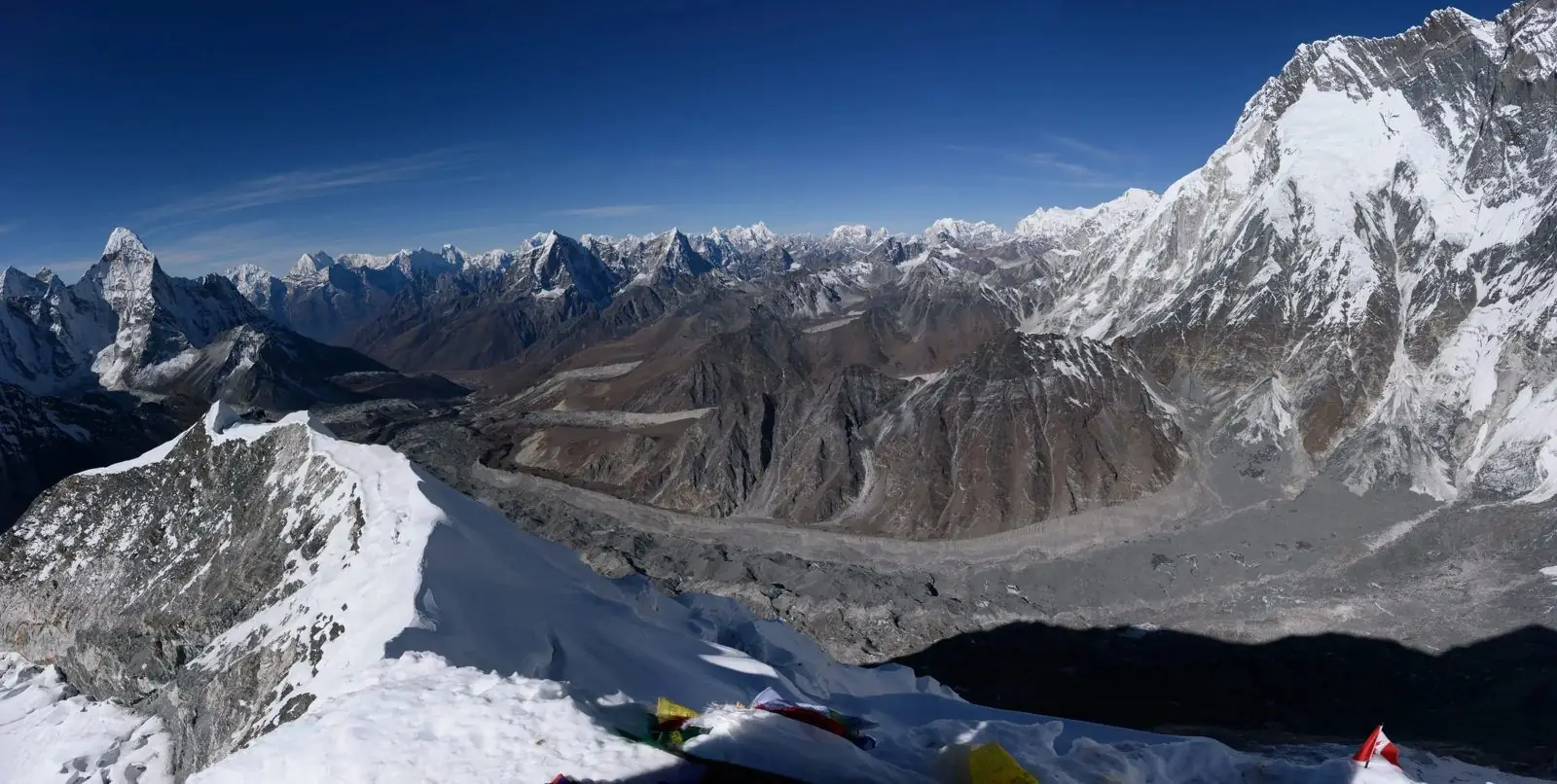
Paldor Peak is a trekking peak of about 5,896 m in the Ganesh Himal area, above the Tamang Heritage region north of Kathmandu. It is a mountaineering climb with snow and ice, not a walk. Facts on routes and access are less documented than for famous peaks, so confirm details with us first.
Where Paldor is
Paldor Peak is in the Ganesh Himal range, which lies north of Kathmandu towards the Tibetan border. It is usually listed at about 5,896 m, though figures differ a little between sources.
The approach often passes through the Tamang Heritage area, a region of hill villages with a distinct culture, mountain views and a quieter feel than the Everest or Annapurna trails.
Because this peak sees fewer climbers than the most popular trekking peaks, information is thinner. Treat any single description, including this one, as a starting point, and let us check the current picture for your dates.
What the climb involves
Expect a trek of several days to reach a base camp, followed by a higher camp and a summit push over snow and ice. The upper section calls for crampons, an ice axe, a harness and rope work.
Exact camps, times and the line taken vary with season and conditions, so we do not give fixed hours. The weather and the state of the glacier decide what is possible on the day.
A guide with local knowledge is not optional here. Route finding on less travelled ground, and managing risk on snow and ice, are what a good guide is for.
Who it suits
This peak suits climbers who want a quieter objective and who already have basic snow and ice experience. It also suits well prepared trekkers who are willing to learn skills before the climb and who accept that a summit is not guaranteed.
It is less suited to people with a short holiday, since a peak attempt needs spare days for acclimatisation and for weather.
- Good fitness and trek experience at altitude.
- Some snow and ice practice.
- Flexible dates.
- Comfort with simple camping and basic food.
- Insurance that covers climbing at this height.
Season and health
Spring and autumn are the usual climbing seasons, offering clearer skies and steadier conditions. Winter is cold and the monsoon brings rain, leeches on lower trails and poor visibility.
Altitude illness can affect anyone. Know the signs: headache that does not ease, nausea, dizziness, poor sleep and unusual tiredness. If they get worse, descend. Severe signs such as confusion or stumbling are an emergency. This is general information, not medical advice, so talk to your doctor before you travel.
Build acclimatisation days into the plan and avoid gaining too much height too quickly. A calm pace early in the trek pays off on summit day.
Permits and planning
Peak climbing in Nepal needs a permit arranged through a registered agency, and some areas near the border have extra rules. Fees and rules change, so confirm before you travel. We do not quote fees on this page.
Our packages include permits, a licensed guide, porters and transfers. For a peak attempt, tell us your experience, fitness and dates, and we will say whether Paldor is a good fit or whether another objective would suit you better.
Indian travellers do not need a visa for Nepal but should carry valid photo ID such as a passport or voter ID, and should check current currency rules before travelling.
Common questions
How high is Paldor Peak?
It is usually given as about 5,896 m. Different maps and guidebooks may show slightly different numbers, so treat the figure as approximate and not as an exact survey value.
Is Paldor Peak technical?
Yes, expect snow and ice on the upper section, with crampons, an ice axe and rope work. It is a mountaineering climb, not a trek, so some experience or training is needed.
When should I climb Paldor Peak?
Spring and autumn are the usual seasons, with clearer skies and steadier conditions. Weather can still change quickly, so keep spare days in your plan.