




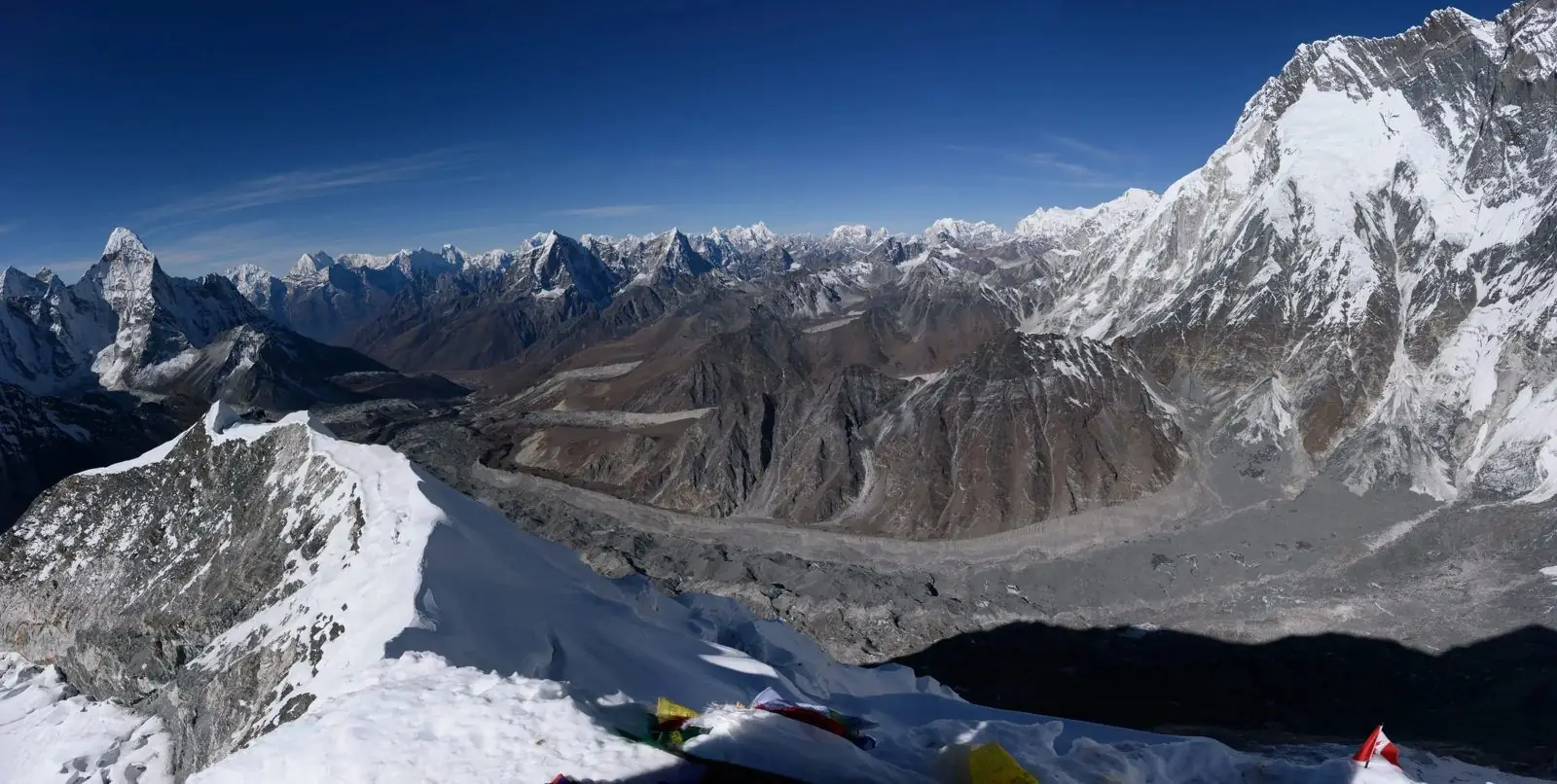
Trekking peaks are a listed group of lower Nepal summits, mostly between about 5,500 m and 6,500 m, with a simpler permit route and shorter logistics. Expedition peaks are the higher or more demanding mountains, with a heavier permit process and far more support. Most first-time climbers start on a trekking peak. Rules and royalties change, so confirm the current position before you book.
What each category means
The word trekking in the name is about the permit category, not about how easy the climb is. A trekking peak is a mountain on an official list of peaks that can be climbed with a lighter set of formalities. An expedition peak is any mountain outside that list, and it normally needs a bigger team, more camps and a longer schedule.
Both groups involve snow, ice and real altitude. A trekking peak still asks for fitness, basic technical skill and respect for the weather, so treat the label as an administrative term and not as a promise of an easy day.
Who regulates each group
Trekking peaks are handled through the Nepal Mountaineering Association, which issues climbing permits for the listed peaks. Expedition peaks are handled through the government department responsible for mountaineering and tourism, and the process is slower and more document heavy.
In both cases a registered agency usually arranges the paperwork on your behalf. The exact forms, royalty structure and processing times are revised from time to time, and they can differ by season and by peak. Rules change, so confirm before you travel and ask your agency for the current list of documents.
Examples in each group
Peaks commonly climbed from the Everest and Annapurna regions include the following trekking peaks:
- Mera Peak in the Hinku valley
- Island Peak, also called Imja Tse
- Lobuche East near the Khumbu trail
- Yala Peak in Langtang
- Pisang Peak and Chulu peaks near the Annapurna Circuit
Expedition peaks include the very high giants such as Everest, Lhotse, Makalu, Manaslu, Cho Oyu and Annapurna I, along with many lesser known summits. These sit in a different league of risk, cost, time and experience.
Each of these has its own route, season pattern and level of difficulty, so a general label never replaces peak-specific advice.
Skills and experience compared
On a trekking peak you usually learn the key tools in a day or two: walking in crampons, using an ice axe, clipping into fixed ropes and ascending with a mechanical rope clamp. A guide leads, fixes or checks the ropes and sets the pace.
Expedition peaks assume you can already do these things well, and also manage multi-day camps, rope teamwork, long storm waits, high-altitude cooking, self-rescue and decision making when a leader is not within reach. Most mountaineers spend several seasons on trekking peaks and other 6,000 m objectives before they consider an expedition peak.
Time, logistics and support
A trekking peak is normally planned as a trek plus a climb of roughly two to three weeks door to door, using lodges for the approach and tents at base or high camp. Our Mera, Island and Lobuche programmes run about 17 to 18 days from Kathmandu.
Expedition peaks often need six to eight weeks, fixed camps, supplemental oxygen on the highest mountains, high-altitude support staff and a larger gear load. Planning that kind of trip with an agency early is wise, and rules change, so confirm requirements well before your travel dates.
Choosing between them
If you have not climbed above 6,000 m before, a trekking peak is the sensible first step. Pick one that matches your experience and your time, and plan a spare day for weather. Altitude illness can affect anyone, so know the symptoms such as headache, nausea and unusual tiredness, and descend if they worsen. This is general information, not medical advice.
If you are unsure where you fit, send us your past treks and fitness routine, and we will suggest a realistic first peak.
Whatever you choose, check that your insurance covers climbing at that height.
Common questions
Is a trekking peak easy to climb?
No. The word trekking describes the permit category. Trekking peaks still involve glaciers, steep snow, high altitude and cold, and they suit fit people who are willing to learn basic mountaineering skills under a guide.
Do I need a guide for a trekking peak?
Going with an experienced licensed guide through a registered agency is the normal and safest approach, and rules often expect it. Rules change, so confirm the current requirement with your agency before you travel.
Can a beginner climb an expedition peak?
It is not advised. Expedition peaks assume solid prior experience at altitude and with ropes and camps. Build that experience on trekking peaks and other high objectives first, then talk to an agency about the next step.


