




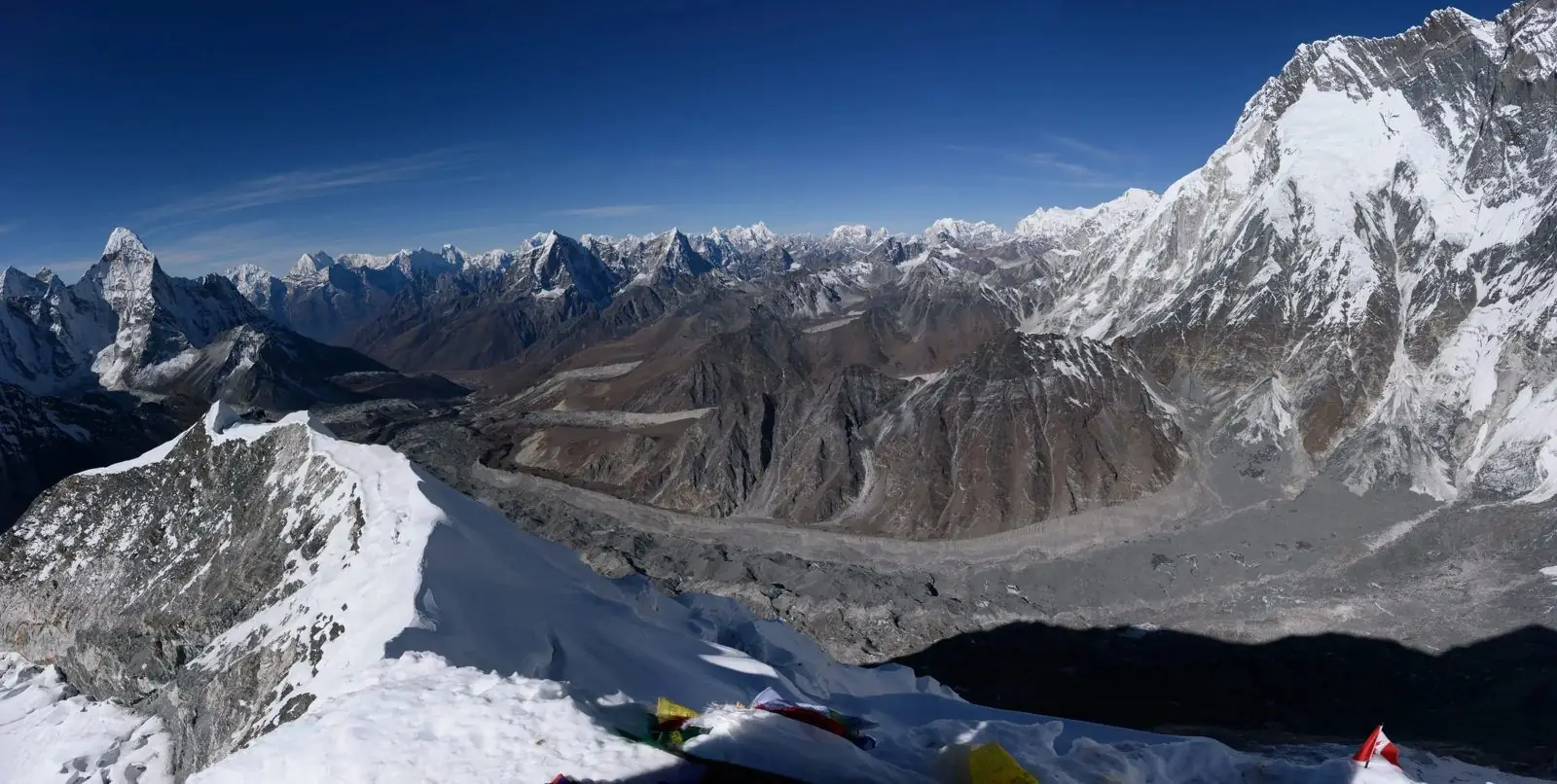
Amphu Laptsa is a high glaciated pass of about 5,800 m linking the Chhukung and Imja valley area with the Hongu side. It is technical and for experienced parties only, with ice, steep ground and rope work. Conditions change a lot between seasons, so confirm the current picture before planning.
What the pass is
Amphu Laptsa is a high pass that connects the Imja valley, near Chhukung, with the remote Hongu valley on the other side. It is commonly given as about 5,800 m, though sources differ a little.
It is not one of the standard Everest region trekking passes. The Three Passes trek, which is 20 days in our plan, uses different, less technical crossings. Amphu Laptsa is a separate undertaking and is usually done as part of a longer, more remote route.
Because of its glaciated terrain and remote setting, it attracts few people, and information can be out of date by the time you read it.
Why it is technical
The pass involves glacier and ice, steep sections that may need fixed rope or a roped team, and a descent that can be exposed. You should expect to use crampons, an ice axe and a harness.
Conditions change from year to year. Snow cover, ice and crevasse patterns can make a route easy one season and difficult or closed the next. A guide with recent knowledge matters more here than almost anywhere.
Rockfall, falling ice and sudden weather are real hazards. This is not a place to learn the basics, and it is not a good choice for large, mixed ability groups.
Who should attempt it
Amphu Laptsa suits experienced trekkers and climbers who have crossed glaciated terrain before, are fit, and have spent time above 5,000 m. It also suits those who have enough time for acclimatisation and spare days for weather.
It does not suit first time high altitude trekkers or anyone who is unsure about exposure and rope work. If you have doubts, a lower and easier crossing is a far better choice for now.
- Previous glacier and crampon experience.
- Good acclimatisation on earlier days.
- Flexible dates and spare days.
- A licensed guide and a capable team.
- Insurance that covers high altitude activity.
Altitude and safety
Crossing at about 5,800 m after a few days of height gain is demanding. Plan for a gradual build up in the Imja valley before attempting it.
Know the signs of altitude illness: persistent headache, nausea, dizziness, poor sleep and unusual fatigue. If they worsen, do not go higher, and descend. Severe symptoms such as confusion or loss of balance are an emergency. This is general information, not medical advice, so speak to your doctor first.
Cold, wind and a long day add to the strain. The decision to turn back should be made early, not late, and a guide's call on the day should be respected.
Season, permits and planning
Spring and autumn are the usual seasons, as they offer clearer skies and steadier conditions. Winter is extremely cold and the monsoon brings poor visibility and unstable snow.
The route passes through national park areas and may involve extra permit conditions, since it crosses toward a more remote, protected region. Rules and fees change, so confirm before you travel. We do not quote fees on this page.
Our packages include permits, a licensed guide, porters and transfers. Tell us your experience and dates, and we will give you an honest view on whether this pass fits your trip or whether the standard Three Passes route is the better choice.
Common questions
How high is Amphu Laptsa?
It is commonly given as about 5,800 m. Figures differ a little between maps, guidebooks and other sources, so treat the number as approximate rather than exact.
Is Amphu Laptsa part of the Three Passes trek?
No. The Three Passes trek uses different crossings. Amphu Laptsa is a separate, more technical route for experienced parties, usually part of a longer, remote itinerary.
Can a trekker without climbing experience cross it?
It is not advised. The pass needs glacier skills, crampons, an ice axe and rope work. Build experience on easier high routes first, then consider it with a guide who knows the area.


