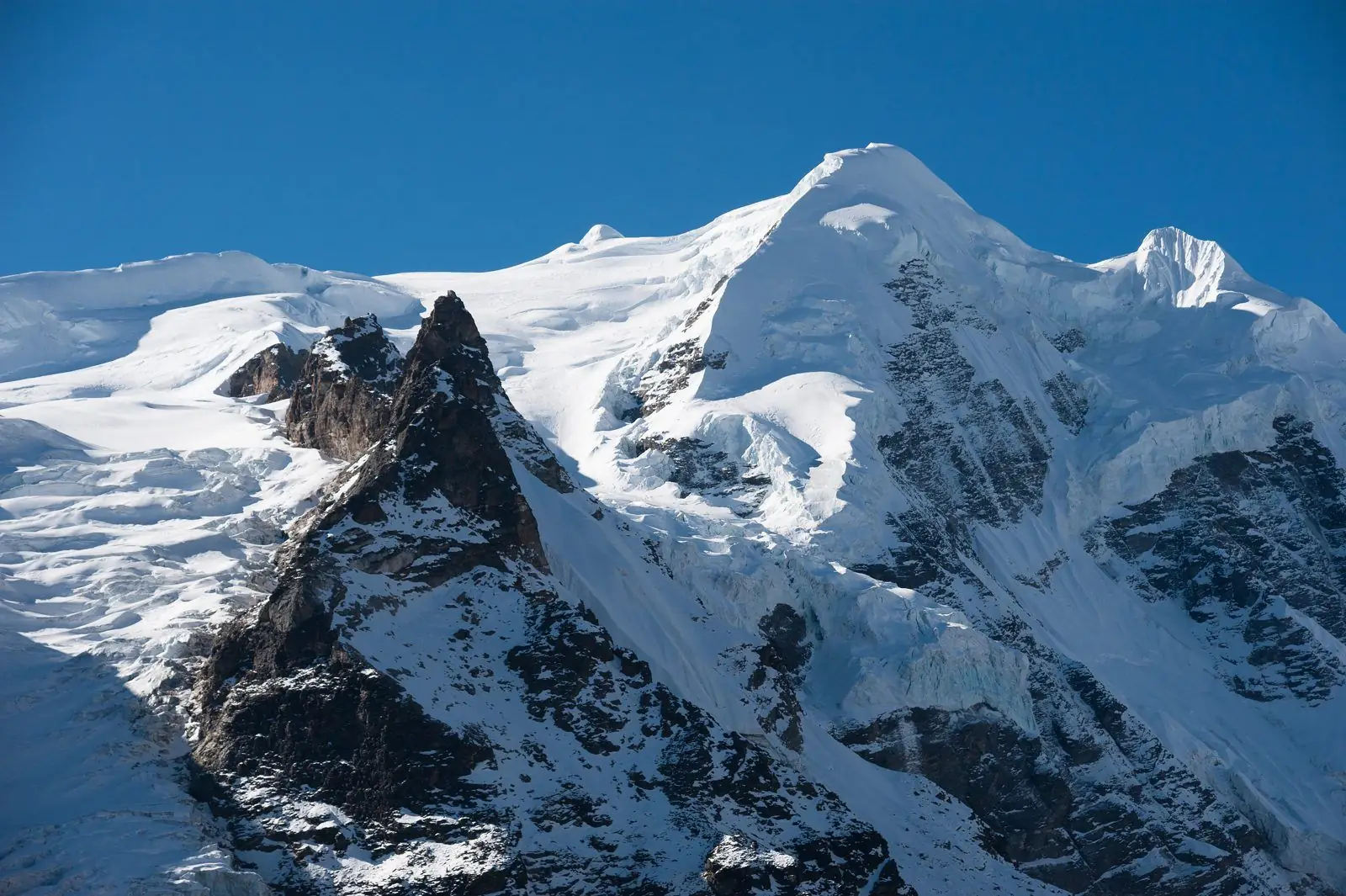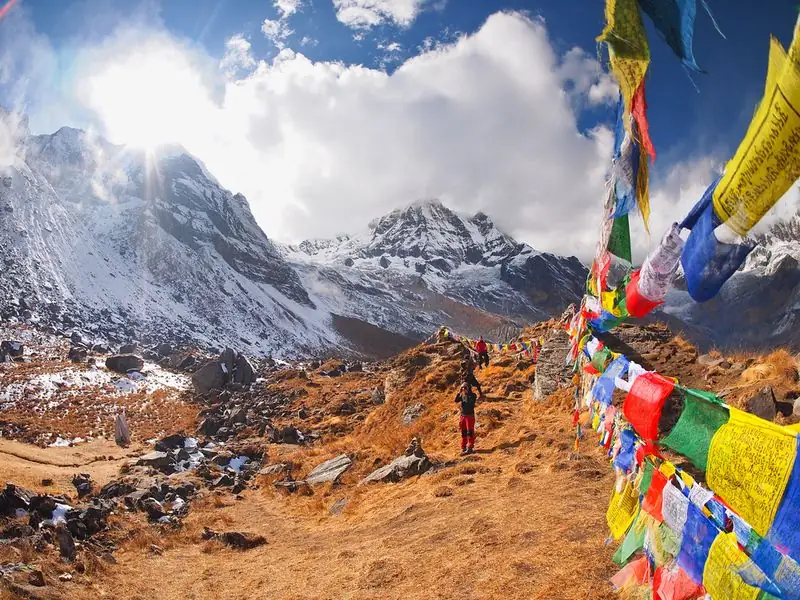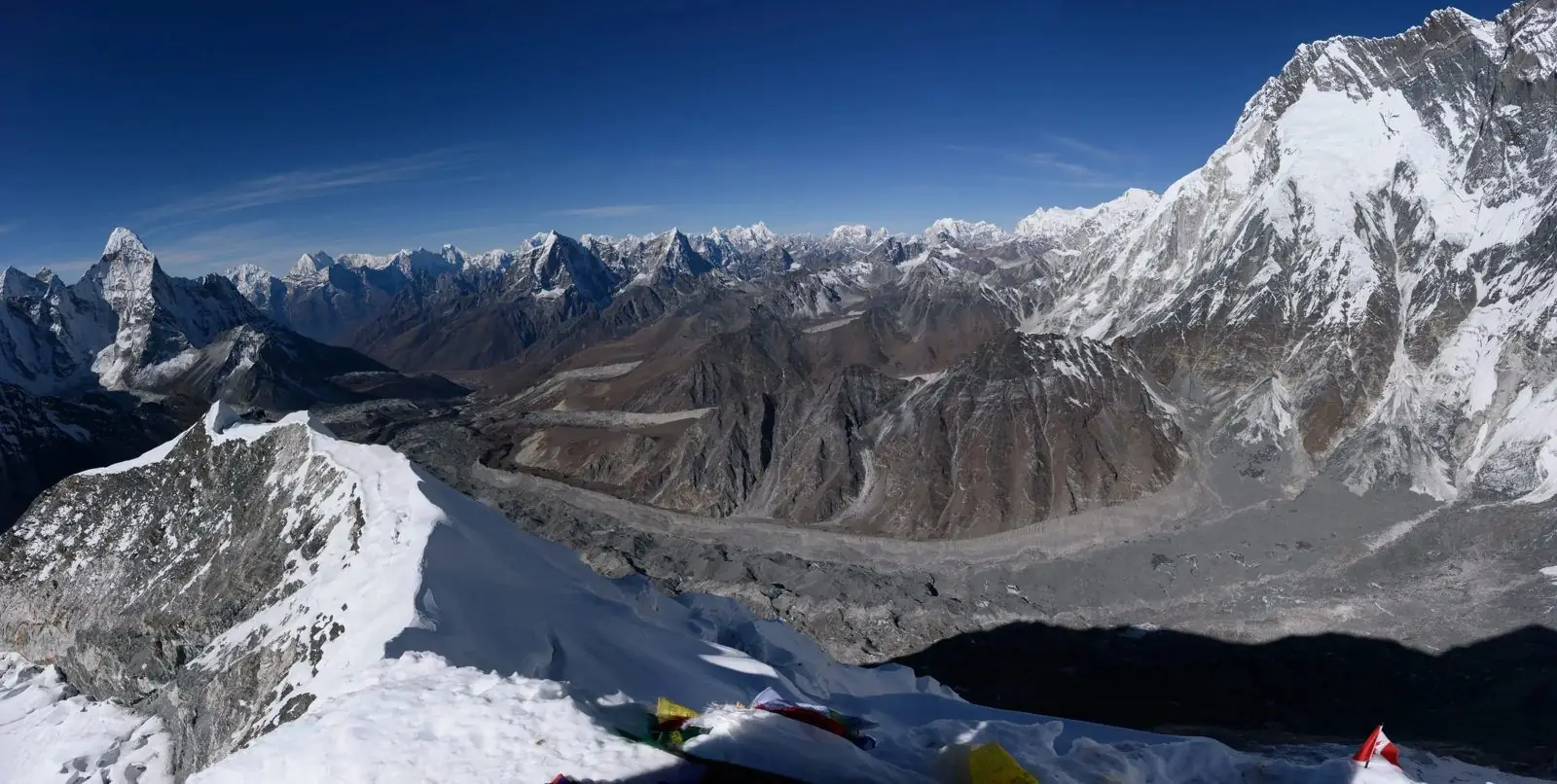
Naya Kanga, also known as Ganja La Chuli, is a trekking peak of around 5,844 m near Kyanjin Gompa in the Langtang valley. It is a real mountaineering objective, with glacier travel and a steep summit section, rather than a walk. Heights and route details vary by source, so confirm the current picture before planning.
Where Naya Kanga is
Naya Kanga stands above the upper Langtang valley, in reach of Kyanjin Gompa, the last main village before the high glacier country. It is often listed at around 5,844 m, and it is also called Ganja La Chuli, so you may see either name in guidebooks.
Langtang is reached by road from Kathmandu to the trailhead, followed by a trek up the valley. Our standard Langtang trek is 10 days, and a climb on Naya Kanga would normally be added to that or planned as a longer trip.
Kyanjin is at about 3,800 m, which makes it a comfortable base for acclimatisation hikes before heading higher.
Route outline
A typical attempt goes from Kyanjin to a base camp on the moraine and glacier edge, then to a higher camp, before a summit push. The upper part involves glacier travel, snow slopes and a steeper final stretch.
Expect crampons, an ice axe, a harness and rope work. Exact camps, timings and the line taken depend on the season, the glacier's condition and the guide's judgement, so we will not give fixed hours here.
Conditions can change from year to year, and crevasse patterns and snow cover are never the same twice. This is one reason a qualified guide who knows the area is not optional but part of a safe plan.
Difficulty and who it suits
Naya Kanga is often called one of the more approachable trekking peaks, but approachable is relative. It still demands fitness, good acclimatisation and basic snow and ice skills, which a guide can teach in a short training session before the climb.
It suits trekkers with some experience at altitude who want a first proper summit, and who are comfortable with early starts, cold and a long summit day.
- Good fitness and a steady head for exposure.
- Prior trek above 4,500 m is helpful.
- Willingness to learn rope and crampon use.
- Spare days for weather.
- Insurance that covers peak climbing.
Season and conditions
Spring and autumn are the usual windows, with the clearest skies and steadier snow. Winter is cold with short days, and the monsoon brings cloud, rain at lower levels and unstable snow above.
Weather in the high Himalaya can turn quickly, so a summit date is a hope and not a promise. Build in spare days, and be ready to turn back if wind, fresh snow or your own condition say so.
Altitude illness can affect anyone. Know the signs: headache, nausea, dizziness, poor sleep and unusual tiredness. If they worsen, descend. This is general information, not medical advice, so check with your doctor before you travel.
Permits and planning
Peak climbing in Nepal needs a permit arranged through a registered agency, along with the usual national park entry and trekking paperwork for Langtang. Rules and fees change, so confirm before you travel. We do not quote fees on this page.
Our packages include permits, a licensed guide, porters and transfers. For a peak attempt, tell us your climbing background, fitness and dates, and we will advise on a sensible schedule and on whether extra rest days are needed.
If you are unsure whether you are ready, a good plan is to do the Langtang trek first and decide on the climb once you have felt how your body handles the height.
Common questions
Is Naya Kanga the same as Ganja La Chuli?
Yes, both names are used for the same peak, which is around 5,844 m near Kyanjin in Langtang. Maps and guidebooks may use either, so check which one a source means.
Can a beginner climb Naya Kanga?
A fit beginner with no snow experience can consider it with a guide and some training first, but it is still a mountaineering climb. Altitude experience beforehand makes a real difference.
When is the best time for Naya Kanga?
Spring and autumn are the usual seasons, with clearer skies and steadier conditions. Weather can still change fast, so plan spare days and be ready to turn back.