




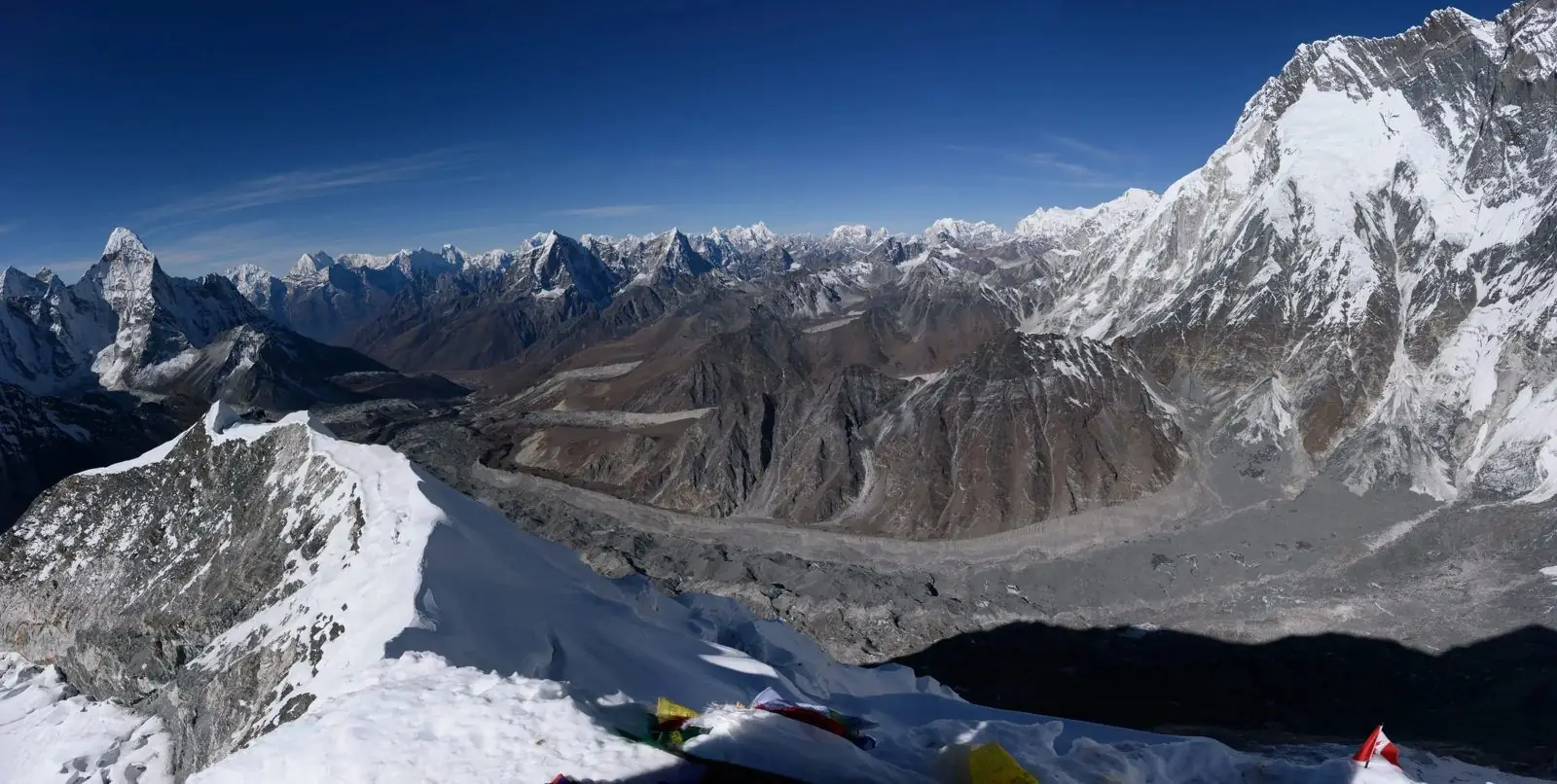
Grades such as PD (a little difficult) and AD (fairly difficult) describe overall mountaineering seriousness, combining slope angle, exposure, glacier travel and effort. Mera Peak is usually described at the easier end, Island Peak a step harder, and Lobuche East harder again. Grades are indicative only, since snow, ice and weather change the real difficulty from day to day.
Where the grading system comes from
The PD and AD labels come from an alpine system used in many mountain ranges. PD means peu difficile, or a little difficult. AD means assez difficile, or fairly difficult. Higher levels exist, but they are rare among trekking peaks.
The grade is an overall impression of the route, not a measure of fitness. It looks at the steepness of snow and ice, the length of technical sections, the exposure and the objective hazards. It does not capture altitude or cold, which add a lot of effort on Nepal peaks.
What PD means on a Nepal peak
A PD route is mostly glacier walking and moderate snow slopes. You wear crampons, carry an ice axe and rope up in places where crevasses could be hidden. There may be a short steeper section, but the climb is usually long and tiring rather than technical.
Mera Peak is the usual example. It is often described as PD, though its height, about 6,400 m, makes it a serious undertaking. Easy terrain at that altitude still demands good acclimatisation, early starts and careful pacing.
Plan extra acclimatisation days and a spare day for weather, since an easy grade does not shorten the real effort.
What AD means on a Nepal peak
An AD route adds steeper snow or ice and sections where you move on fixed ropes with a mechanical clamp. Falls would have more serious consequences, so the guide fixes or checks protection and watches your technique.
Island Peak is often placed around this level because of its steep headwall near the top, and Lobuche East is commonly described as being at or above that level for its exposed ridge. Descriptions differ between sources, so treat any single grade as one opinion and not a rule.
Guides watch each client's balance and rope handling closely on these sections and may slow the group or turn back.
Comparing common peaks
As a rough comparison, from gentler to more demanding in technical terms:
- Mera Peak, long glacier walk with limited steep sections
- Yala Peak, a shorter, less crowded Langtang climb
- Pisang Peak, steeper ground above high camp
- Chulu peaks, long and cold with variable snow
- Island Peak, a steep headwall with fixed ropes
- Lobuche East, a narrow ridge and mixed ground
This ordering is a simple guide, and people with different strengths may rank them differently.
The list is a loose guide, since a peak can feel easier in firm snow and harder in wind or deep fresh snow.
Why grades are not a guarantee
Conditions change the grade. A dry autumn may leave bare ice where spring snow was soft, and heavy snow can turn an easy slope into a slog or add avalanche risk. Wind and temperature can make a moderate climb feel severe.
Your own state also matters. Poor sleep, a chest infection or a slow acclimatisation can make an easy route hard. Altitude illness can appear on any peak, so know the symptoms, such as headache, nausea and unusual weakness, and descend if they worsen. This is general information, not medical advice.
Using grades to choose a first peak
Use the grade as one input alongside your trekking history, comfort with heights and the number of days you can spare. Beginners are often steered towards Mera Peak for its gentle terrain, while people who have already climbed above 5,000 m and want a technical test look at Island or Lobuche East.
Tell us what you have done before and we will compare options honestly. A longer schedule with spare days usually improves your chances more than choosing an easier grade.
Your guide has the final say on the day, and a turn-back for safety is part of responsible climbing.
Common questions
What does PD mean for a climb?
PD stands for peu difficile, or a little difficult. It usually means glacier walking and moderate snow slopes with limited steep sections. At Nepal altitudes, even a PD peak is demanding because of height and cold.
Is Island Peak harder than Mera Peak?
Generally yes in technical terms, because Island Peak has a steep headwall with fixed ropes while Mera Peak is mostly a glacier walk. Mera Peak is higher and long, so effort and altitude still matter.
Are the grades official?
No. They are indicative opinions used by guidebooks and guides, and they vary between sources and seasons. Treat them as a rough comparison, not as a promise about how a given climb will feel.


