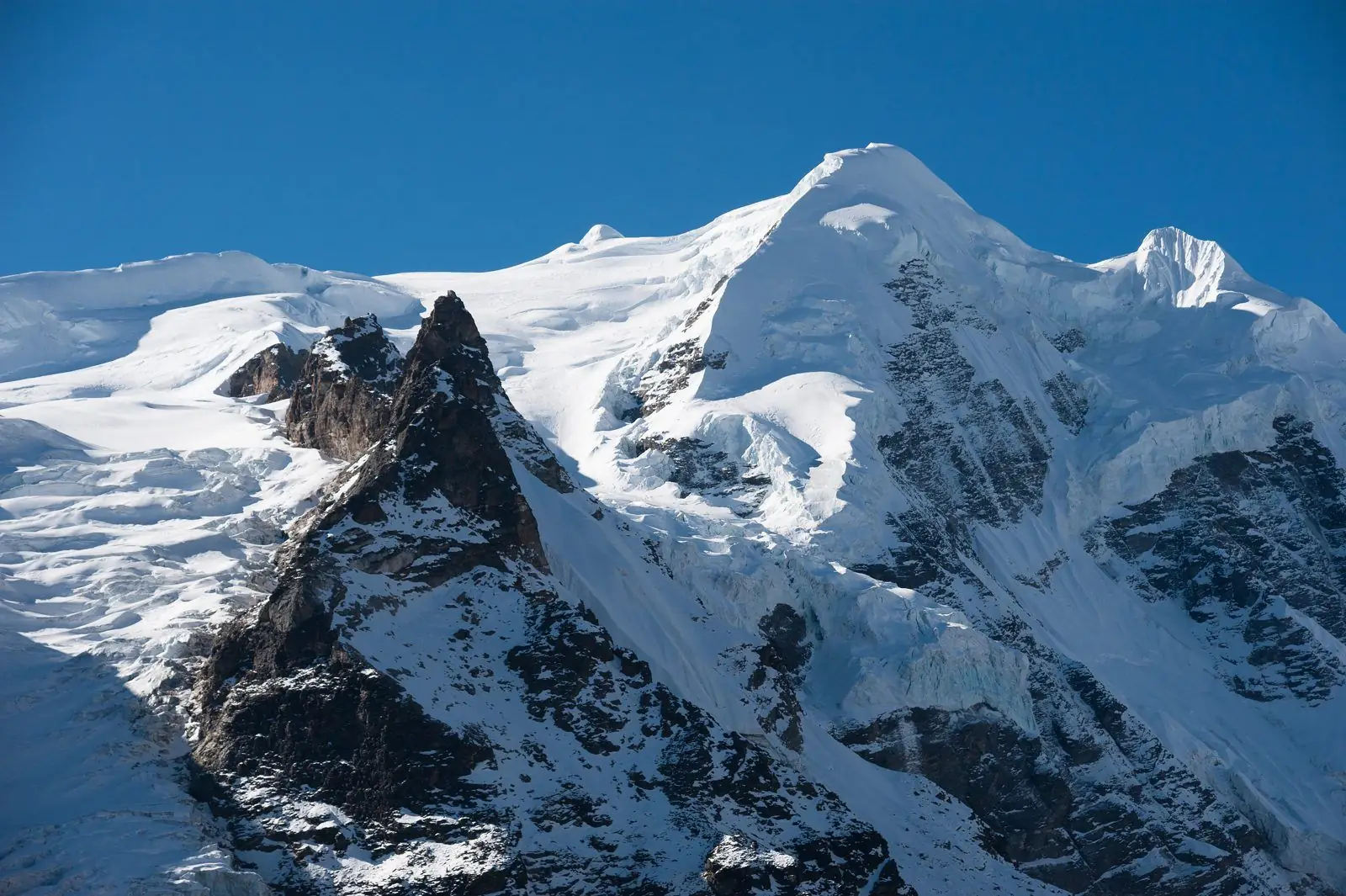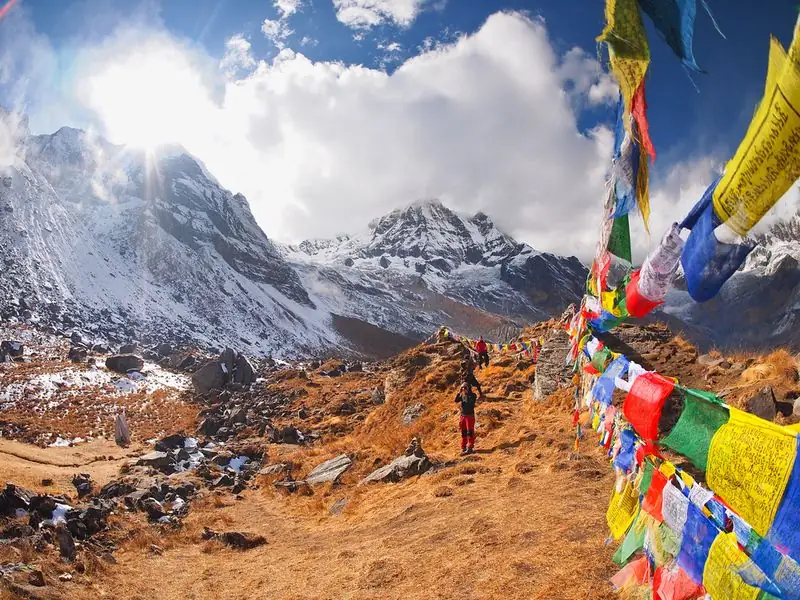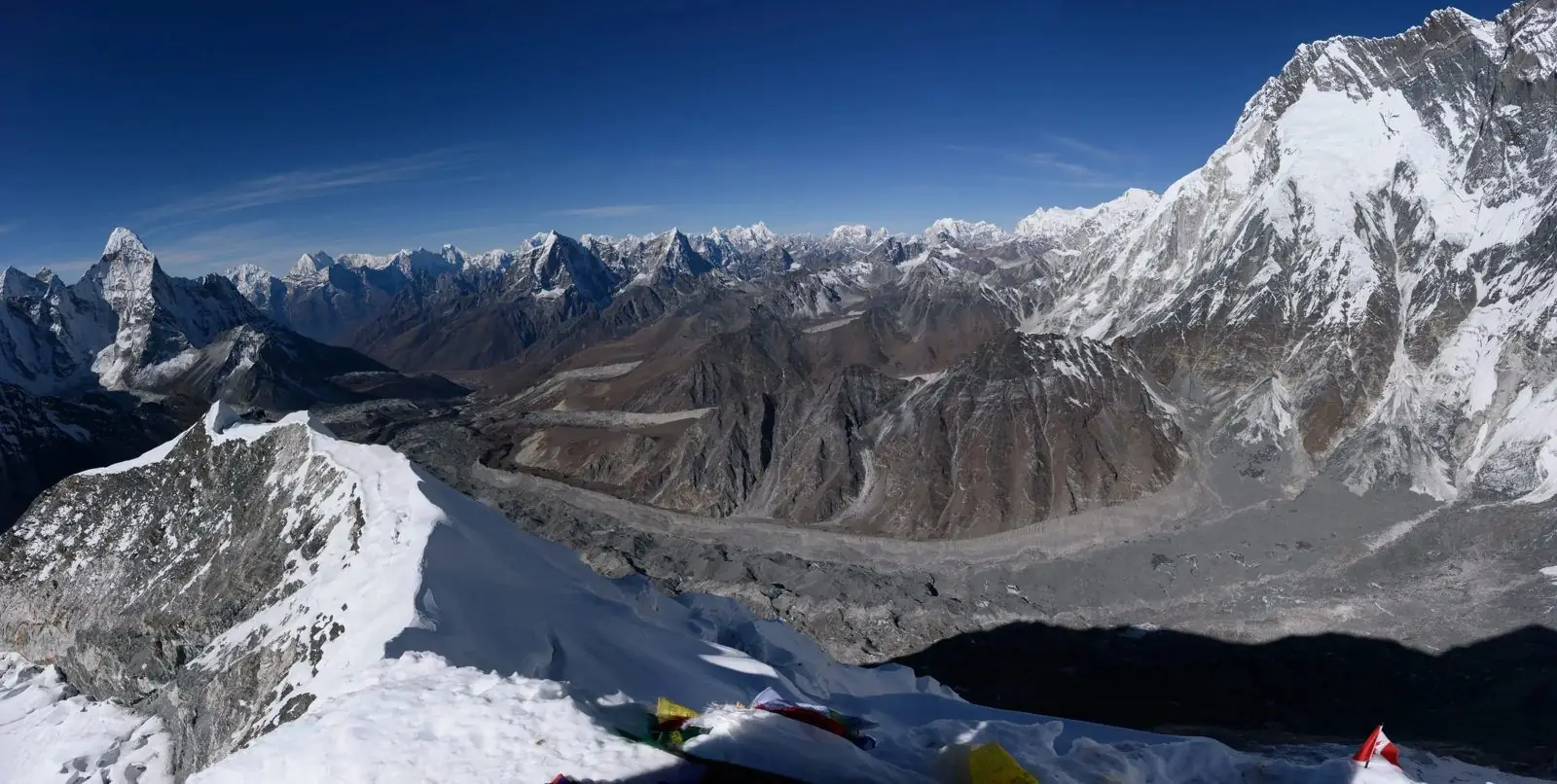
The best seasons for peak climbing in Nepal are spring, roughly April and May, and autumn, roughly late September to November. Skies are steadier, trails are open and flights usually run on time. Winter is very cold and windy, and the monsoon brings cloud, rain and poor visibility. Conditions vary every year, so treat any month as a rough guide.
Autumn climbing window
Autumn follows the monsoon, so the air is clear and the trails are washed. Days are usually dry and stable from about October into November, which is why many climbers aim for this window. Nights are cold and get colder as winter approaches.
Snow can be thinner on the glaciers, so you may meet more bare ice and firmer surfaces, which asks for secure crampon technique. Lodges and flights are busiest then, so booking early helps. Conditions vary every year, and no month is guaranteed.
A spare day in the schedule helps if a cold, windy morning forces a delay.
Spring climbing window
Spring runs roughly April and May. Temperatures rise, rhododendrons bloom on lower trails and snow cover on the peaks is often deeper. Afternoon cloud and wind can build as the season advances, and the weather can be more changeable than in autumn.
Deeper snow may cover crevasses, so careful roping matters. Some climbers like spring for the warmer approach and longer days. Because the big expeditions also use this window, the popular routes can be crowded.
Morning starts are still the safest, since the snow is firmer and the wind is usually lighter before the sun warms the slopes.
Winter conditions
Winter, roughly December to February, brings very cold nights, strong winds and short days. Many lodges at higher elevations close or run limited services, and high passes can be hard to cross.
Many peaks are harder in winter, though skies can be clear. Only experienced, well-equipped climbers with a flexible plan should consider it. Frostbite and hypothermia are real risks, so warm gear and a conservative guide matter more than usual. Rules and access can change, so confirm before you travel.
If you do go, add extra days, expect closed lodges on some routes, and plan every day around daylight and conditions.
Monsoon cautions
The monsoon, roughly June to early September, brings heavy rain, leeches at lower elevations, landslides, cloud and unreliable flights. Views are limited and trails can be slippery or blocked.
Snow on the peaks can be unstable and visibility poor. Rain-shadow regions such as parts of Mustang get less rain, but climbing peaks in the main Himalayan range is generally a poor choice during these months. Most agencies run few trekking peak departures in the monsoon.
Flights to mountain airstrips are often delayed or cancelled, which can shorten your climbing time and strain tight schedules. Build in generous buffer days if you must travel then.
Wind, snow and specific peaks
Wind is often the main summit-day problem, and it tends to be stronger at the transition months. A peak like Island Peak can have a fixed-rope headwall that is harder in icy conditions, while Mera Peak may have deeper snow on its glacier in spring.
Lobuche East has an exposed ridge where wind matters. Langtang and Annapurna peaks such as Yala, Pisang and Chulu have their own patterns and can hold more snow after storms. Ask us for the current picture before you commit to a date.
Spring and autumn windows can still shift with each year's weather.
Planning for flexibility
Choose a schedule with a spare day or two so a bad-weather morning does not end your attempt. Watch forecasts, listen to your guide and accept that a turn-back can be the right call.
If you are picking between seasons, think about your tolerance for cold, crowds and snow depth. We can talk through the month that suits you and add a spare day to your itinerary.
Remember too that fees, flights and lodge availability follow the same seasonal pattern, with busy months selling out first. Booking early gives you more choice of dates, and a flexible approach lets you adjust if the forecast changes.
Common questions
When is the best time to climb in Nepal?
Spring, roughly April and May, and autumn, roughly late September to November, are the main windows. Weather is steadier and trails and flights are more reliable. Conditions still vary each year.
Can I climb a trekking peak in winter?
It is possible for experienced, well-equipped climbers, but it is very cold and windy, and some lodges close. Most first-time climbers are better off in spring or autumn. Confirm access before you travel.
Is the monsoon a bad time to climb?
Generally yes. Rain, cloud, landslides and unstable snow make climbing in the main Himalayan range difficult and less rewarding, and few agencies run peak departures at that time.