




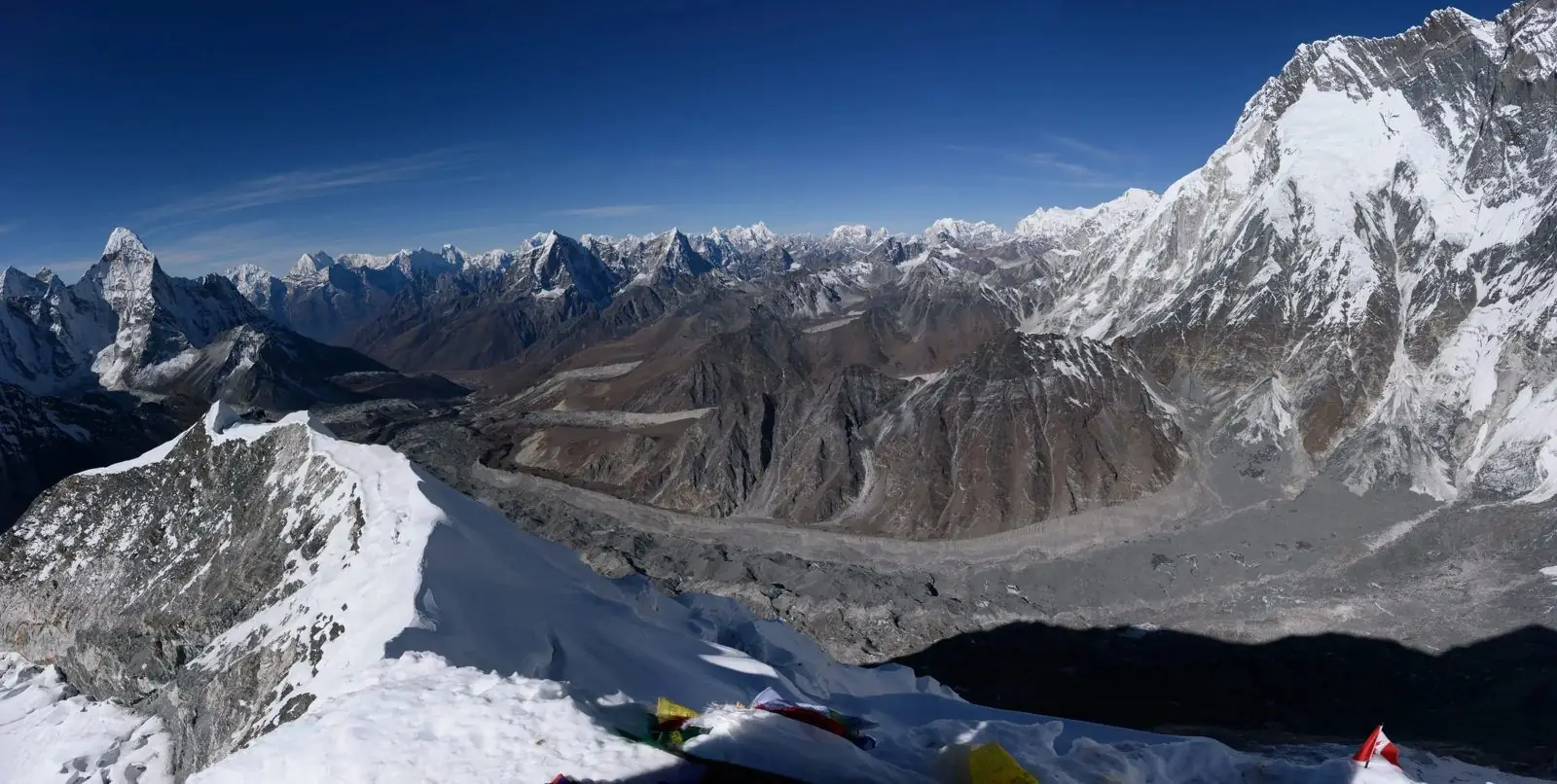
For a Nepal trekking peak you need strong endurance for long days at altitude, steady legs for early starts, and a willingness to learn basic tools. Most beginners train for three to four months, then learn crampons, ice axe and rope skills with a guide at base camp. Prior trekking above 4,000 m helps a great deal.
The fitness base you need
Peak days are long. Expect to walk or climb for many hours in cold, thin air, often starting in the middle of the night. What matters most is aerobic endurance and the ability to keep moving at a slow, steady pace while carrying a light pack.
Leg strength, a strong core and good balance help on steep snow. Raw speed does not. A person who can hike for six to eight hours on consecutive days, with a loaded daypack, is usually in the right range, though needs vary by peak and by pace.
A training outline
A simple plan over about twelve to sixteen weeks works for many people:
- Three or four cardio sessions each week, building from 40 minutes to over an hour
- One long hike every weekend, adding weight and hours slowly
- Two short strength sessions for legs, core and back
- Stair or hill repeats with a loaded pack
- A lighter final week before you fly
Build gradually and rest when needed. If you have any health condition, speak to your doctor before starting, as this is general information and not medical advice.
Skills you will use
Four skills cover most trekking peaks. Crampons need a wide, deliberate stance so the points do not snag. An ice axe is used for balance, for support on slopes and for stopping a slide. Fixed ropes are climbed with a mechanical clamp called a jumar, clipped to the line and moved up as you go. A harness connects you to the rope.
None of these require climbing experience beforehand, but practising simple knots and wearing your boots long before the trip makes the learning days smoother.
Your guide will check each piece of equipment and correct your technique as you practise.
High-altitude days
Altitude changes what fitness means. Even very fit people feel slow above 5,000 m, sleep poorly and lose appetite. Good acclimatisation, hydration and a slow pace matter more than gym numbers.
Watch for headache, nausea, dizziness, unusual breathlessness or confusion. Tell your guide early and be ready to descend if symptoms increase, since going down is the main treatment for altitude illness. This is general information, not medical advice. Extra rest days in the plan are a cheap way of improving your safety margin.
Drinking regularly and eating even when appetite is low also help your body cope.
What a guide teaches at base camp
Before the summit push, your guide will normally run a short skills session on a safe slope near base camp or high camp. You practise walking in crampons, using the axe, ascending and descending ropes, and being clipped in correctly.
They check your boots, harness and helmet fit, explain the summit-day timing and set hand signals. Treat this as a real briefing. Ask questions, repeat the movements until they feel natural and tell the guide honestly if you feel unsure about any part.
Sessions are short, so rest and eat well afterwards and keep your energy for the summit push.
Mental preparation and attitude
Summit days involve cold hands, tiredness and sometimes a decision to turn back. Being comfortable with that possibility makes you safer. Peaks are often missed because of wind or snow, and no summit is worth ignoring the guide.
Practise cold-morning starts at home, eat steadily, sip water often and keep a light attitude. We can add a spare day to your schedule to give weather more room, which helps both safety and the odds of a summit.
Remember that your guide knows the mountain and reads the weather daily, so share how you feel and follow the plan agreed together.
Common questions
How fit do I need to be for a trekking peak?
You should handle six to eight hours of hiking on consecutive days with a light pack and recover well. Endurance matters more than speed, and prior trekking above 4,000 m is useful.
Do I need climbing experience?
No prior climbing experience is required for most trekking peaks, but you should be willing to learn crampon, ice axe and rope skills. A guide runs a briefing and practice before the summit attempt.
How long should I train?
Many people train for three to four months with regular cardio, long weekend hikes and some strength work. Begin earlier if you are starting from low fitness, and consult a doctor first if you have health concerns.


