Summit day on Pisang Peak is a long, cold and demanding push, but for a well-acclimatised climber with a good guide it is a very achievable goal. The day is mainly a test of pacing, warmth and steady movement on steep ground. Knowing its shape helps you save energy.
The start
You wake around midnight or 1 to 2 am, drink something warm and eat a light breakfast. The guide checks harnesses, crampons and layers. At this hour the cold can be severe, so keep spare gloves and a hot drink in your bag.
The ascent
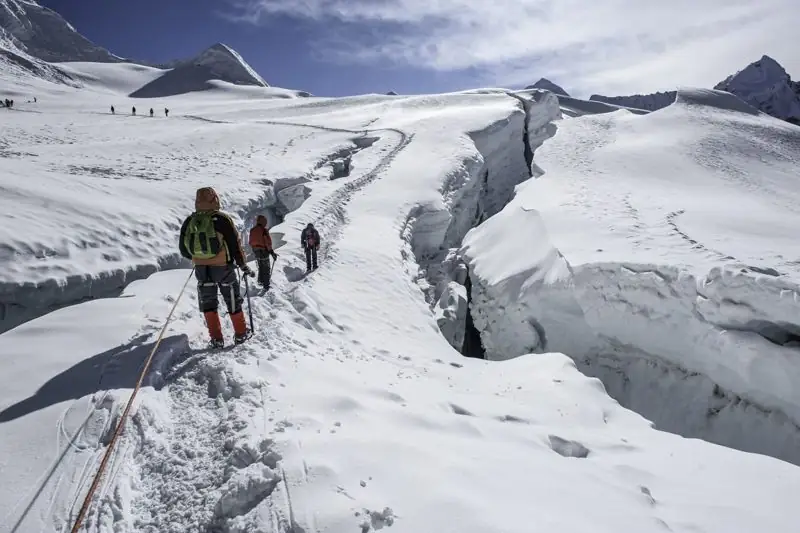
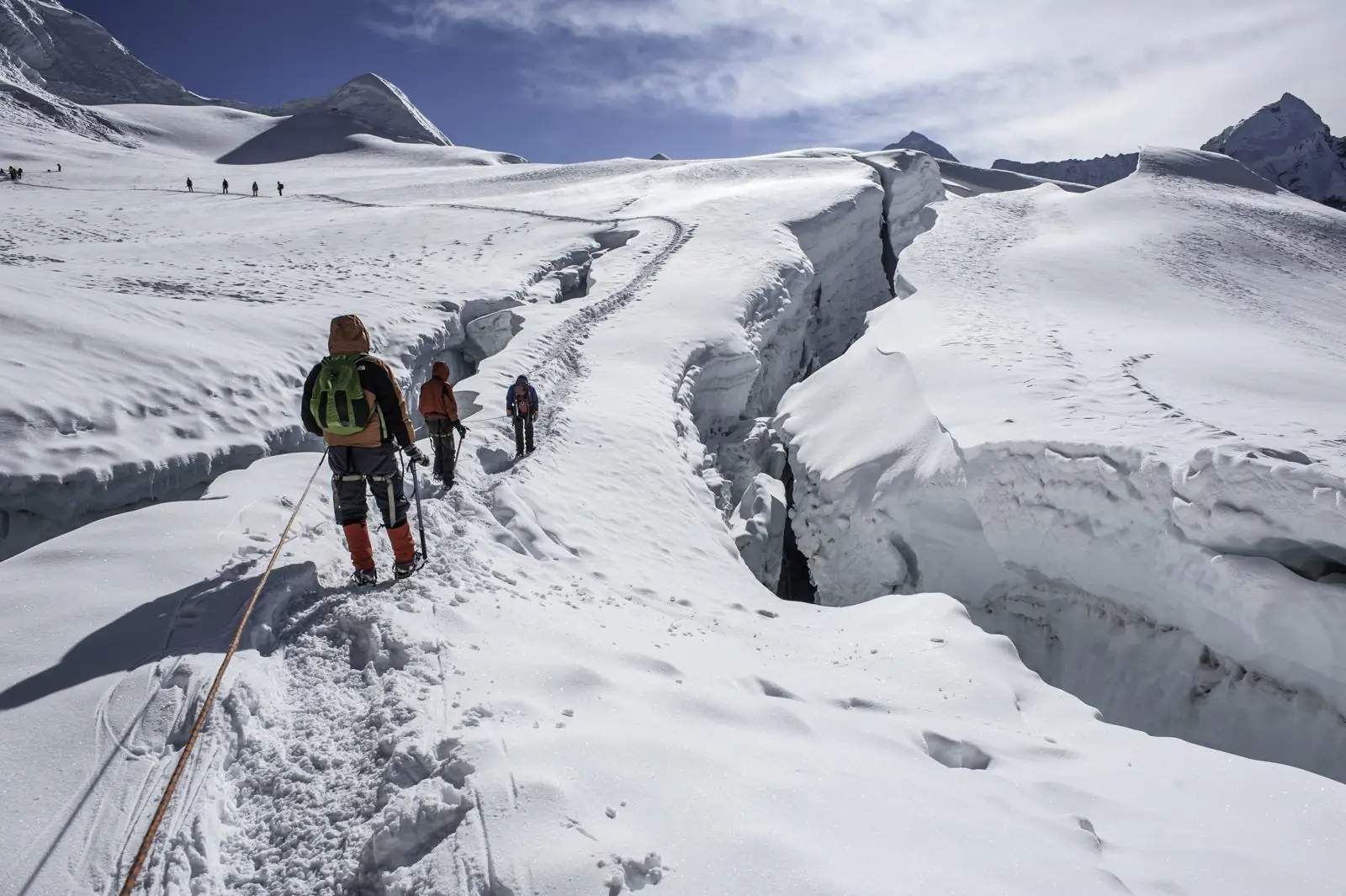
The route follows a rocky ridge and then climbs snow slopes toward the summit. Sections are steep, and fixed ropes are normally used where needed. You climb with a harness, ascender and crampons, in single file with the guide. The pace is slow, with a rest every hour or so. Dawn arrives as you climb, and the first light on Annapurna and Manaslu rewards the early start.
The summit
The top is a narrow, airy ridge with views across the Annapurna range, Manaslu and the Tibetan plateau. Spend only a few minutes there, because wind and cold are strong and the descent is long. Take photos, drink, eat and start down.
The descent
The way down is often harder than expected, because you are tired and exposed. Move carefully and keep eating and drinking. Depending on the plan, you return to high camp or base camp the same day.
Timing and turning back
- The group may have a turn-around time to avoid afternoon wind.
- If you feel unwell or cold in the hands or feet, tell your guide at once.
- Turning back is a safe decision, not a failure.
Staying comfortable
Dress in layers, protect your hands and face and carry a thermos and easy snacks. Sunglasses are essential after sunrise because the snow glare is intense.