




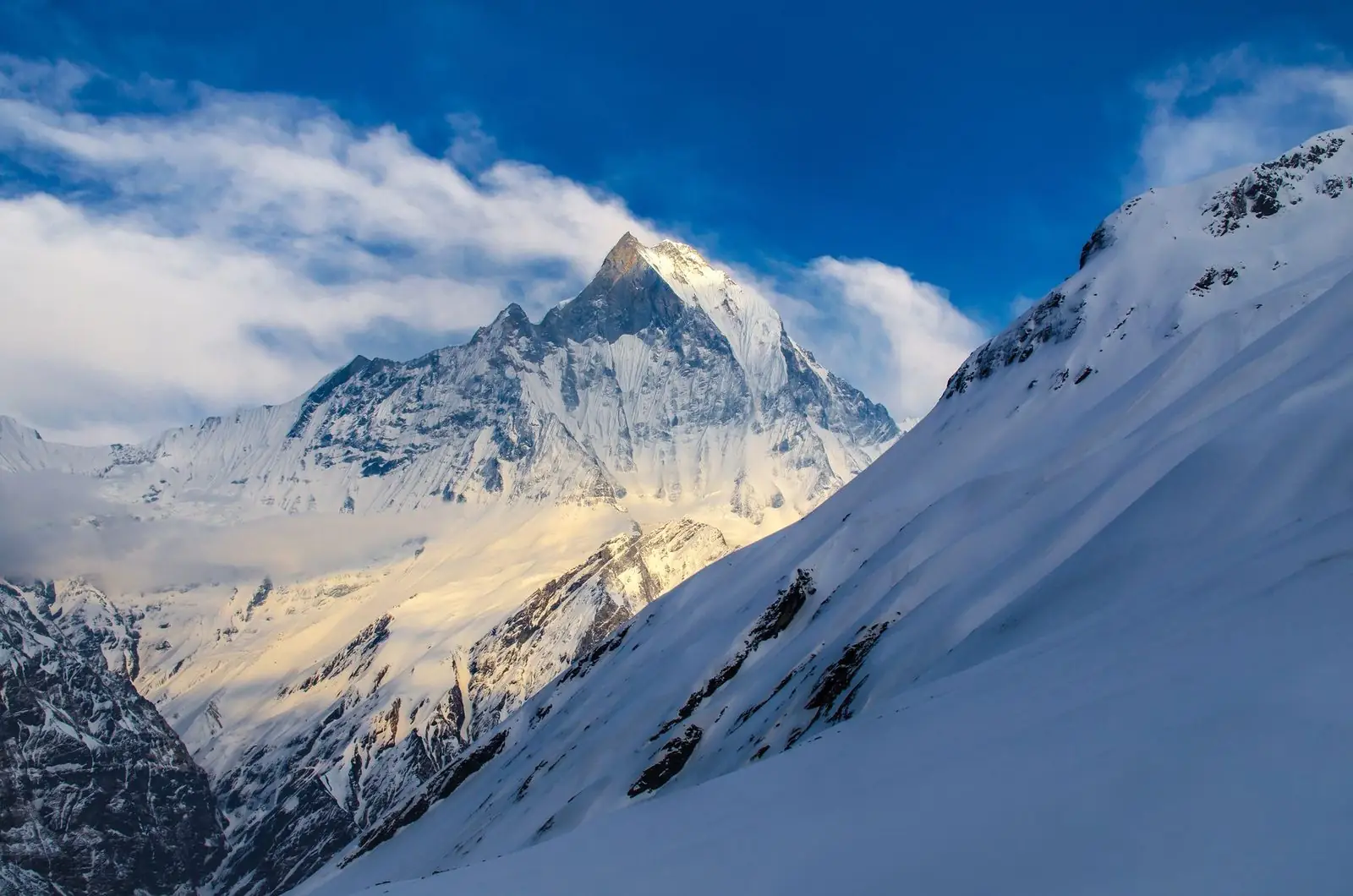
Tent Peak (Tharpu Chuli) was first climbed in 1964 by a Japanese party from an expedition to Annapurna South led by Dr Haruo Higuchi, by the south-east ridge. The north-west ridge, which is the route used today, was first climbed in 1965 by Gunter Hauser and a German party.
1964: the first ascent
The first summit party was Japanese. They were members of an expedition to Annapurna South led by Dr Haruo Higuchi and climbed the south-east ridge, which climbing sources rate as Alpine AD, a harder grade than the normal route.
1965: the north-west ridge
In 1965 Gunter Hauser and a German party climbed the north-west ridge. This line is graded Alpine PD and is the route that operators use today.
The normal route
From base camp, climbers go to a high camp, then cross snow and ice to the north-west ridge and follow it to the summit. See difficulty, camps and season.
What the grades mean
The Alpine grades come from the French system. PD means peu difficile, a little difficult, and AD means assez difficile, fairly difficult. The south-east ridge climbed in 1964 is therefore the harder of the two lines, and the north-west ridge is the one chosen for guided climbs.
Why the route matters
On the north-west ridge the climber meets steep snow and ice, then a narrow ridge near the top. The line is short, but it is exposed, so ropes, crampons and an ice axe are used and the guide decides on the day whether conditions are safe.
Common questions
- Who made the first ascent? A Japanese party in 1964.
- Which route is used today? The north-west ridge, first climbed in 1965.
- Which ridge is harder? The south-east ridge, rated Alpine AD.
Sources differ on detail
Camp altitudes, group sizes for permits and other details vary between operators, so treat figures as approximate and ask your agency for the plan for your dates.
Plan it
See Tent Peak facts or the Annapurna Base Camp day-by-day itinerary.


