




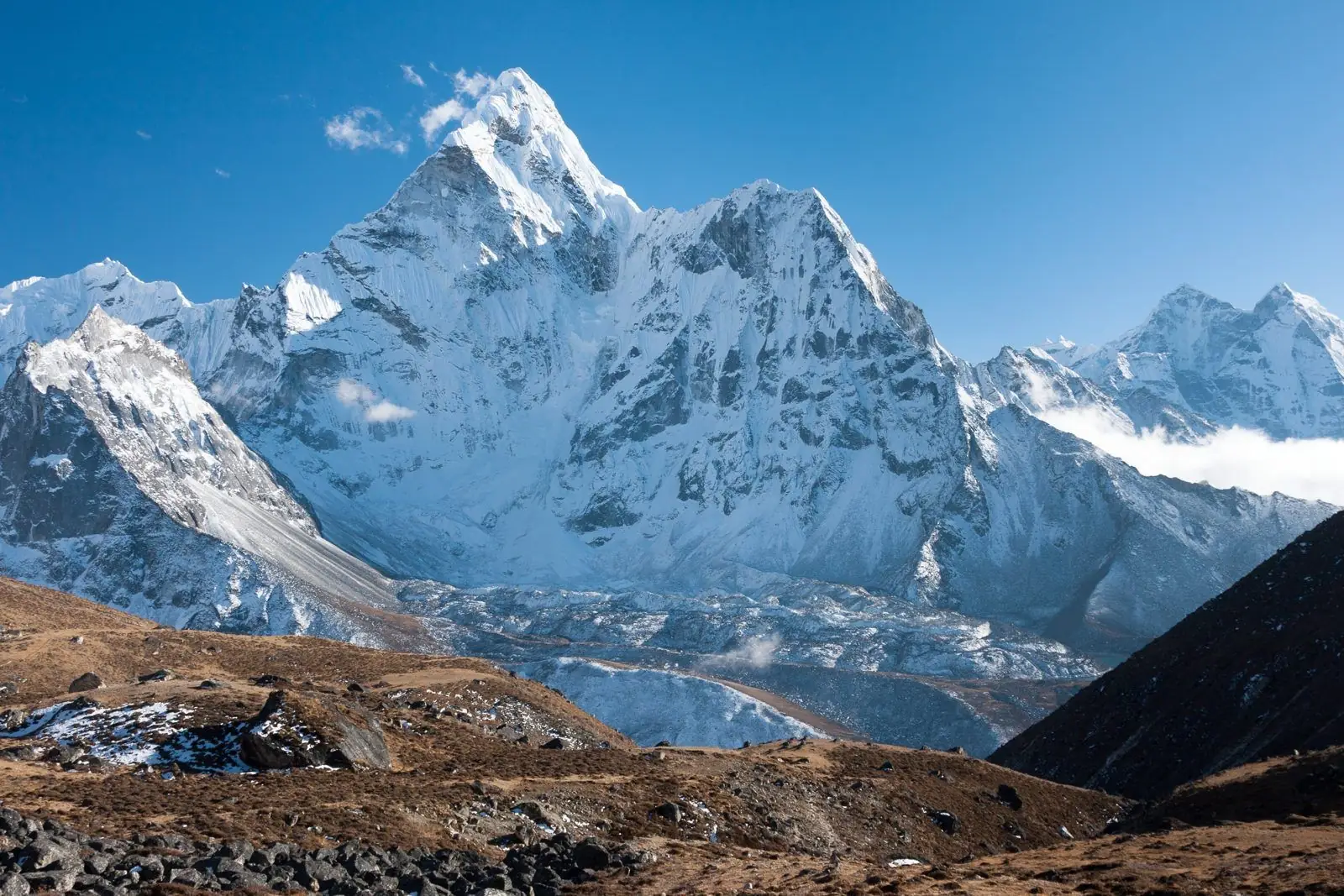
Gorak Shep is the last settlement before Everest Base Camp, a handful of lodges on a flat sandy bed beside the glacier. At about 5,160 m in the Everest Region, it is where most trekkers sleep before visiting base camp and climbing Kala Patthar for a closer look at Everest.
Altitude: about 5,160 m. Heights quoted for villages and camps vary by source, so treat this as a guide.
Where Gorak Shep is and why trekkers stop
Gorak Shep lies at the end of the main trail, reached from Lobuche over moraine and rocky ground. There is no village in the usual sense, only lodges serving trekkers. It is the base for the two classic goals: Everest Base Camp itself, and the Kala Patthar viewpoint. Many groups reach Gorak Shep, rest, then walk to base camp the same day or the next morning. Our stages link it with Lobuche, Chhukung and Everest Base Camp.
What to expect at Gorak Shep
Expect a flat, stony basin ringed by glacier, rock and snow peaks. The lodges are simple and busy, the dining room is the only warm room and the wind is relentless in the afternoon. There are no trees, and everything is carried in by porters and animals. The landscape feels hard and bare, yet the setting is memorable. Sunrise from Kala Patthar usually begins with a very early start, so evenings are quiet and focused on rest.
Altitude and how you may feel
At about 5,160 m, this is the highest sleeping point on most itineraries. Poor sleep, headache, nausea and short breath are common. Move slowly, drink often and eat when you can. Altitude illness can be serious here, and if symptoms worsen you should descend at once and tell your guide. Staying one night only, then descending the next day, is the usual plan. Never go higher with confusion, loss of balance, a worsening headache or breathlessness while resting.
Lodging, food and practical tips
Rooms are small, unheated and sometimes crowded, so pack a warm sleeping bag, thermals and a hat. Meals are basic: soup, noodles, dal bhat and tea. Prices are the highest on the route. Carry water, snacks and sun protection, and keep electronics warm because batteries drain fast in the cold. Times between Lobuche, Gorak Shep and base camp vary with pace and trail conditions. Your guide may change the plan on the day if weather or health demand it.
Stage guides that pass through Gorak Shep
These day-by-day guides start or end at Gorak Shep, with walking times, ascent and where to sleep.
- Gorak Shep to Everest Base Camp trek: altitude, time and route
- Chhukung to Gorak Shep trek: stages, altitude and time
- Lobuche to Gorak Shep trek: altitude, time and route
Common questions
Can you stay overnight at Everest Base Camp?
Trekkers usually sleep at Gorak Shep, which has lodges. The base camp itself is used by climbing expeditions in season, so most visitors walk there and return the same day.
Why is Gorak Shep so uncomfortable?
It is above 5,000 m, with cold nights, thin air and basic rooms. Most people sleep poorly. Eating, drinking and resting well help, and descending is the cure if symptoms worsen.
How far is Gorak Shep from Everest Base Camp?
Base camp is a few hours of rocky walking from the lodges, out and back. Time varies with pace and trail conditions, and the route follows the moraine beside the Khumbu glacier.


