




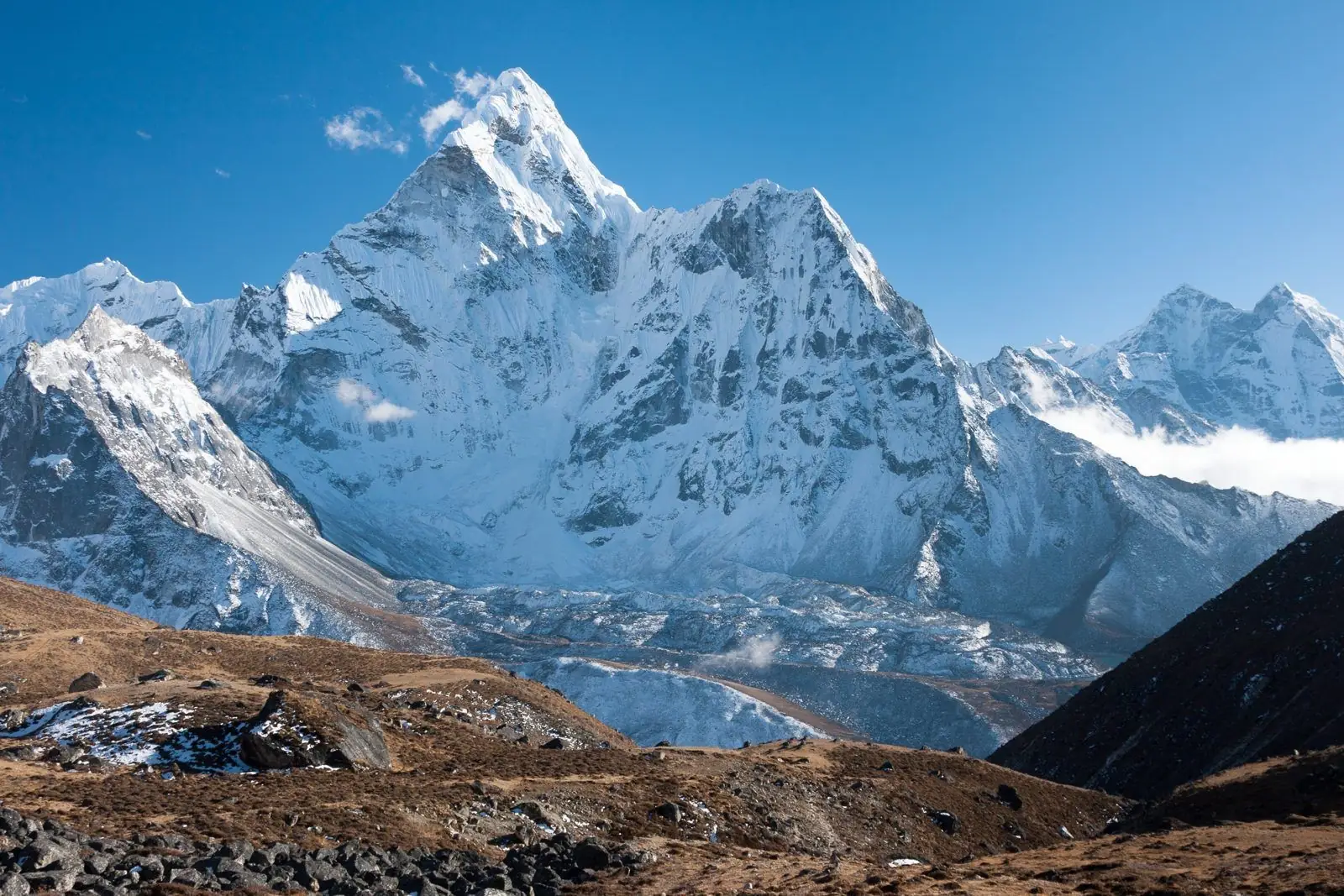
Chhukung is the last settlement in the Imja valley and the base for Island Peak. At about 4,730 m in the Everest Region, it sits beneath the huge walls of Lhotse and Nuptse, and is used by trekkers heading over the Kongma La or climbing the viewpoint of Chhukung Ri.
Altitude: about 4,730 m. Heights quoted for villages and camps vary by source, so treat this as a guide.
Where Chhukung is and why trekkers stop
Chhukung lies at the head of the Imja valley, reached from Dingboche along a gradual track. It is a stop for climbers preparing for Island Peak, for trekkers on the Three Passes route and for people who want a quieter alternative to the main Everest Base Camp path. Our stages link it with Dingboche, Deboche, Tengboche, Pangboche, Lobuche, Gorak Shep and Everest Base Camp. Some itineraries use it as an extra acclimatisation night.
What to expect at Chhukung
Expect a short row of lodges, a bakery or two and an enormous, cold amphitheatre of rock and ice. The mood is practical, with climbers sorting ropes and trekkers resting. The wind is sharp in the afternoon and the temperature drops quickly after sunset. Walking up to a nearby ridge in the late afternoon gives a wide view of Island Peak and Ama Dablam. Clouds often rise from the valley by midday, so mornings are best for sightseeing.
Altitude and how you may feel
At about 4,730 m, Chhukung is higher than Dingboche, so your sleeping altitude rises noticeably. Headaches, broken sleep and low appetite are common. Plan a steady gain, stay hydrated and be honest about how you feel. Altitude illness can become serious at this height, and if symptoms worsen you should descend and tell your guide without delay. Going back down to Dingboche to sleep is a normal and sensible choice, and you will usually feel better the same evening.
Lodging, food and practical tips
Lodges are simple and cold, so bring a warm sleeping bag, a hat and a hot water bottle. Food is basic, with dal bhat, noodles, soup and eggs. Island Peak climbs need a permit and an experienced guide, and a careful acclimatisation plan. Carry sun protection, because glare from snow is strong. Walking times from Dingboche vary with pace and trail conditions, so start after breakfast and aim to arrive with daylight to spare.
Stage guides that pass through Chhukung
These day-by-day guides start or end at Chhukung, with walking times, ascent and where to sleep.
- Deboche to Chhukung trek: stages, altitude and time
- Tengboche to Chhukung trek: stages, altitude and time
- Chhukung to Gorak Shep trek: stages, altitude and time
- Chhukung to Everest Base Camp trek: stages, altitude and time
- Chhukung to Lobuche trek: altitude, time and route
- Dingboche to Chhukung trek: altitude, time and route
- Pangboche to Chhukung trek: stages, altitude and time
Common questions
What is Chhukung used for?
It is the last settlement in the Imja valley and a base for Island Peak. Trekkers also use it for Chhukung Ri and as a start for the Kongma La crossing.
Is it better to sleep in Dingboche or Chhukung?
Dingboche is lower and warmer, so it suits most Everest Base Camp trekkers. Chhukung is better if you plan a peak climb or want a quiet extra acclimatisation night.
Can I go from Chhukung to Everest Base Camp?
Yes, by crossing the Kongma La or returning down to Dingboche and then on to Lobuche. The pass is demanding, so only attempt it with proper acclimatisation and a guide.


