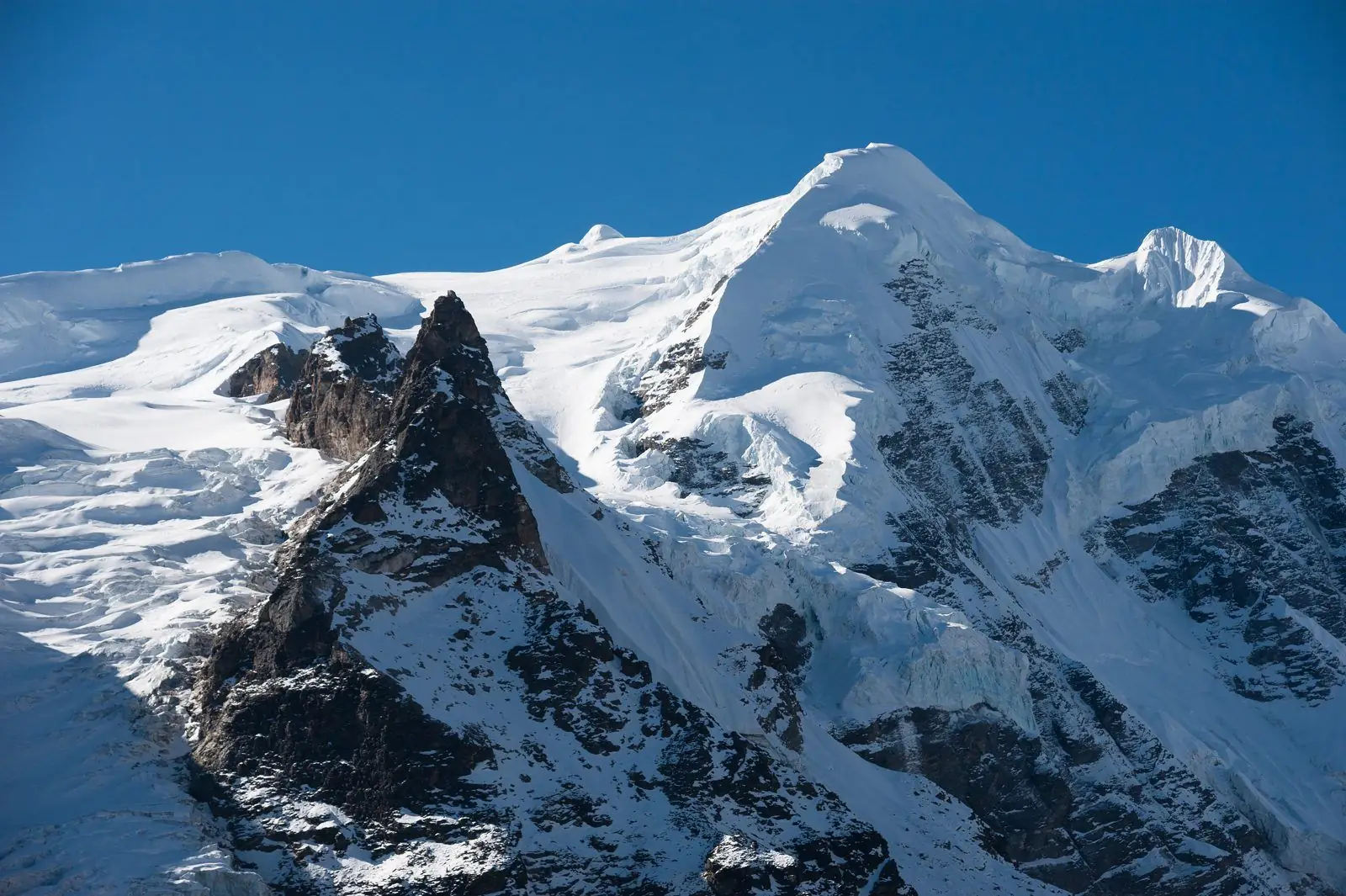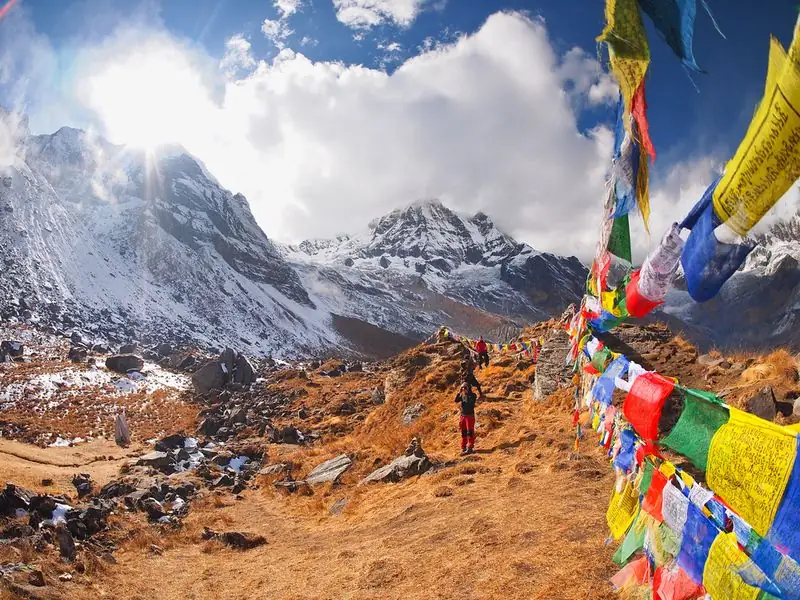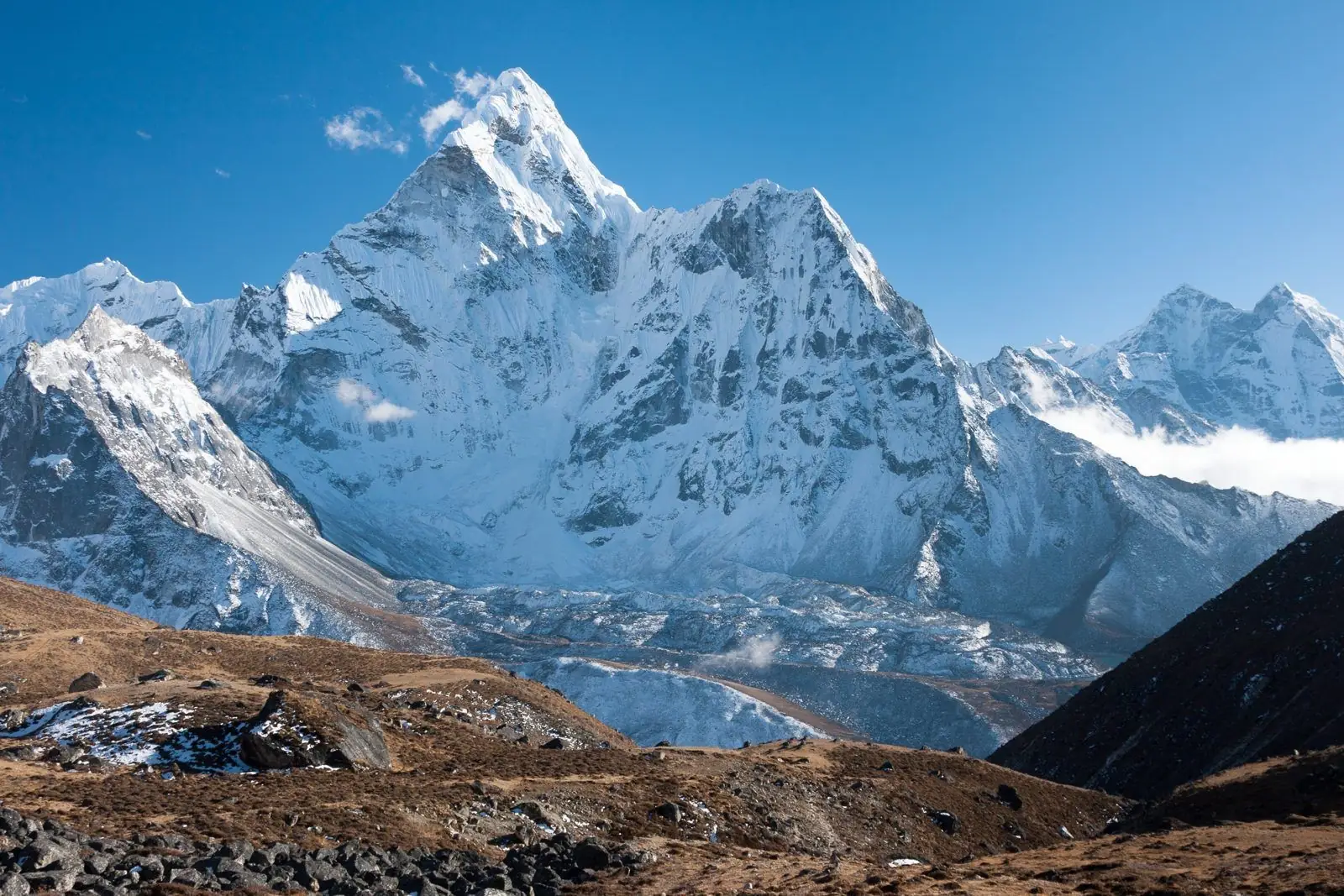
Dingboche is the Imja valley village where most Everest Base Camp trekkers spend their acclimatisation day. At about 4,410 m in the Everest Region, it sits in a wide, open valley surrounded by stone walled fields and big peaks, and it is also the starting point for Pokalde and Island Peak trips.
Altitude: about 4,410 m. Heights quoted for villages and camps vary by source, so treat this as a guide.
Where Dingboche is and why trekkers stop
Dingboche lies above the Imja Khola, reached from Pangboche or Deboche, and is where the trail to Lobuche and the route to Chhukung divide. Spending at least one rest day here is a sound habit, with a short walk higher, such as the ridge above the village. It is also the usual launch point for climbers heading to a base camp for Pokalde or Island Peak. The Dingboche acclimatisation day is one of the most important days on the whole trek.
What to expect at Dingboche
Expect long stone walls protecting barley and potato plots, a wide sky and a long row of lodges. Wind can be strong in the afternoon, so rooms and dining halls are often cold until the stove lights. Views of Ama Dablam and Lhotse are close, and a walk to the Nangkar Tshang ridge gives an even wider look. Bakeries and cafes offer a break from dal bhat. Spend the day resting, drinking water and walking slowly rather than pushing hard.
Altitude and how you may feel
At about 4,410 m, Dingboche is high enough that headaches, poor sleep and loss of appetite are common. The rest day exists to help your body adjust, using the climb high and sleep low pattern. Do not skip it. Walk up a few hundred metres, then return to sleep. Altitude illness can strike seriously at this height, and if symptoms worsen you should descend and tell your guide immediately. Never ascend with worsening headache, vomiting or confusion.
Lodging, food and practical tips
Lodges are numerous but fill fast in March, April, October and November, so reservations through your operator matter. Rooms are cold at night, so bring a warm sleeping bag and thermal layers. Meals remain familiar, with dal bhat, noodles, soup, eggs and baked goods. Charging usually costs extra, and wifi is slow. Hydrate well, avoid alcohol and use sun protection, because the light is strong at this height. Times between villages vary with pace and trail conditions.
Stage guides that pass through Dingboche
These day-by-day guides start or end at Dingboche, with walking times, ascent and where to sleep.
- Deboche to Dingboche trek: stages, altitude and time
- Dingboche to Lobuche trek: altitude, time and route
- Khumjung to Dingboche trek: stages, altitude and time
- Dingboche to Chhukung trek: altitude, time and route
- Tengboche to Dingboche trek: stages, altitude and time
- Pangboche to Dingboche trek: altitude, time and route
Common questions
Why do trekkers rest at Dingboche?
It is the point where the sleeping altitude passes about 4,400 m, so a rest day lets the body adapt before the climb to Lobuche. Short walks higher help the process.
How high is Dingboche?
About 4,410 m. That is a significant step above Pangboche, so take the day slowly, and sleep no higher than your guide advises on the acclimatisation day.
What is the walk from Dingboche to Chhukung like?
It follows the Imja valley upward to the base for Island Peak. The route is gradual, but altitude makes it feel tougher. Time varies with pace and trail conditions.