




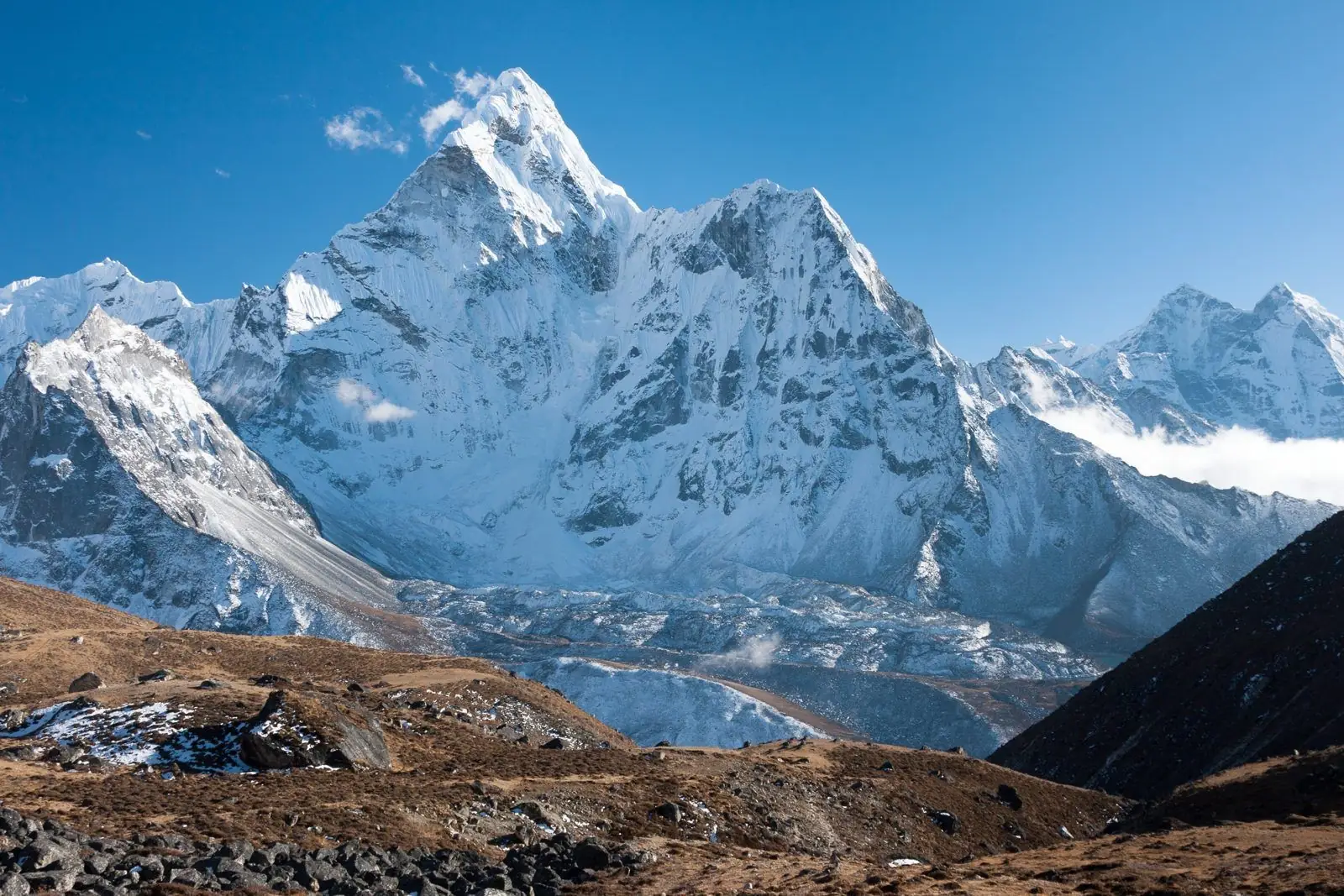
Tengboche is known for its large monastery, set on a ridge with a clear view of Ama Dablam, Everest and Lhotse. In the Everest Region at about 3,860 m, it is a classic stop on the way to Everest Base Camp and a highlight of shorter treks like the Everest View route.
Altitude: about 3,860 m. Heights quoted for villages and camps vary by source, so treat this as a guide.
Where Tengboche is and why trekkers stop
Tengboche stands on a forested ridge reached after a descent to the river at Phunki Tenga and a stiff climb. It is a natural halt between Namche Bazaar and Pangboche or Dingboche. Trekkers stop for the monastery, the views and a rest before the trail climbs higher. Our stages connect it with Namche, Khumjung, Monjo, Phakding and onwards to Deboche, Pangboche and Dingboche. The monastery is worth a visit, and afternoon views can be clear.
What to expect at Tengboche
Expect a wide clearing with the monastery at its centre, a few lodges, a bakery and a feeling of space after the narrow valley. Mountains fill the horizon, with Ama Dablam especially striking. Visitors may watch prayers in the afternoon, sitting quietly at the back. Remove shoes at the door, keep voices low and ask before taking photographs. Mornings are cold and often clear, so an early walk to the ridge rewards you before cloud arrives.
Altitude and how you may feel
At about 3,860 m, Tengboche is a good deal higher than Namche, and the stage up from the river is tiring. Many trekkers notice a mild headache, restless sleep or shortness of breath at night here. Drink water, avoid alcohol and move slowly. Altitude illness can strike at this height, and if symptoms worsen you should descend and tell your guide. Deboche, just below in the forest, is sometimes a lower and warmer place to sleep.
Lodging, food and practical tips
Lodges are fewer than in Namche and fill quickly in spring and autumn, so booking ahead through your operator helps. Rooms are simple and the dining room stove is the warm centre of the evening. Expect dal bhat, soup, noodles and baked goods. The nights are cold, so a good sleeping bag and thermal layers matter. Walking times vary with pace and trail conditions, and the climb after the river crossing can feel longer than the map suggests.
Stage guides that pass through Tengboche
These day-by-day guides start or end at Tengboche, with walking times, ascent and where to sleep.
- Namche Bazaar to Tengboche trek: altitude, time and route
- Tengboche to Chhukung trek: stages, altitude and time
- Tengboche to Deboche trek: altitude, time and route
- Monjo to Tengboche trek: stages, altitude and time
- Tengboche to Pangboche trek: stages, altitude and time
- Khumjung to Tengboche trek: altitude, time and route
- Tengboche to Dingboche trek: stages, altitude and time
- Phakding to Tengboche trek: stages, altitude and time
Common questions
What is Tengboche famous for?
Its large monastery on a ridge, with a clear view of Ama Dablam, Everest and Lhotse. It is among the best known stops on the Everest Base Camp route.
Is Tengboche a good place to sleep?
Yes, for the views and the monastery, though it is cold and exposed. Some trekkers prefer Deboche, which lies in forest just below and is often warmer.
Can I visit the Tengboche monastery?
Visitors are generally welcome at set times. Dress modestly, remove shoes, stay quiet during prayers and ask before photographing inside. Your guide can tell you what is usual on the day.


