




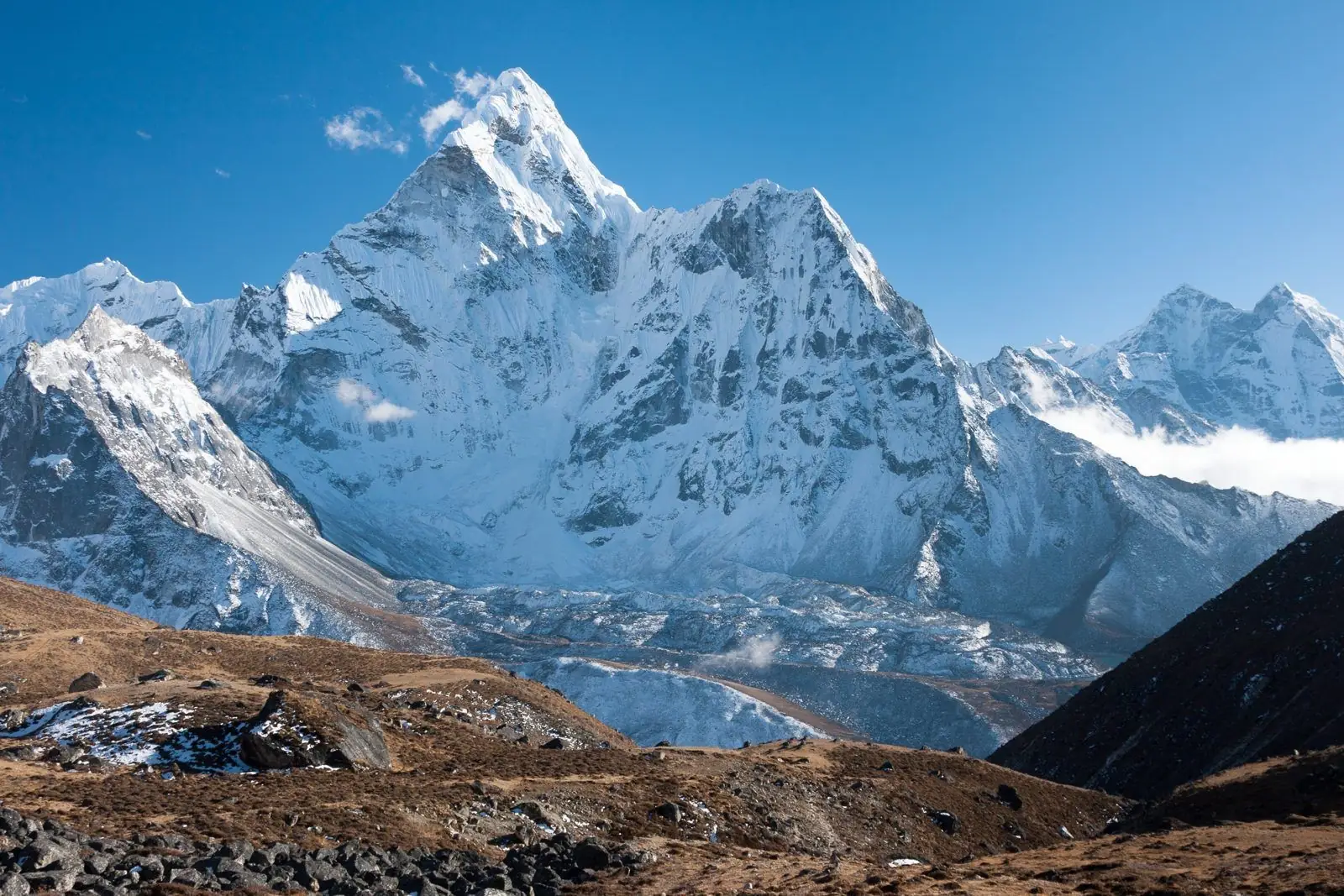
Pangboche is the last permanent village of the upper Khumbu, with a small, old monastery. Sitting at about 3,930 m in the Everest Region, it comes between Deboche and Dingboche, and marks the point where the trail leaves the woods and heads into higher, barer country.
Altitude: about 3,930 m. Heights quoted for villages and camps vary by source, so treat this as a guide.
Where Pangboche is and why trekkers stop
Pangboche stands on the hillside above the Imja river, along the path from Tengboche to Dingboche. Trekkers stop for lunch, to visit the monastery or to sleep when they want a shorter day to Dingboche. Our stages join it with Khumjung, Tengboche, Deboche, Namche Bazaar, Chhukung and Dingboche. Beyond here, villages are mostly seasonal, so it is the last place on the route that feels lived in year round, and it makes a natural pause after the long day from Namche or Tengboche.
What to expect at Pangboche
Expect stone houses, walled potato fields and a handful of lodges and tea houses, with the monastery above the main path. Ama Dablam looks huge from here, and the view changes as you climb. The air is thinner and drier, and the vegetation starts to fade into scrub and juniper. Visitors to the monastery should ask at the village about access, remove shoes and keep photographs respectful. The trail after Pangboche splits for different routes, so note which way your guide plans to go.
Altitude and how you may feel
At about 3,930 m, Pangboche is higher than Tengboche, and you may feel the extra height as you climb from the river. Mild headache, poor sleep and reduced appetite are common. Keep the pace slow, drink often and avoid alcohol. Altitude illness can strike here, and if symptoms worsen you should descend and tell your guide. Sleeping at Pangboche rather than going straight to Dingboche gives a gentler gain, since the next stage climbs a lot.
Lodging, food and practical tips
Lodges are simple and fewer than lower down, with a stove-heated dining room and shared bathrooms. Menus rely on dal bhat, noodles, potatoes and eggs. Prices rise with altitude, so plan cash accordingly. Pack gloves, a warm hat and layers for the afternoon wind. Walking times vary with pace and trail conditions. Our guides often use Pangboche as a lunch or sleeping stop depending on how the group is acclimatising, which is a sensible way to adjust the schedule.
Stage guides that pass through Pangboche
These day-by-day guides start or end at Pangboche, with walking times, ascent and where to sleep.
- Khumjung to Pangboche trek: stages, altitude and time
- Tengboche to Pangboche trek: stages, altitude and time
- Pangboche to Chhukung trek: stages, altitude and time
- Namche Bazaar to Pangboche trek: stages, altitude and time
- Pangboche to Dingboche trek: altitude, time and route
- Deboche to Pangboche trek: altitude, time and route
Common questions
Why is Pangboche called the last permanent village?
Villages above it, such as Dingboche and Lobuche, are mostly seasonal and used mainly for grazing and trekkers. Pangboche is lived in all year, and it has an old monastery.
Can I sleep in Pangboche instead of Dingboche?
Yes. Many guides choose it for a gentler gain in sleeping altitude, though it adds a day to the schedule. Dingboche then becomes a shorter walk the following morning.
What can I see from Pangboche?
Ama Dablam dominates the view, with the Imja valley below. The small monastery above the village is also worth visiting with care and respect for local custom.


