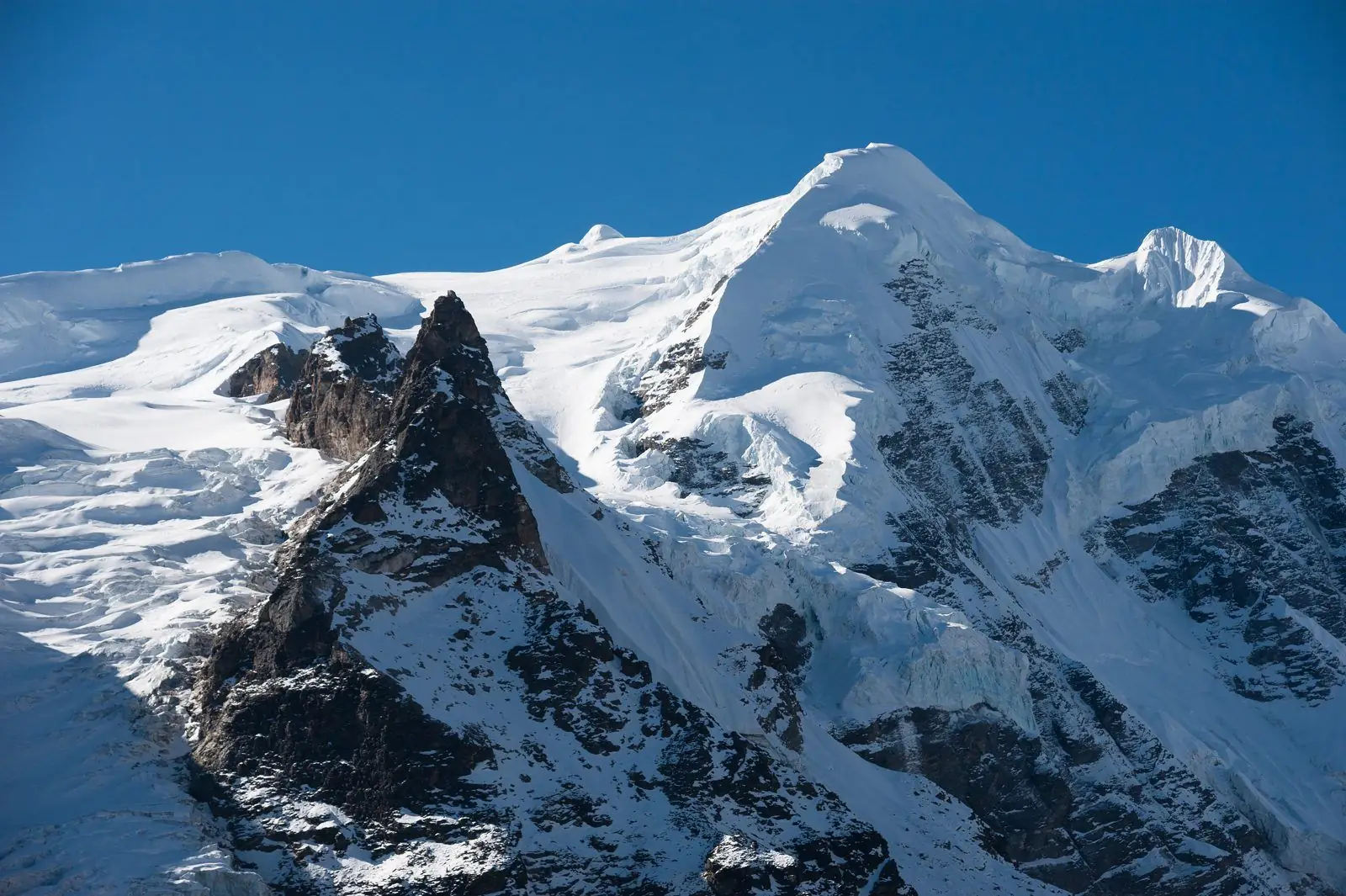
Island Peak Base Camp sits at about 5,100 m in the Khumbu region, a few hours above Chhukung. Chhukung is the last settlement before it and before the Three Passes route. Climbing groups use the camp to prepare for the summit push of Island Peak, also called Imja Tse.
Altitude: about 5,100 m. Heights quoted for villages and camps vary by source, so treat this as a guide.
Where Island Peak Base Camp is and why climbers stop
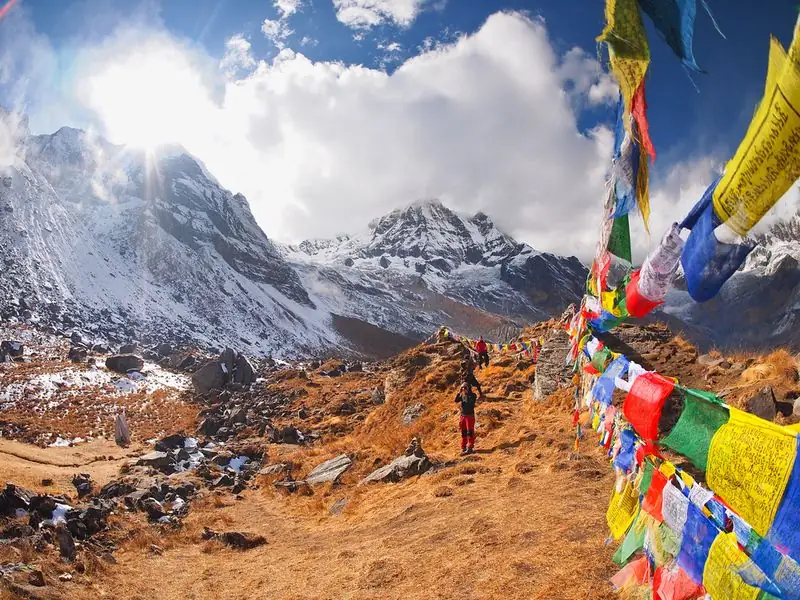
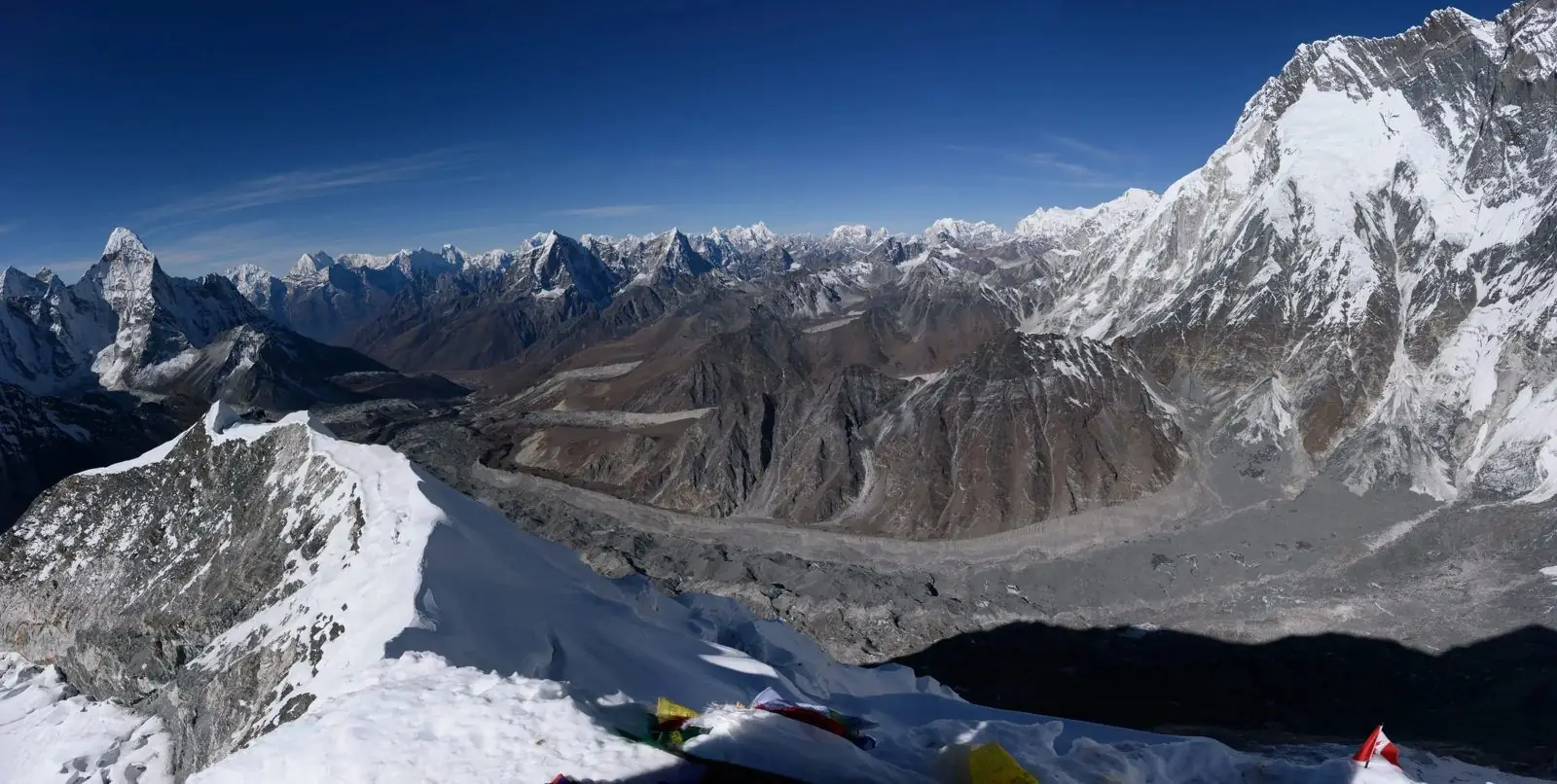
The camp is reached from Chhukung, up the Imja valley, on a trail that climbs steadily over moraine and rocky slopes. Above the last lodges, the trail becomes a camping route, with the mountain ahead and large peaks all around.
Climbers stop here to rest, finalise gear and begin the ascent with an early alpine start. Our programmes treat it as a stage after acclimatisation walks in the Everest region, rather than as a first night at altitude.
What to expect at Island Peak Base Camp
Expect a tented camp on stony ground, with a dining tent, simple toilet arrangements and a very cold night. Temperature drops to minus 10 or below at night in spring and about minus 15 in late autumn, so warmth is the main comfort issue.
The day usually includes a briefing on equipment, harness and crampon fitting, and sometimes a short practice session. Meals are hot and simple. Weather is often calm in the morning and windier later, so most climbing happens early.
Altitude and how you may feel
At about 5,100 m, sleeping altitude is high, and the camp is above the Chhukung lodges, so you should arrive well acclimatised. Common signs are headache, poor sleep, shortness of breath and a weak appetite.
Drink plenty, move slowly and tell your guide about any symptoms. Altitude illness can strike at base camp, and if symptoms worsen, with vomiting, confusion or trouble walking straight, go down to Chhukung or lower. Summit plans should always give way to health.
Lodging, food and practical tips
There are no lodges at the camp, only tents arranged by your operator, with a cook team. Bring a very warm sleeping bag, down jacket, insulated boots, gloves and a headtorch. Water is usually boiled or treated, so carry bottles with insulation to stop them freezing.
Island Peak is a trekking peak that needs climbing skills, a licensed guide and permits via a registered agency. Check that your insurance covers high altitude and evacuation, and plan a spare day for weather.
Common questions
How high is Island Peak Base Camp?
Island Peak Base Camp sits at about 5,100 m, a few hours above Chhukung. That is a significant step up, so climbers should arrive properly acclimatised from earlier days in the Khumbu.
How cold does it get at Island Peak Base Camp?
Night temperatures drop to minus 10 or below in spring and around minus 15 in late autumn. A warm sleeping bag, down layers and insulated boots are essential for comfort and safety.
Where is the last settlement before Island Peak Base Camp?
Chhukung is the last settlement before the base camp and also before the Three Passes route. Most climbers sleep there before moving up to the tented camp.