




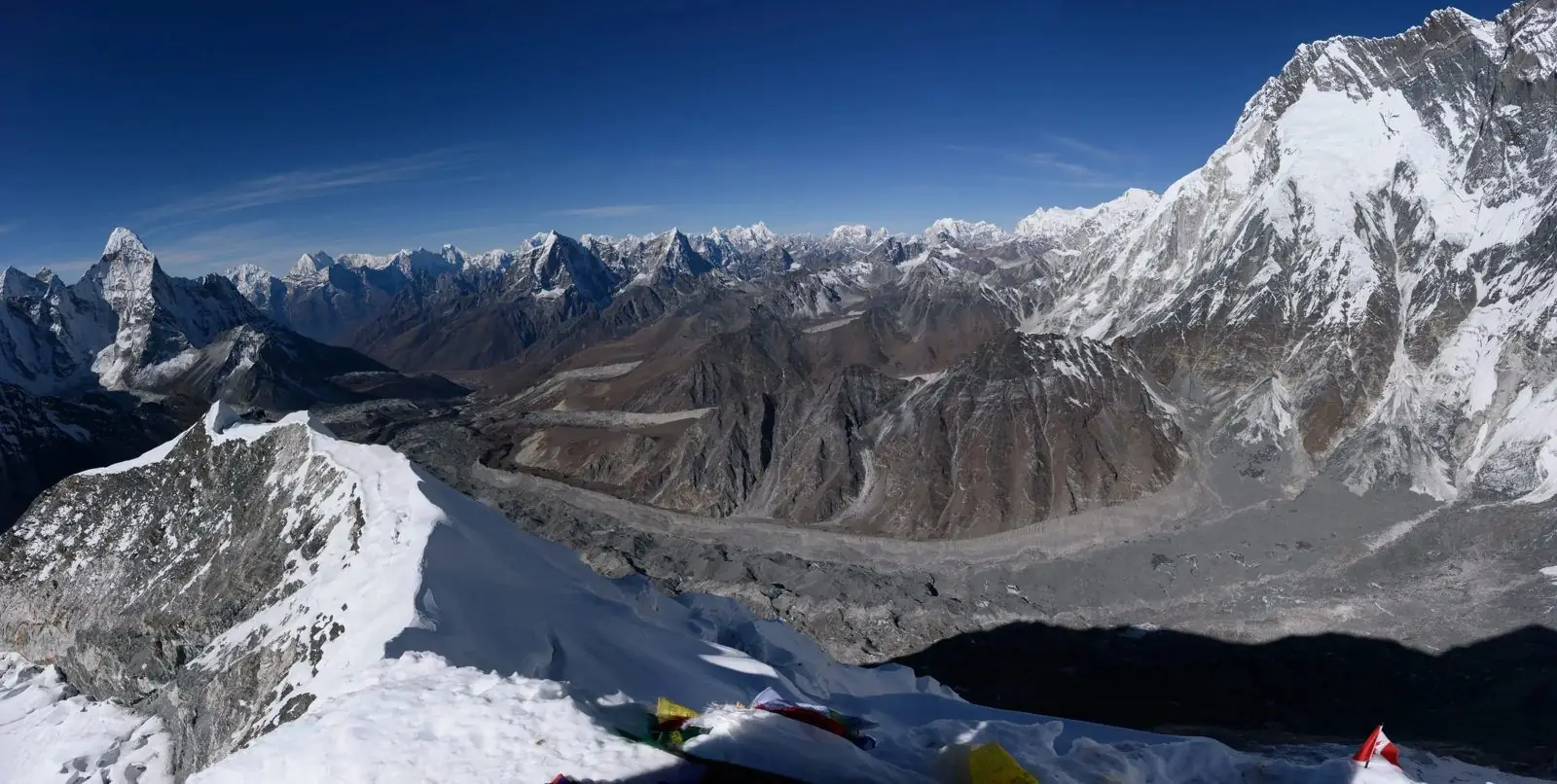
Kothe, sometimes written Khote, is a stop in the Hinku valley at about 3,600 m. On the Mera Peak route it comes after Chutanga and Thuli Kharka and before Thaknak, and it is the first night spent beside the river on the way toward Khare.
Altitude: about 3,600 m. Heights quoted for villages and camps vary by source, so treat this as a guide.
Where Kothe is and why trekkers stop
Kothe lies in the forested lower Hinku valley, where the trail from Thuli Kharka drops to the river after crossing a high ridge. Our standard Mera plan climbs and descends through Chutanga, Thuli Kharka, Kothe, Thaknak and Khare, and Kothe is the first of the valley camps.
Trekkers stop here because it is a natural end to the descent and a sensible step up in height. After the summit, most groups return to Khare and then to Kothe on the way back to Lukla over three to four days.
What to expect at Kothe
Expect a small cluster of lodges set among trees beside the river, in a narrow valley with steep slopes on both sides. The atmosphere is quiet, and the forest gives shelter from wind. Views of the peaks come as the valley opens further up.
The day usually involves a long descent from Thuli Kharka, which can be hard on the knees, so poles help. In peak weeks the lodges may be busy, so booking ahead with your operator matters.
Altitude and how you may feel
At about 3,600 m Kothe is a mid-altitude stop. Many trekkers arrive here after a higher pass day at Thuli Kharka, so the sleeping altitude actually falls, which usually helps with rest. Mild headache or poor sleep can still occur.
The valley then climbs steadily, with sleeping height rising each night toward Khare. Altitude illness can strike on Mera Peak routes, even for fit trekkers. Drink plenty, move slowly, and descend if symptoms such as vomiting, confusion or unsteadiness worsen.
Lodging, food and practical tips
Lodging is basic: simple rooms, shared toilets and a limited menu of dal bhat, noodles, soup and eggs. Comfort is lower than in Lukla or Namche, so bring a good sleeping bag, cash and a power bank, since charging may cost extra or be limited.
Signal is unreliable in the Hinku valley, and Khare and Lukla are the last places with a good chance of it. Mera Peak is a trekking peak climbed with a licensed guide, and your operator will arrange permits ahead of the trip.
Common questions
How high is Kothe on the Mera Peak route?
Kothe is at about 3,600 m in the Hinku valley. It comes after Thuli Kharka and before Thaknak, so for many groups the sleeping altitude dips here before it rises again toward Khare.
Is Kothe spelled Khote?
Both spellings appear in guides and maps. They refer to the same Hinku valley stop on the Mera Peak route, which lies between Thuli Kharka and Thaknak.
Can I get a mobile signal at Kothe?
Not reliably. Khare and Lukla are the last places with a good chance of signal on this route, so plan to be out of contact for most of the Hinku valley days.


