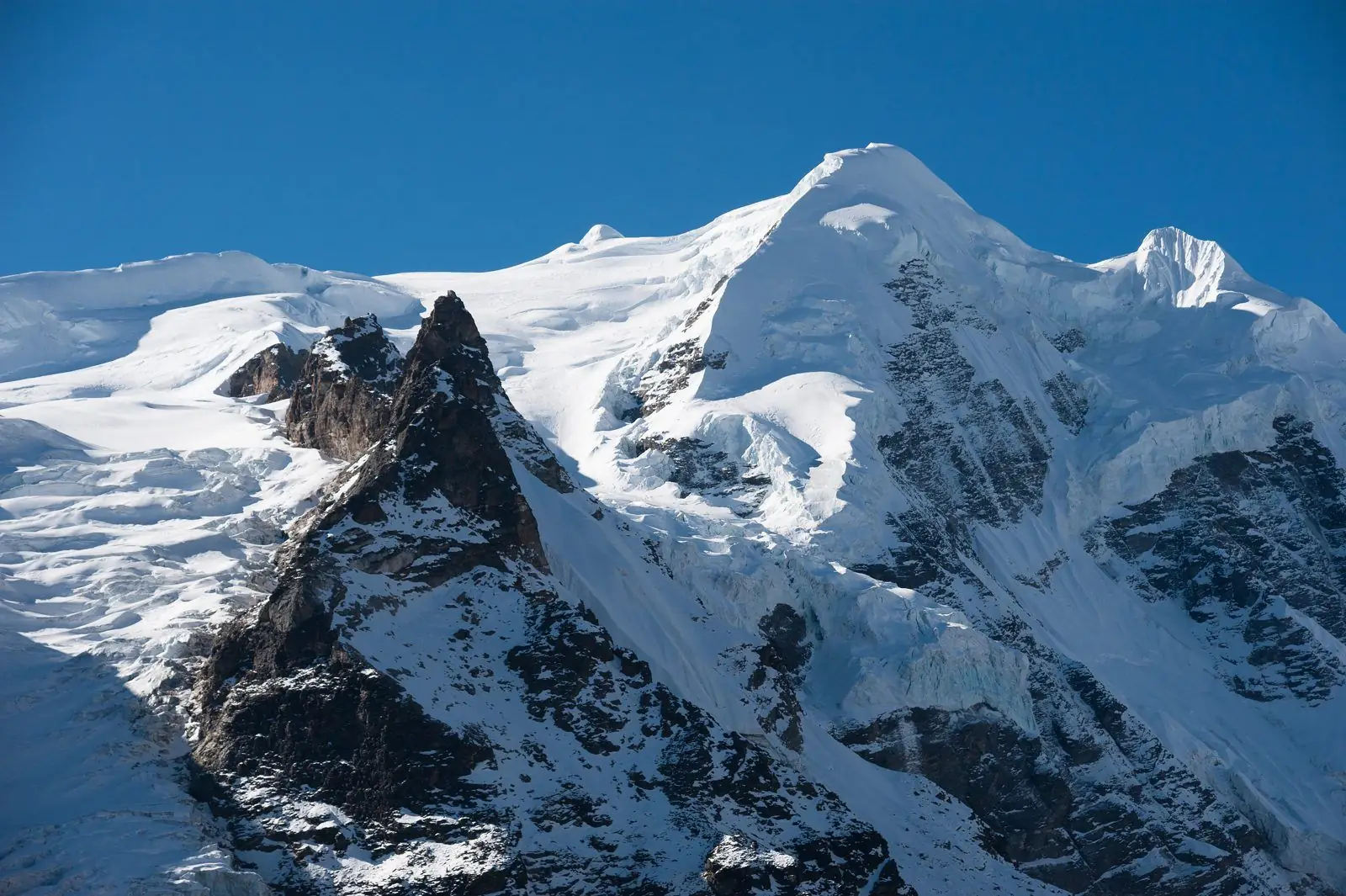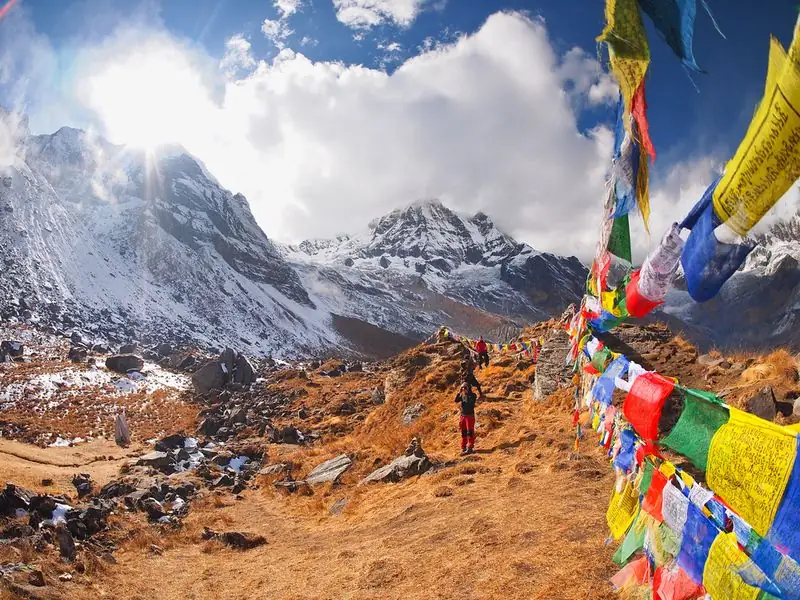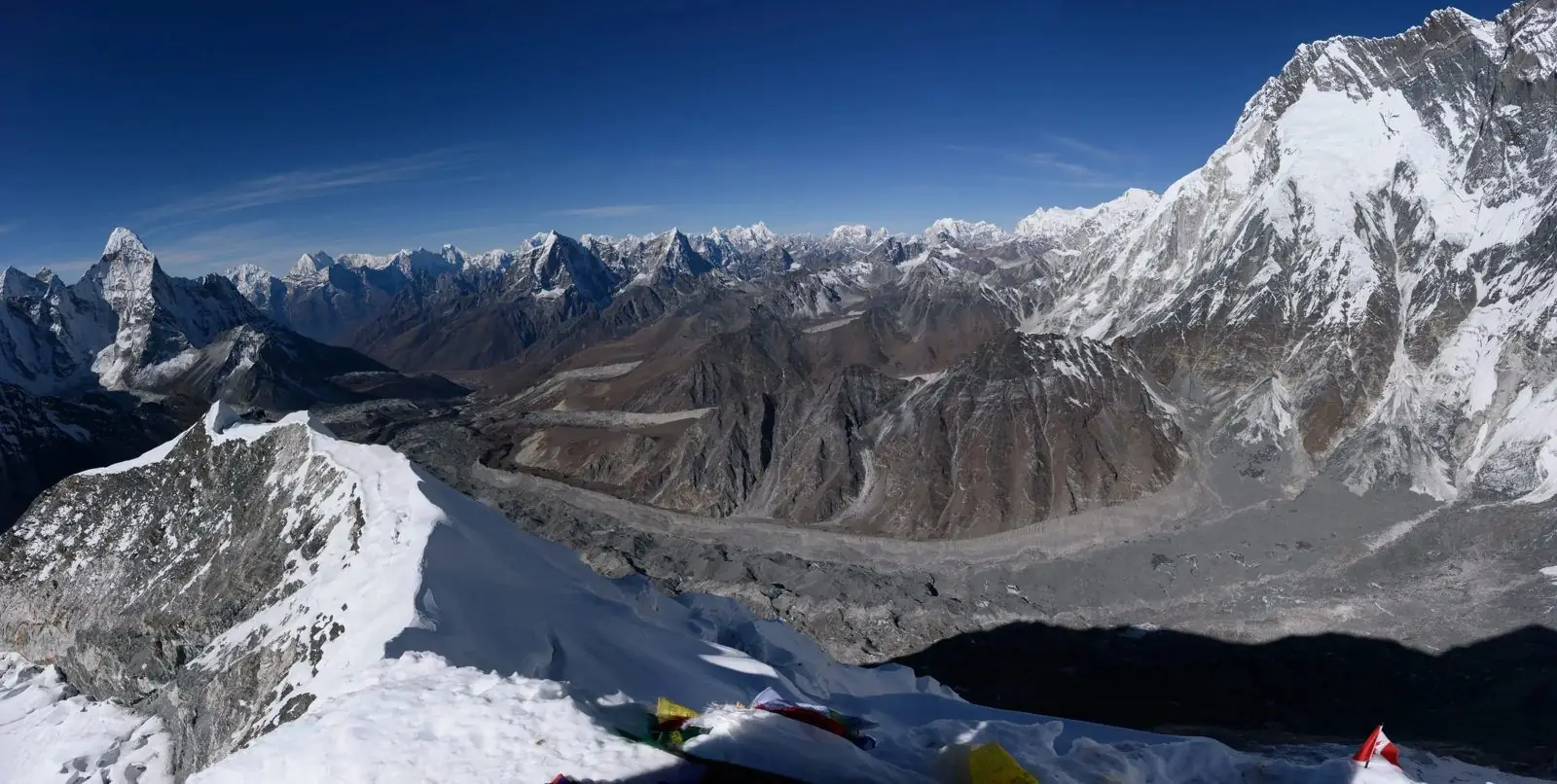
Mera La is a high glacier pass near Mera Peak, in the Hinku and Hunku country of the Solukhumbu Himalaya. Teams cross it, or climb Mera Peak nearby, as acclimatisation on the way to Baruntse base camp. It is a snow and ice route, not an ordinary trail.
Where Mera La is and why trekkers cross it
The pass lies on the high glacier near Mera Peak, with a base camp and then a high camp on the ice. It connects the Hinku side with the Hunku valley, which is the usual approach to Baruntse. Trekkers reach it via Khare and the glacier camps.
Teams use it because crossing builds altitude fitness and confidence on snow, ahead of the bigger objective. Many Baruntse itineraries add either Mera Peak or the Mera La before continuing to Baruntse base camp.
What the crossing is like
The crossing is a glacier day, with roped travel, crampons and an ice axe, so it needs mountaineering equipment and skills. Teams start before dawn because the wind on the pass and glacier can be strong later, and the snow is firmer early.
The terrain is long, cold and exposed, and the pace is slow. Timing varies with conditions, group fitness and the state of the snow. Your guide decides on the day whether to go, and a late start or poor weather can mean turning back.
Altitude and how you may feel
The pass is in the 5,000 m range, with the high camp and crossing higher than any village on the way. At this height headaches, poor sleep and tiredness are normal, and the cold adds to the strain.
Climb slowly, sleep higher every few days and take a rest day or two. Altitude illness can strike hard here, and if symptoms such as confusion, severe headache or unsteady walking worsen, descend at once. Glacier travel also means crevasse risk, so keep to the guide's line.
Lodging, food and practical tips
There are no lodges on the pass. Nights are in tents at base camp and a high camp on the glacier, with food prepared by the support team. Bring a four-season sleeping bag, mountaineering boots, warm layers and sun protection for the glare on snow.
This is not a route for first-time trekkers. Use a licensed guide and a registered agency, and make sure you have proper insurance that covers helicopter evacuation at altitude. Have a backup plan in case the crossing is not possible.
Common questions
What is Mera La used for?
Mera La is crossed by teams linking the Hinku and Hunku valleys, often as acclimatisation on the way to Baruntse base camp. Some teams climb Mera Peak instead of crossing it.
Is Mera La a technical crossing?
It is a glacier crossing that uses crampons, ropes and an ice axe, so it needs mountaineering skills and a guide. It is more serious than an ordinary teahouse pass such as those on classic treks.
Why do teams start before dawn?
Wind on Mera La and on the glacier can be strong later in the day, and the snow is firmer early. An early start gives the best conditions and leaves time to descend before they worsen.