




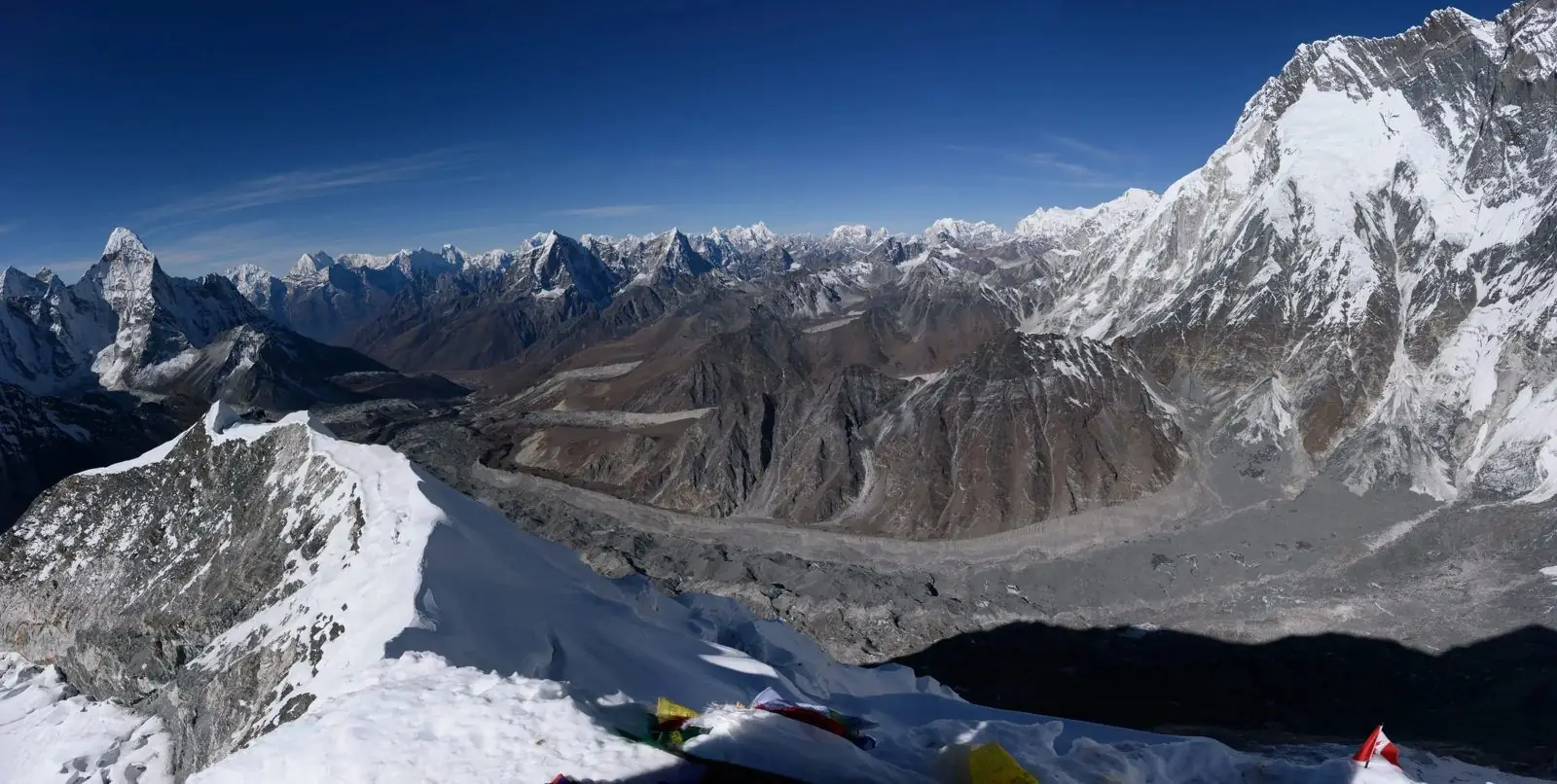
Khare is the last village before the glacier on the Mera Peak route, at about 5,000 m in the Hinku valley. It serves as the base for acclimatisation, gear checks and practice on ice, and groups usually rest here for a day before moving higher.
Altitude: about 5,000 m. Heights quoted for villages and camps vary by source, so treat this as a guide.
Where Khare is and why trekkers stop
Khare is the last real settlement before climbing begins. The trail from Thaknak reaches it at the head of the Hinku valley, with the mountain above and the glacier close by. Nothing permanent lies beyond it, only camps.
Trekkers stop for a full day here. The slow itinerary includes a rest day at Khare to check crampons, harnesses and ropes, and to practise on the lower slopes. After the summit, most groups return to Khare and then walk down to Kothe and Lukla.
What to expect at Khare
Expect a stark settlement of stone lodges on a high, windy slope, with the peak and ice above you. In peak weeks Khare and the high camp are busy, because Mera Peak is one of the most popular trekking peaks, so beds can be tight.
The usual rest day includes a short training session on ice, with the guide showing crampon work, rope handling and a safe walking style. Days here are cold and bright, nights are bitter, and the view is the best of the Hinku approach.
Altitude and how you may feel
At about 5,000 m the air has roughly half the sea-level oxygen, so even small tasks are tiring. Poor sleep, headache and low appetite are common, and the rest day is there to help adaptation rather than to be idle.
A short walk higher followed by a night back at Khare helps many people. Altitude illness can strike seriously at this height. If symptoms worsen, especially confusion, breathlessness at rest or loss of balance, descend promptly, because turning back is the correct decision, not a failure.
Lodging, food and practical tips
Lodging is basic and cold, with shared rooms, shared toilets and limited heating. Food is simple and hot, and drinks are the priority, so take water with you. Bring a warm sleeping bag, spare batteries and cash, because there are no banks or shops.
Signal is better here than higher up, and Khare and Lukla are the last places with a good chance of it, so call home before you move on. Mera Peak is climbed with a licensed guide, and your operator arranges permits and climbing equipment in advance.
Common questions
Why do groups rest at Khare?
Khare is the last settlement before the glacier, so groups use a rest day to acclimatise, check climbing gear and practise on ice. Resting here makes the later summit push safer and more comfortable.
How high is Khare?
Khare is at about 5,000 m, the highest settlement on the Mera Peak route. It is much higher than Kothe and Thaknak, so sleep and appetite often suffer, and slow movement is essential.
Is there phone signal at Khare?
There is a fair chance of signal at Khare, along with Lukla, which are the last two places on this route with good chances. Do not count on it, and message family before heading higher.


