




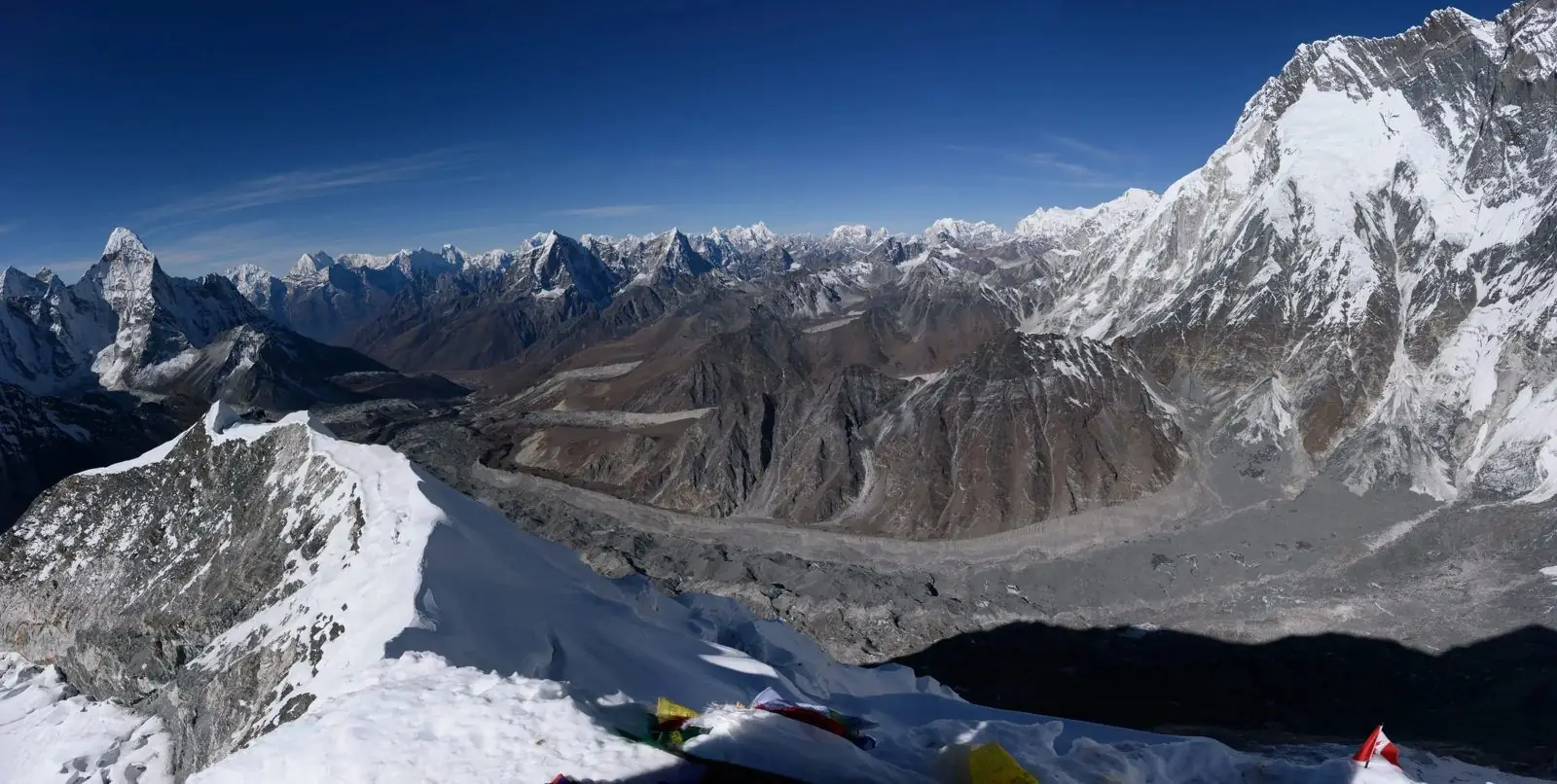
Thaknak is a high camp in the Hinku valley, at about 4,300 m, between Kothe and Khare on the Mera Peak route. This page covers the Hinku valley Thaknak only, not the Gokyo one. It is a stage on the slow climb to the glacier country.
Altitude: about 4,300 m. Heights quoted for villages and camps vary by source, so treat this as a guide.
Where Thaknak is and why trekkers stop
Thaknak sits above the tree line in the upper Hinku valley, on the river route toward the peak. The camps at Kothe, Thaknak and Khare follow the water, and Thaknak is the middle one, so almost every itinerary sleeps here on the way up.
The reason to stop is acclimatisation. The valley gains height steadily, and breaking the climb into Kothe, Thaknak and Khare keeps each day manageable and leaves time for a rest day further up.
What to expect at Thaknak
Expect a stark, open setting with a handful of basic lodges, rocky slopes, and glimpses of high peaks. Trees are gone by now, and the landscape feels cold and spacious. The trail from Kothe climbs steadily beside the river.
The day is a steady climb rather than a hard one, but it can feel slow at this height. Weather turns quickly, so wear layers and keep a hat and gloves handy. Timing varies with pace, weather and trail conditions.
Altitude and how you may feel
At about 4,300 m the oxygen is clearly thinner than lower in the valley, so breathlessness on slopes and disturbed sleep are common. Some people have a mild headache, a dull appetite or swollen fingers in the morning.
Go slowly, drink often and sleep only a modest height above the previous night. Altitude illness can strike, and if symptoms worsen, with severe headache, vomiting, confusion or poor balance, descend toward Kothe and tell your guide at once rather than waiting until morning.
Lodging, food and practical tips
Lodging here is basic: small rooms, shared toilets, minimal heating and a short menu. Comfort becomes simple at this height, so bring a warm sleeping bag, a thermal layer for nights and some cash. Hot drinks and soup are welcome after the walk.
Power and signal are limited, so carry a power bank and expect to be offline. Mera Peak is a trekking peak climbed with a licensed guide, and your operator handles the permits. Rest days at this altitude, if your plan has them, are best spent walking a little higher and sleeping low.
Common questions
Which Thaknak does this page cover?
This page is about the Thaknak in the Hinku valley on the Mera Peak route, between Kothe and Khare. It is not the Thaknak near Gokyo on the Everest region Cho La route.
How high is Thaknak?
Thaknak in the Hinku valley is at about 4,300 m. That is roughly 700 m higher than Kothe, so the sleeping altitude rises noticeably, and trekkers should walk slowly and keep drinking.
What comes after Thaknak on the Mera Peak route?
After Thaknak the trail continues up the valley to Khare, the last settlement before the glacier. Khare is the base for acclimatisation and practice on ice before the climb.


