




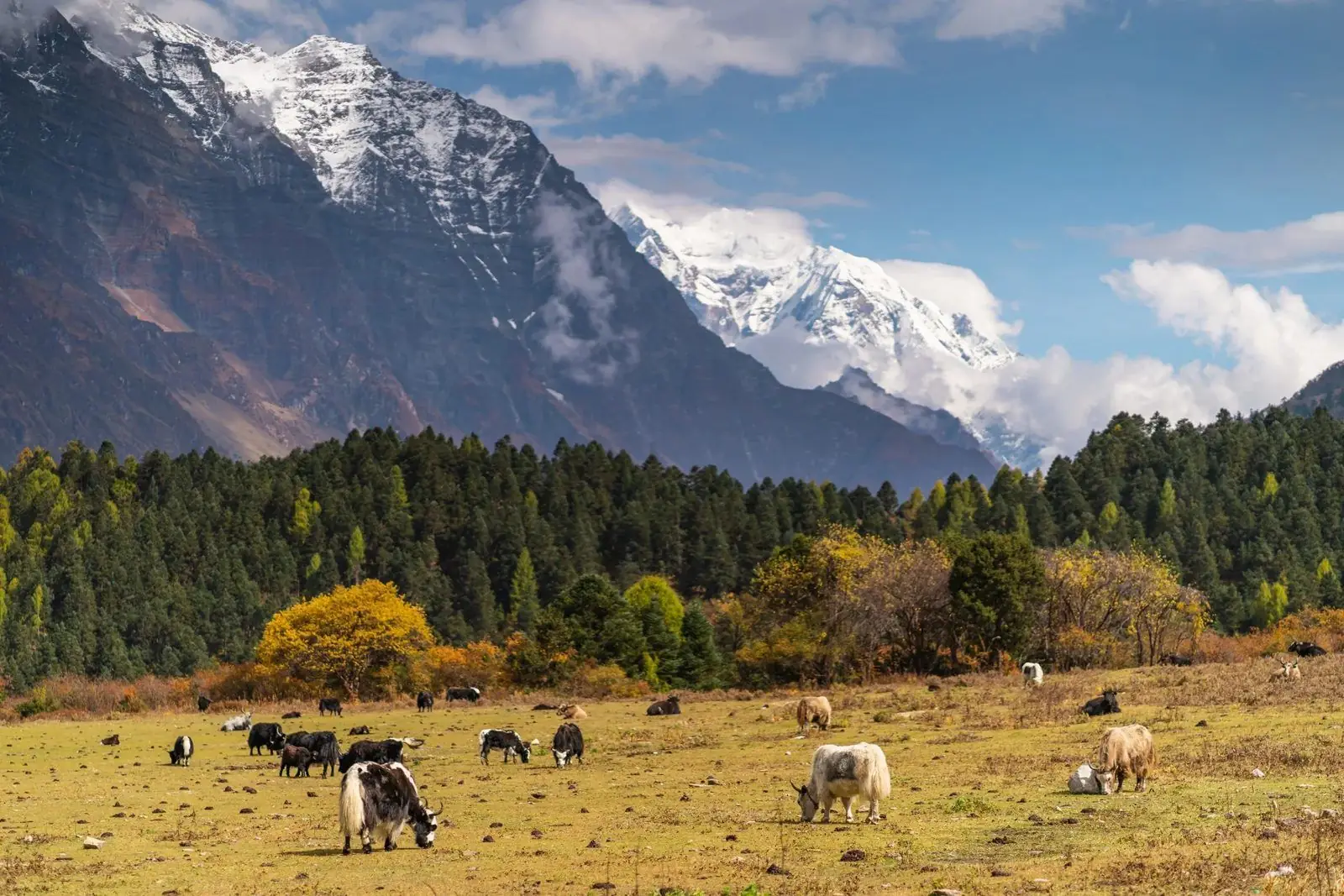
Kyang, also written Kayang, is a small high settlement on the Nar-Phu route. From Koto the trail is on foot, passing Dharamsala and Kyang on the way to Phu or Nar Phedi. Some groups sleep here, depending on conditions, season and group size, and lodges can be seasonal and very simple.
Where Kyang is and why trekkers stop
This page is about Kyang on the Nar-Phu trekking route. Our guides describe the approach as driving to Besisahar and Koto, then trekking to Dharamsala, Kyang and Phu or Nar Phedi, passing stone villages and canyons. Kyang sits on the stretch where the valley opens and the trail climbs gradually.
Spelling varies, so you may see Kayang on maps and signs. The place is the same, a small stop in the upper valley that many groups simply walk through in daylight.
What to expect at Kyang
Expect a small, quiet place with simple buildings and wide surroundings. Outside the main villages, in places like Meta and Kayang, lodges can be seasonal and very simple. The walking is steady rather than technical, though the canyon sections can be narrow and exposed. Take time to look around, since few people live this high.
The scenery here is dramatic, with canyon walls, wide river beds and high ridgelines. Take time at viewpoints, but watch your footing on narrow stretches where the trail crosses loose slopes.
Altitude and how you may feel
Kyang is higher than Dharamsala, so sleeping altitude rises. Our itinerary gains altitude gradually through Koto, Meta and Kayang. Even so, headaches, poor sleep and low appetite can appear. Go slowly, drink water and report symptoms to your guide.
If you do sleep at Kyang, keep to a calm routine of fluids, food and early rest. A mild headache that eases with rest is common, but one that worsens needs attention.
Lodging, food and practical tips
Do not expect much in the way of comfort. Lodges, where open, are basic, with limited food choices. Carry rupees, snacks and a warm layer. Nar-Phu is a restricted area, so you need special permits and a licensed guide through a registered agency. Keep printed permit copies in a waterproof bag in case officers ask to see them.
Stock up on snacks and warm drinks before leaving the last well provided village. Carry a small stove or flask only if your operator suggests it, as fuel can be scarce.
Common questions
Is Kyang the same as Kayang?
Spellings vary on this route. Both refer to the same small settlement on the Nar Phu trail between Dharamsala and Phu or Nar Phedi, so check maps and signs carefully.
Can I sleep at Kyang?
Some groups do, depending on conditions, season and group size. Lodges can be seasonal and very simple, so confirm arrangements with your operator and carry snacks and a warm layer.
Do I need a guide for Kyang?
Yes. Nar-Phu is a restricted area, so you need special permits and a licensed guide via a registered agency. Independent trekking is not allowed, and officers may check your papers.


