




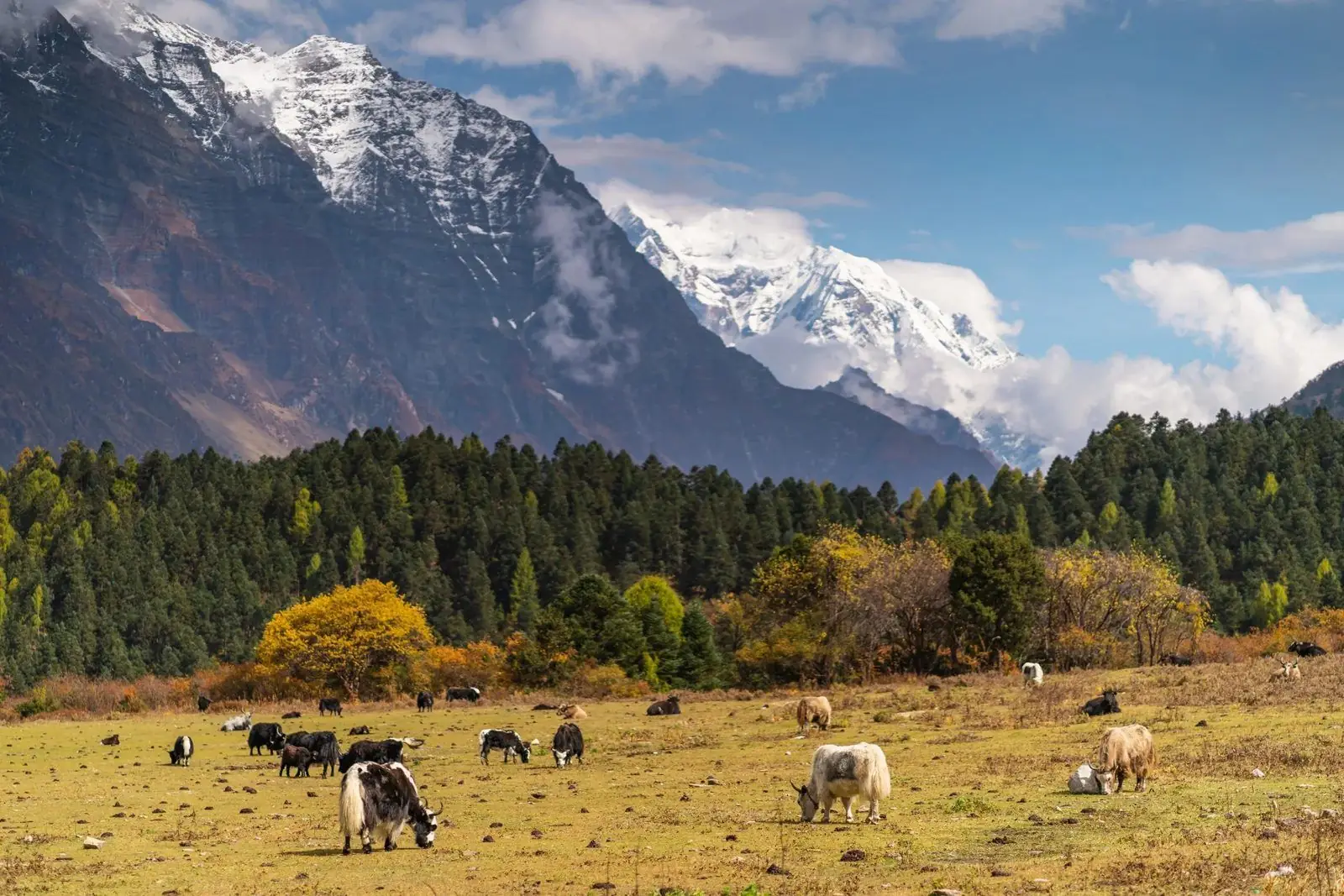
Nile is a village in upper Tsum Valley, at about 3,360 m, on the trail between Chhokangparo and Chhule, below Mu Gompa. This page covers the trekking village in Tsum, not any other place of the same name. Half Tsum itineraries turn around here or at Chhule, and longer ones continue to Mu Gompa.
Altitude: about 3,360 m. Heights quoted for villages and camps vary by source, so treat this as a guide.
Where Nile is and why trekkers stop
Nile lies north of Chhokangparo on the main trail that continues through Chhule to Mu Gompa near the Tibetan border. On our Tsum plans, day 7 goes from Chhokangparo to Nile and Chhule, so the village often marks the end of the long upward walk.
Trekkers stop here because it is a practical place to sleep before the highest parts of the valley, and a base for people who want a rest day. Shorter trips reach Nile or Chhule and then return.
What to expect at Nile
The landscape is more open and austere than lower Tsum, with fewer trees, wide slopes, stone-walled fields and prayer flags marking the approach. The trail passes mani walls and chortens, and you should keep them on your left side as you walk.
The village is quiet and traditional, with simple houses and a slow rhythm. Mornings are usually clear and bright, while clouds and wind can build later in the day. Warm clothing is needed in the evening even in the warmer months.
Altitude and how you may feel
At about 3,360 m you are in the range where mild altitude symptoms are common: light headaches, poor sleep and shortness of breath on the climbs. The rise from Chhokangparo is gradual, which helps, but it does add up.
Take the stage slowly, drink regularly and avoid alcohol. Include at least one rest day at Chhokangparo or Nile if the schedule allows. Altitude illness can strike at any time, so if symptoms worsen, descend to a lower village and get advice from your guide.
Lodging, food and practical tips
Lodging is in simple teahouses with basic rooms, shared toilets and limited hot water, and the food is plain: dal bhat, noodles, soup and potatoes. Facilities are thinner than in lower villages, so bring cash, snacks, a good sleeping bag and spare batteries.
Tsum Valley is a restricted area, so a restricted-area permit and a licensed guide through a registered agency are required. Weather can change quickly in this upper section, so keep rain and wind layers on top in your daypack.
Common questions
Is Nile in Tsum Valley the same as other places called Nile?
This page is only about Nile, the trekking village in upper Tsum Valley in the Manaslu region of Nepal. It sits between Chhokangparo and Chhule on the trail toward Mu Gompa.
How high is Nile in Tsum Valley?
Nile is about 3,360 m, in the same band as neighbouring Chhule. It is noticeably higher than Chumling, so trekkers who sleep here should walk slowly and look out for symptoms of altitude sickness.
Can I turn around at Nile?
Yes. A half-Tsum itinerary goes from Lokpa to Nile or Chhule and back, taking about six days. You skip the final stretch to Mu Gompa, which keeps sleeping altitude lower.


