




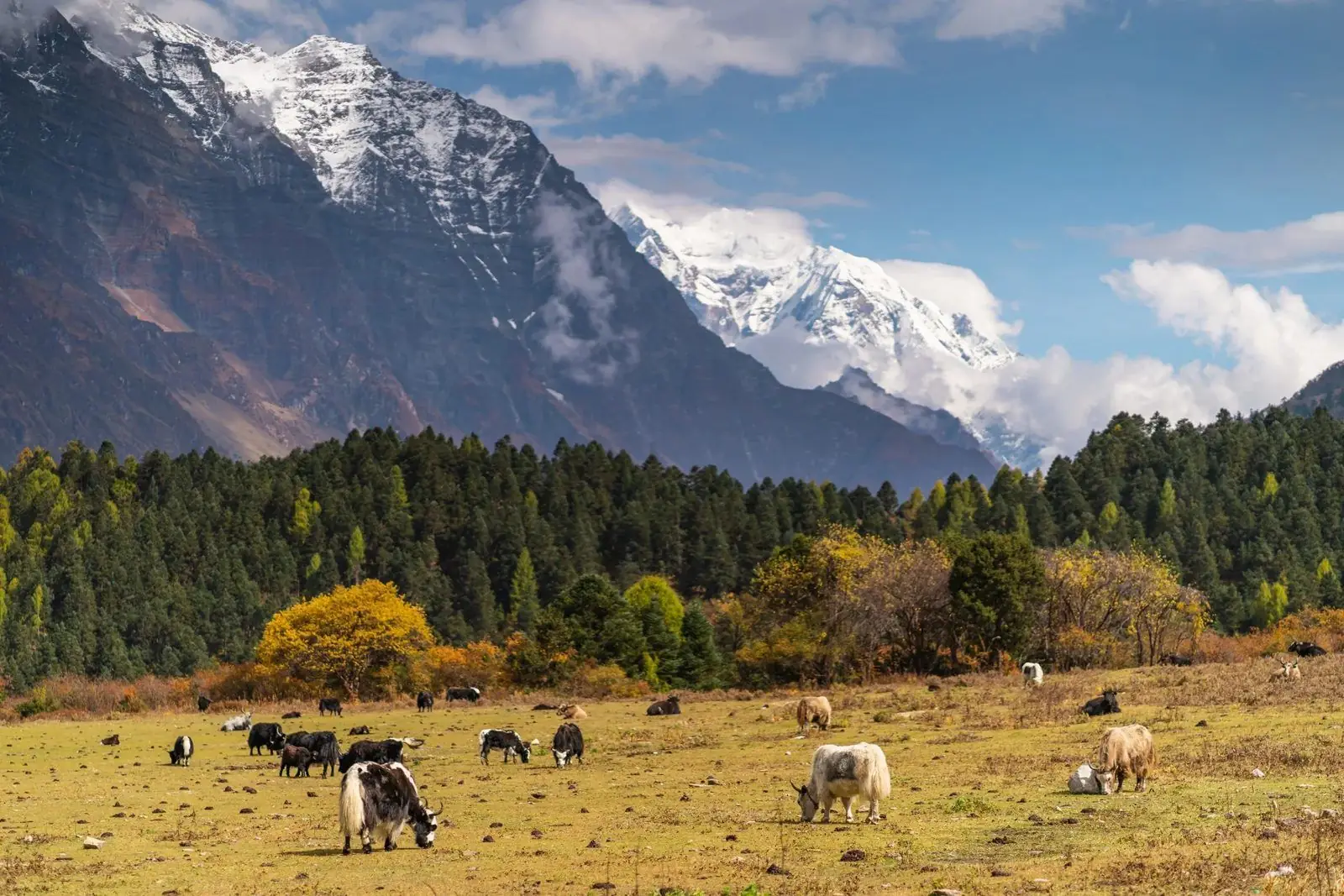
Chumling is the first overnight village on the walk into Tsum Valley, at about 2,380 m. It lies a day beyond Lokpa and is split into an upper and a lower part, with a monastery. Most trekkers sleep here on day 5 before climbing on to Chhokangparo.
Altitude: about 2,380 m. Heights quoted for villages and camps vary by source, so treat this as a guide.
Where Chumling is and why trekkers stop
Chumling is the gateway village of the valley, on the trail that runs north through Chhokangparo, Nile and Chhule toward the Tibetan border. After leaving Lokpa you cross into a quieter, more Tibetan-influenced landscape, and Chumling is where that change first becomes clear.
Most itineraries make it the first night in Tsum. It also serves as the sensible stopping point on the way back, since our plans often descend to Chhokangparo or Chumling after the high end of the valley.
What to expect at Chumling
The village has two parts, an upper and a lower, and a monastery that gives a first taste of the valley's Buddhist culture. Expect stone houses, prayer flags, mani walls to pass on the correct side, and fields of barley and potatoes in season.
The walk in from Lokpa is a mix of forest trail and open slope with some ascents. Allow time to wander the lanes in the afternoon, and be respectful at the monastery: ask before photographing and remove hats and shoes where asked.
Altitude and how you may feel
At about 2,380 m the sleeping altitude is only slightly higher than Lokpa, so most trekkers feel comfortable. The following day takes you noticeably higher, to Chhokangparo at about 3,010 m, which is where the effects of altitude start to appear for some.
Use Chumling to settle in: sleep well, drink water and eat even if appetite is low. Altitude illness can strike on this valley, and if headaches worsen, or breathing or balance become difficult, descend rather than keep climbing.
Lodging, food and practical tips
Lodging is in simple family-run teahouses with basic rooms and shared washing facilities. Meals are hearty and plain, usually dal bhat, noodles, momos or potatoes. Bring cash, a warm sleeping bag and a headtorch, because power can be limited.
Tsum Valley is a restricted area, so you need a restricted-area permit and a licensed guide through a registered agency. Evenings cool quickly, even in the lower village, so keep a warm layer ready once the sun drops behind the ridge.
Common questions
What is Chumling known for?
Chumling is the first village stop in Tsum Valley, with an upper and lower part and a monastery. It is where many trekkers first meet the valley's Buddhist culture, mani walls and stone houses.
How far is Chumling from Lokpa?
In our Tsum itineraries Lokpa to Chumling is one trekking day, usually day 5. The exact time varies with pace and trail conditions, but it is generally an easy to moderate day with some climbing.
How high is Chumling compared with the next stop?
Chumling is about 2,380 m. The next stop, Chhokangparo, is about 3,010 m, so the sleeping altitude rises by roughly 600 m, and you should drink plenty and walk slowly the next day.


