




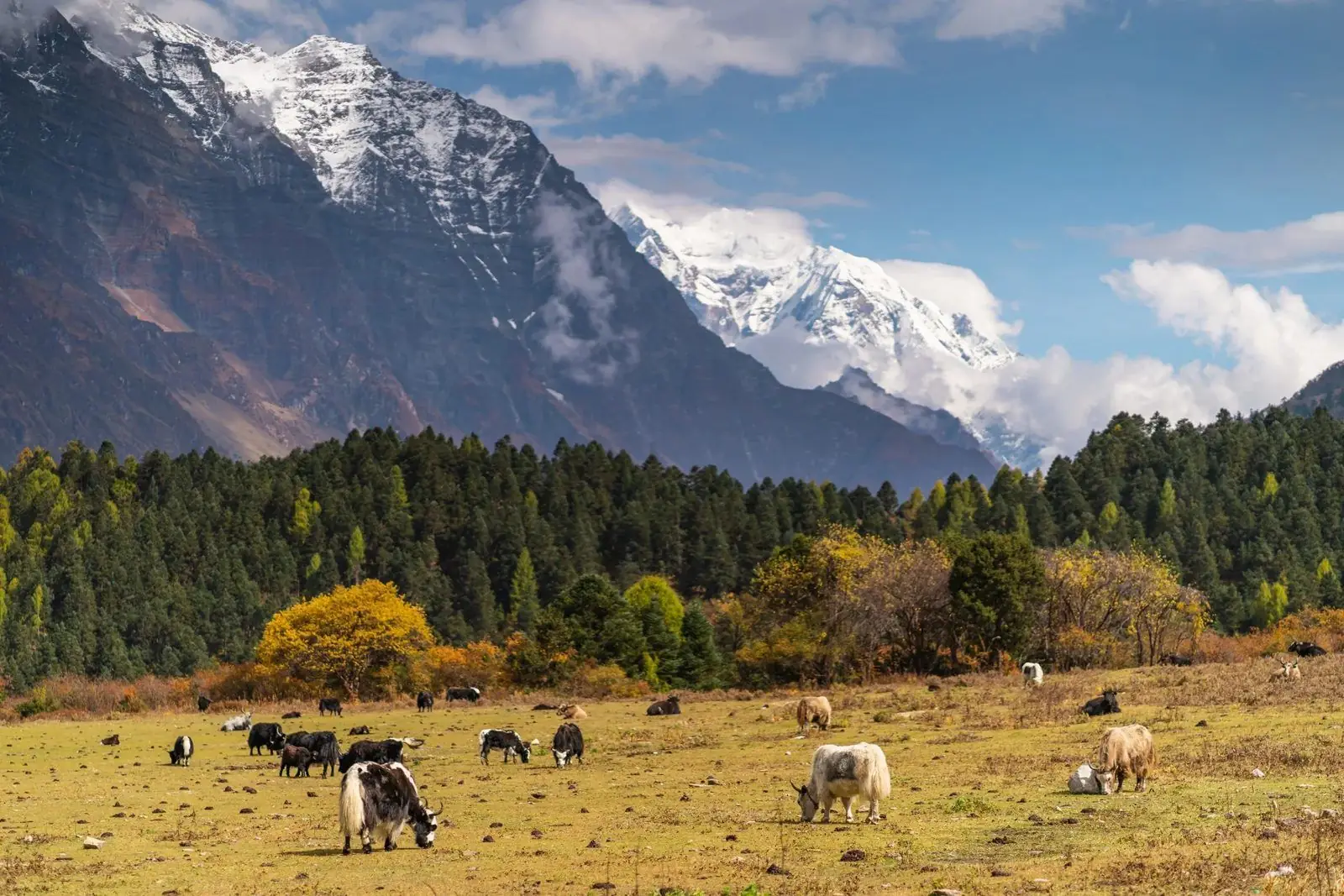
Chhokang Paro, also written Chhokangparo, is a Tsum Valley village at about 3,000 m, above Chumling and before Nile. It is often the turning point for shorter Tsum trips and a favoured place for a rest day, so many groups sleep here more than once.
Altitude: about 3,000 m. Heights quoted for villages and camps vary by source, so treat this as a guide.
Where Chhokang Paro is and why trekkers stop
The village sits on the main trail north through Tsum Valley, between Chumling and Nile. It marks the point where the valley opens out and the sense of remoteness grows, with the high ground and the Tibetan border further north.
Trekkers stop here for several reasons. Short Tsum versions walk from Lokpa to this village and back. Longer itineraries sleep here on the way up and often again on the descent, and it is the usual place for a planned rest day.
What to expect at Chhokang Paro
Expect a sizeable mountain village by valley standards, with stone houses, mani walls, prayer flags and farmland on the terraces around. The setting is wide and open, and in clear weather the surrounding peaks and ridges are easy to appreciate from the village.
On a rest day you can take a short walk to a nearby monastery or village, or simply stay put and let the body adjust. Side trips depend on the season and trail condition, so ask your guide for the best option on the day.
Altitude and how you may feel
At about 3,000 m this is where altitude begins to matter. Sleeping here after Chumling means a rise of roughly 600 m, which is a lot in a single day, and some trekkers feel headache, light nausea or restless nights.
Rest, fluids and slow walking help. Include at least one rest day around here if you can. Altitude illness can strike without warning, and if symptoms such as a severe headache, vomiting or loss of coordination worsen, descend to Chumling and seek medical advice.
Lodging, food and practical tips
Lodging is in teahouses with basic rooms, shared toilets and limited hot water. Menus are simple and filling, with dal bhat, soups, noodles and local potatoes. Carry cash in small notes, extra batteries or a power bank, and a warm sleeping bag, as nights are cold.
Tsum Valley requires a restricted-area permit and a licensed guide arranged through a registered agency. Signal and charging are unreliable, so tell family not to expect daily messages from the valley.
Common questions
Is Chhokang Paro a good place for a rest day?
Yes. It is a common rest-day stop in Tsum Valley because it sits at about 3,000 m, high enough for acclimatisation to matter and comfortable enough for a quiet day with short walks nearby.
How is Chhokang Paro spelled?
It appears as Chhokang Paro, Chhokangparo and Chhokang Paro village in different sources. They all refer to the same Tsum Valley village between Chumling and Nile on the route north.
Can I do a short Tsum trip that ends here?
Yes. A short Tsum version walks from Lokpa to Chhokang Paro and back, taking roughly four to five days from Lokpa. It gives a taste of the valley without going to Mu Gompa.


